

市場洞察
Fed and BOJ Decisions Put Dollar and Yen at a Policy Crossroads
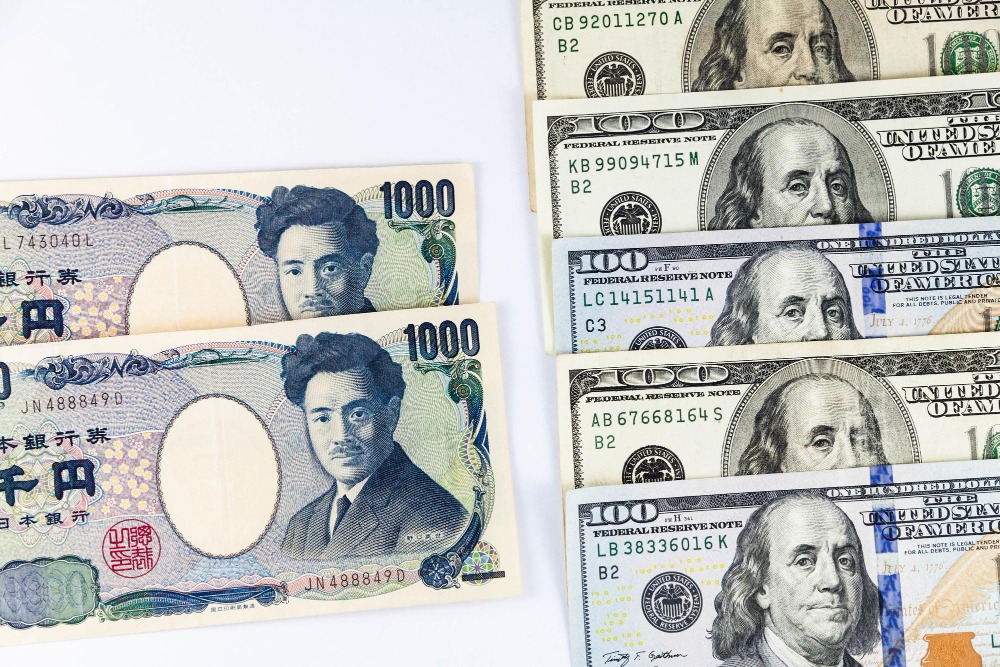
Fed and BOJ Decisions Put Dollar and Yen at a Policy Crossroads
The U.S. dollar and Japanese yen are entering a critical week as investors prepare for monetary-policy decisions from both the Federal Reserve and the Bank of Japan.
The Federal Reserve is widely expected to raise interest rates at its September 15–16 meeting, while the BOJ is also expected to consider another rate increase later this week.
The two decisions come at a particularly complicated time for policymakers. Oil prices have climbed above $100 amid renewed Middle East supply concerns, U.S. Treasury yields have risen sharply, and inflation expectations remain elevated.
The result is a market increasingly focused on the policy paths of the world's two major central banks—and what those paths could mean for USDJPY.
The Fed Moves Back Into the Spotlight
Markets have rapidly shifted their expectations for U.S. monetary policy.
According to the latest Reuters economist poll, 85% of economists expected the Fed to raise its policy rate by 25 basis points at the September meeting, taking the target range to 3.75%–4.00%.
Interest-rate futures have also moved toward a stronger tightening outlook.
The change reflects a combination of persistent inflation, stronger economic data and the latest increase in energy prices.
The market is therefore facing an unusual situation: a central bank preparing to tighten policy while investors are simultaneously concerned about the impact of higher borrowing costs on economic activity.
Oil Adds Another Inflation Challenge
The latest surge in crude prices makes the Fed's decision even more significant.
Brent crude has moved above $100 as attacks on Saudi energy infrastructure and Gulf shipping raise concerns about supply disruptions. Higher energy prices can feed into transportation, production and consumer costs, making inflation more difficult to contain.
This creates a potential feedback loop for interest-rate markets:
Higher oil → Higher inflation expectations → Higher Treasury yields → Greater pressure for monetary tightening
The U.S. 10-year Treasury yield has already moved above 5%, reaching its highest level since October 2023.
For investors, the key question is whether the Fed views the latest inflation pressure as temporary and supply-driven or as a risk that could become embedded in broader price expectations.
Why the Dollar Has Strengthened
The dollar has benefited from several forces at the same time.
First, rising U.S. Treasury yields make dollar-denominated assets relatively more attractive.
Second, geopolitical uncertainty can increase demand for the U.S. currency as a traditional safe-haven asset.
Third, expectations of a Fed rate hike have provided additional support.
The Dollar Index recently approached a two-week high near 99.55, reflecting the combination of higher yields, geopolitical risk and changing rate expectations.
However, further dollar gains may depend heavily on how hawkish the Fed sounds about future meetings.
A rate hike that is accompanied by cautious guidance could produce a very different market reaction from a hike that signals additional tightening ahead.
The BOJ Creates a Different Policy Story
Japan is moving in the opposite direction from the ultra-loose monetary environment that defined much of the previous decade.
The BOJ has already moved its policy rate higher and is facing growing pressure to continue normalizing monetary policy as inflation and wage pressures remain relevant.
Markets are increasingly expecting another rate increase, with the BOJ decision due later this week.
This is particularly important for the yen because higher Japanese rates can reduce the yield advantage enjoyed by dollar assets and potentially encourage investors to unwind yen-funded carry trades.
The yen has recently traded near a seven-month high, although the currency has faced renewed pressure as the dollar strengthened alongside rising oil prices and U.S. yields.
USDJPY at a Policy Crossroads
The Fed and BOJ decisions could create several possible paths for USDJPY.
Scenario 1: Hawkish Fed, Cautious BOJ
If the Fed raises rates and signals that additional tightening remains possible while the BOJ adopts a cautious approach, the U.S.-Japan yield differential could widen.
That would potentially support the dollar against the yen and push USDJPY higher.
Scenario 2: Both Central Banks Tighten
If both the Fed and BOJ raise rates, the initial reaction could be more complicated.
The dollar could receive support from higher U.S. yields, while the yen could benefit from expectations that Japan's tightening cycle has further room to run.
USDJPY could therefore experience sharp two-way volatility as traders reassess the relative pace of policy normalization.
Scenario 3: Dovish Fed, Hawkish BOJ
This would represent the strongest potential setup for yen appreciation.
If the Fed signals that September could mark the end of the current tightening cycle while the BOJ emphasizes further rate increases, the U.S.-Japan yield differential could narrow.
That could encourage further yen buying and place downward pressure on USDJPY.
What Higher Yields Mean for Gold
Gold is also caught between competing forces.
Geopolitical tensions and concerns over global economic stability can support safe-haven demand.
However, higher U.S. Treasury yields and a stronger dollar can work against gold because the metal does not generate interest income.
This creates an important cross-asset relationship:
Geopolitical risk supports gold, while higher yields and a stronger USD create headwinds.
As a result, gold traders may pay particularly close attention to the Fed's language rather than simply the rate decision itself.
Equity Markets Face a Higher-Rate Test
Higher yields also present a challenge for equity markets.
The higher the risk-free rate, the greater the discount applied to future corporate earnings. This can be particularly important for technology and growth stocks, whose valuations depend heavily on future earnings expectations.
U.S. equities have already faced pressure as Treasury yields moved higher and investors reassessed expectations for monetary policy.
The technology-heavy Nasdaq was also affected by a broader selloff in semiconductor stocks, adding another layer of uncertainty to an already rate-sensitive sector.
For Japan, a stronger yen could create mixed effects.
A stronger currency can increase purchasing power and reduce imported inflation, but it can also weigh on the overseas earnings of major exporters.
The Bigger Question: Which Central Bank Tightens Further?
The most important issue for currency traders may not be the immediate rate decisions.
Instead, the market will focus on the future policy path.
If the Fed signals that inflation remains the primary concern, U.S. yields and the dollar could stay supported.
If the BOJ becomes more confident about sustainable inflation and wage growth, expectations for further Japanese rate increases could strengthen.
The resulting divergence—or convergence—between the two central banks will be crucial for USDJPY.
Key Events to Watch
Traders should closely monitor:
- Federal Reserve interest-rate decision
- Fed economic projections
- Fed Chair Kevin Warsh's press conference
- Bank of Japan interest-rate decision
- BOJ policy guidance
- U.S. Treasury yields
- U.S. inflation expectations
- Crude oil prices
- USDJPY price action
- Gold and major equity indices
Market Outlook
The dollar and yen are entering a potentially volatile period as investors assess two different monetary-policy stories.
The Fed is being pushed toward tighter policy by persistent inflation and rising energy prices, while the BOJ is gradually moving further away from its long-standing accommodative stance.
At the same time, geopolitical tensions are adding another variable to the equation by pushing oil prices higher and increasing inflation uncertainty.
For traders, the focus should therefore extend beyond the headline rate decisions. Forward guidance, yield differentials and the market's interpretation of future policy moves could prove more important than the initial 25-basis-point decisions themselves.
With both central banks meeting in the same week, USDJPY could become one of the most closely watched currency pairs as markets search for clarity on the next phase of global monetary policy.
DISCLAIMER: Derivative products carry high risk and may result in the loss of your entire invested capital. Before trading, ensure you fully understand the legal framework, product characteristics, and your broker’s trading rules. Always trade responsibly and with caution.
RISK WARNING: Margin trading with leverage is not suitable for all investors due to its high risk. THERE ARE NO GUARANTEED RETURNS in trading. Beware of any claims promising assured profits. Only use capital you can afford to lose. Before engaging in any transaction, ensure you understand the risks and assess both your experience and risk tolerance.
