

Phân Tích Thị Trường
China-US Robot Ban Dispute Raises New Concerns for Global Technology Markets
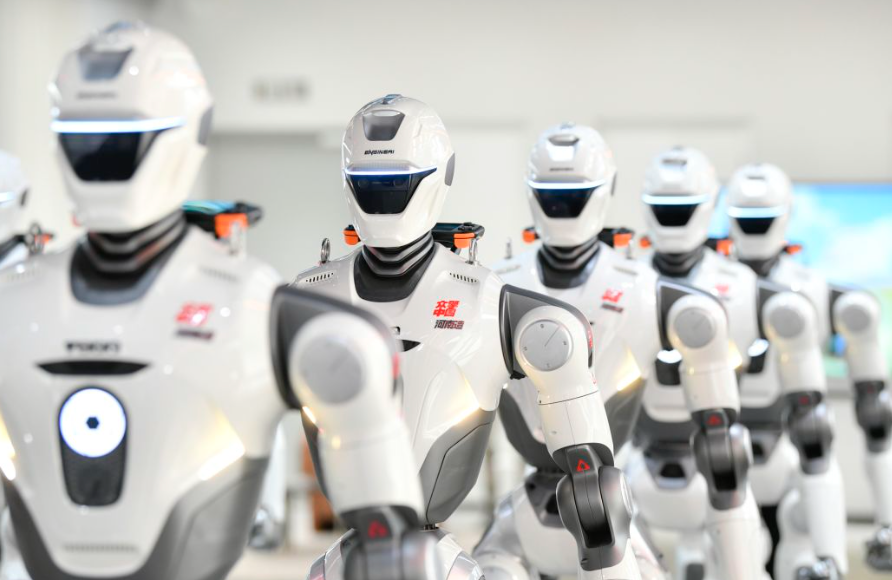 China-US Robot Ban Sparks Trade Tensions
The China-US robot ban has become the latest flashpoint in the increasingly complex technology rivalry between the world's two largest economies. On 30 July 2026, China warned it would take retaliatory measures if the United States proceeds with recently announced restrictions on imports of Chinese-made robots and related power inverters.
The dispute arrives at a time when artificial intelligence and robotics are rapidly becoming strategic industries. Governments are no longer viewing these technologies solely through an economic lens. National security, supply chain resilience, and industrial competitiveness are now playing equally significant roles.
As investors digest the latest developments, the China-US robot ban is emerging as another reminder that geopolitical policy can move markets almost as quickly as economic data or corporate earnings.
Why the United States Introduced the Robot Ban
The new restrictions were announced by the US Federal Communications Commission (FCC), which cited national security concerns surrounding Chinese-made humanoid robots, quadruped robots, and power inverters used in energy infrastructure.
US officials argue that increasingly connected robotic systems could present cybersecurity vulnerabilities or be exploited for surveillance. The measures also align with Washington's broader objective of strengthening domestic manufacturing while reducing dependence on Chinese technology.
According to Reuters, this decision follows several years of expanding US restrictions covering semiconductors, telecommunications equipment, artificial intelligence technologies, drones, and advanced computing hardware.
Rather than treating robotics as a standalone industry, policymakers now appear to view it as another critical component of future technological leadership, with the China-US robot ban serving as the clearest example yet.
China's Response Signals Growing Frustration
Beijing responded quickly and forcefully.
China's Commerce Ministry accused Washington of abusing national security arguments to justify what it described as discriminatory trade practices. Officials warned that if the China-US robot ban remains in place, China would adopt what it called "resolute retaliation" to safeguard the legitimate interests of Chinese companies.
China's Commerce Ministry stated that the restrictions distort fair market competition and undermine the legitimate interests of Chinese enterprises, according to Bloomberg.
Chinese authorities also argued that repeated requests for dialogue had received little response, while claiming the restrictions distort fair market competition.
Those questions remain unanswered for now. Yet uncertainty alone is often enough to influence investor sentiment.
Why Robotics Has Become Strategically Important
The robotics industry has evolved far beyond factory automation.
Today's advanced robots increasingly integrate artificial intelligence, computer vision, machine learning, autonomous navigation, and cloud connectivity. These capabilities allow robots to perform more complex tasks across manufacturing, healthcare, logistics, agriculture, construction, and even defence applications.
China has invested aggressively in becoming a global robotics leader. Several industry estimates, cited by the Financial Times, suggest Chinese manufacturers now account for a dominant share of global humanoid robot production, supported by substantial government incentives, strong domestic demand, and an extensive manufacturing ecosystem.
At the same time, American technology companies continue investing heavily in next-generation robotics powered by advanced AI models. This competition is no longer limited to producing better machines — it increasingly reflects a race to define future industrial standards and technological leadership, a dynamic now central to the China-US robot ban debate.
Market Implications Extend Beyond Robotics
The China-US robot ban is unlikely to affect only robotics manufacturers.
Supply chains throughout the technology sector remain deeply interconnected. Companies producing semiconductors, industrial automation equipment, AI software, sensors, batteries, and precision manufacturing tools could all experience indirect effects if tensions continue to escalate.
Investors have become familiar with this pattern over recent years. Trade restrictions initially target one sector before gradually expanding into adjacent industries.
- Semiconductors provided an early example.
- Artificial intelligence followed.
- Now robotics appears to be joining that growing list amid the China-US robot ban.
While immediate financial impacts may remain limited, prolonged uncertainty often encourages businesses to diversify suppliers, relocate production facilities, and accelerate domestic investment programmes. Those strategic adjustments can reshape industries over many years rather than a few quarters.
Investors Are Watching Policy as Closely as Earnings
Corporate earnings traditionally dominate market attention during reporting season. However, technology investors increasingly recognise that government policy can influence valuations just as significantly.
The latest China-US robot ban illustrates this changing reality. According to CNBC, companies with significant exposure to cross-border technology trade may experience increased volatility whenever new restrictions are announced or diplomatic negotiations stall.
Meanwhile, businesses focused on domestic manufacturing or regional supply chains could benefit from government incentives designed to strengthen local production capabilities.
This shifting landscape requires investors to evaluate more than balance sheets and revenue forecasts. Policy developments, export regulations, and geopolitical relationships are becoming essential parts of investment analysis.
Technology Competition Shows No Signs of Slowing
Despite periods of diplomatic engagement between Washington and Beijing, strategic competition across advanced technologies continues to intensify.
Artificial intelligence, semiconductor manufacturing, quantum computing, clean energy, and robotics are all viewed as industries capable of shaping long-term economic leadership. The China-US robot ban therefore represents more than another trade disagreement.
It reflects a broader effort by both countries to secure technological advantages that could influence global competitiveness for decades.
For financial markets, the immediate impact may be limited to selected technology stocks. The longer-term implications, however, could prove much broader as companies continue adapting investment plans, supply chains, and production strategies to an increasingly fragmented global technology environment.
Investors will now be watching closely for China's next move, as well as any further policy announcements from Washington. Each new development tied to the China-US robot ban has the potential to influence technology valuations, business investment decisions, and broader market sentiment during the second half of 2026.
DISCLAIMER: Derivative products carry high risk and may result in the loss of your entire invested capital. Before trading, ensure you fully understand the legal framework, product characteristics, and your broker’s trading rules. Always trade responsibly and with caution.
RISK WARNING: Margin trading with leverage is not suitable for all investors due to its high risk. THERE ARE NO GUARANTEED RETURNS in trading. Beware of any claims promising assured profits. Only use capital you can afford to lose. Before engaging in any transaction, ensure you understand the risks and assess both your experience and risk tolerance.
