

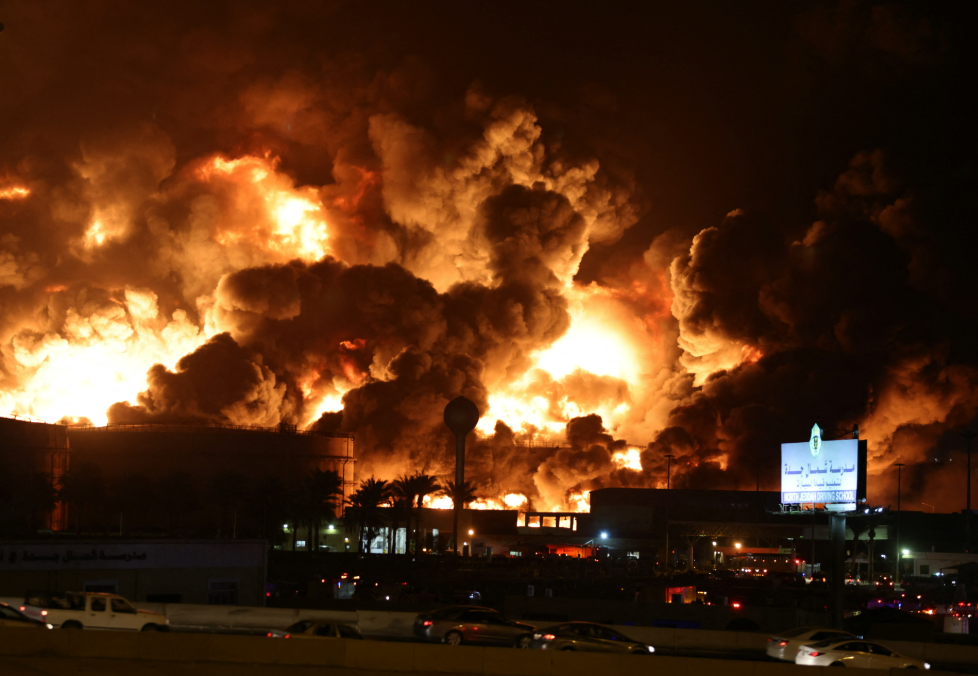
 Saudi Arabia Loses 600,000 Barrels Daily as Oil Facilities Come Under Attack
Introduction to the Saudi Arabia Energy Crisis
Saudi Arabia has experienced a significant disruption to its oil production following recent attacks on key energy infrastructure, with losses estimated at approximately 600,000 barrels per day. According to Yahoo Finance, the incident occurred on April 10, 2026, and has quickly drawn attention across global markets, particularly in the oil sector. Saudi Arabia's oil production challenges represent one of the most pressing energy concerns in recent months.
The impact extends far beyond local borders. Saudi Arabia plays a central role in global energy supply, and even temporary disruptions tend to create ripple effects through prices, investor sentiment, and broader economic expectations. Markets reacted almost immediately to the news from Saudi Arabia. Oil prices, which had previously declined, began to recover as concerns over supply from Saudi Arabia tightened significantly.
A Sudden Shock to Saudi Arabia's Oil Supply
The loss of 600,000 barrels per day represents a meaningful portion of Saudi Arabia's total output. While Saudi Arabia remains one of the world's largest oil producers, such a substantial disruption is difficult to overlook or manage quickly. According to Yahoo Finance, this represents a critical challenge for the kingdom's energy sector.
Saudi Arabia has long been viewed as a stabilizing force within the oil market, often adjusting production levels to balance supply and demand across global markets. This time, however, the disruption was not planned or voluntary. The attacks on oil facilities within Saudi Arabia highlight the vulnerability of critical infrastructure, particularly in regions where geopolitical tensions remain elevated and security concerns persist.
When a country known for managing supply suddenly faces an unexpected shortfall like Saudi Arabia currently does, it sends shockwaves through energy markets worldwide. The kingdom's capacity to respond to such crises will be closely monitored by investors and policymakers globally.
Immediate Market Reaction to Saudi Arabia's Production Loss
Oil markets responded with notable speed to the news from Saudi Arabia. After experiencing one of the sharpest recent declines, crude prices began to rise again as traders reassessed supply conditions in light of the Saudi Arabia incident. This shift reflects a well-established pattern in energy markets: when Saudi Arabia faces production challenges, even temporarily, global supply expectations tighten considerably.
Both Brent crude and West Texas Intermediate saw upward movement, supported by renewed concerns about oil availability from Saudi Arabia. Investors who had previously priced in weaker demand suddenly found themselves adjusting positions in response to the Saudi Arabia crisis. According to Yahoo Finance, trading volumes increased substantially following the announcement of Saudi Arabia's production losses.
In such volatile moments, sentiment changes rapidly. The recovery in oil prices demonstrates how significantly Saudi Arabia influences global energy markets through its production capacity and strategic importance.
Why Saudi Arabia Matters So Much to Global Energy
Saudi Arabia's influence in the oil market cannot be overstated or underestimated by any analyst. As a leading member of OPEC, Saudi Arabia plays a key role in setting production targets and influencing global pricing dynamics. The kingdom's decisions regarding output directly impact energy costs worldwide.
A disruption in Saudi Arabia does not occur in isolation within the global system. It affects expectations across the entire energy market and beyond. Moreover, Saudi Arabia's spare capacity has historically acted as a buffer during global supply shocks. When that buffer is reduced, even temporarily, the margin for error becomes considerably smaller.
Consider these key factors regarding Saudi Arabia's market role:
- Saudi Arabia controls approximately 10% of global oil reserves
- The kingdom produces roughly 13% of the world's daily oil supply
- Saudi Arabia maintains significant spare production capacity for emergencies
- Price decisions by Saudi Arabia influence OPEC policy globally
That is precisely what markets are now considering as they evaluate the lasting impact of Saudi Arabia's current production losses.
Broader Geopolitical Implications of Saudi Arabia's Vulnerability
The attacks on Saudi Arabia's oil sites carry significant geopolitical implications for the region and the world. Energy infrastructure has increasingly become a focal point in regional tensions, and such incidents tend to elevate risk perception among investors globally. Saudi Arabia's vulnerability has exposed potential weaknesses in protecting critical national assets.
As a result, the situation extends far beyond oil supply considerations alone. It feeds into broader concerns about stability in key energy-producing regions like the Middle East. Will there be further disruptions to Saudi Arabia's infrastructure? Markets are already asking this critical question.
While no immediate escalation has been confirmed by officials in Saudi Arabia, the uncertainty itself is enough to influence trading decisions and risk appetite among investors. This geopolitical dimension adds another layer of complexity to understanding Saudi Arabia's role in global energy markets.
"The disruption in Saudi Arabia demonstrates how dependent global markets are on stable energy supplies from the kingdom, and how quickly that stability can be threatened." - Yahoo Finance analysis
Impact on Global Oil Prices and Inflation Pressures
The disruption in Saudi Arabia's production arrives at a particularly sensitive time for global markets. Inflation remains a concern in several major economies, and energy prices are a critical component of inflation calculations. When Saudi Arabia experiences supply issues, oil prices typically rise in response.
Higher oil prices can, in turn, contribute to increased transportation and production costs worldwide. This creates a chain reaction affecting multiple sectors. Businesses face higher operational expenses, and consumers feel the pressure through rising prices at the pump and in goods.
Even a short-term disruption in Saudi Arabia can therefore have longer-term economic implications that extend well beyond the energy sector itself. Consider the following impacts:
- Transportation costs increase due to higher fuel prices
- Manufacturing expenses rise as energy costs increase
- Consumer goods prices climb due to production cost increases
- Inflation pressures mount across multiple economies globally
According to Yahoo Finance, economists are monitoring how Saudi Arabia's production losses might influence broader inflation trends in coming months.
What Traders and Investors Are Watching Regarding Saudi Arabia
Attention now turns to how Saudi Arabia responds to this crisis. Will production be restored quickly, or will the disruption persist for an extended period? Early indications suggest that efforts are underway within Saudi Arabia to stabilize output, though timelines remain uncertain and subject to change.
Traders are also closely monitoring statements from OPEC, Saudi Arabia's leadership, and other major producers. In some cases, other countries may adjust their output to offset losses from Saudi Arabia. The kingdom's recovery speed will determine the length and severity of global supply constraints.
Key monitoring points for investors include:
- Repair timelines for damaged Saudi Arabia oil facilities
- Statements from Saudi Arabia's oil ministry regarding recovery plans
- Decisions by other OPEC members to offset Saudi Arabia's losses
- Geopolitical developments affecting Saudi Arabia's security situation
At the same time, geopolitical developments affecting Saudi Arabia remain in sharp focus. Any sign of further instability in Saudi Arabia could amplify the negative impact on oil prices substantially.
A Market at a Critical Turning Point
The situation involving Saudi Arabia serves as a stark reminder of how deeply interconnected global markets truly are. A single disruption in Saudi Arabia's energy sector can shift expectations across currencies, commodities, and equities within hours.
For now, Saudi Arabia remains central to the narrative dominating energy markets. The loss of 600,000 barrels per day from Saudi Arabia has already influenced market behavior significantly, and the next steps regarding Saudi Arabia's recovery will be closely watched by analysts worldwide.
The story surrounding Saudi Arabia's oil production losses is still unfolding. And Saudi Arabia, once again, is at the center of it, shaping global energy markets and influencing investment decisions worldwide.
