

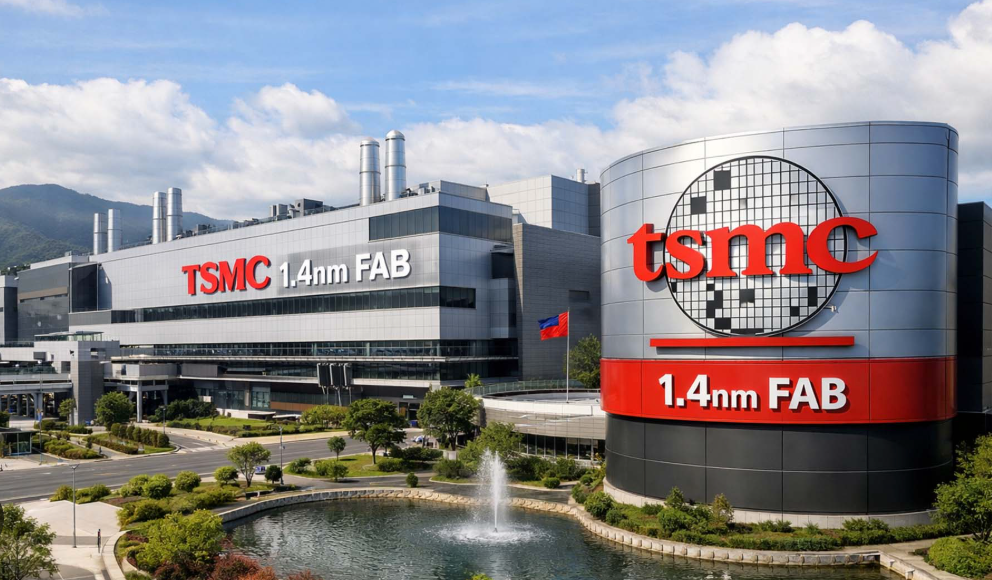
 TSMC Chip Price Increases: What Investors Should Know
The global semiconductor industry may be approaching another important turning point. Taiwan Semiconductor Manufacturing Company (TSMC), the world's largest contract chipmaker, has indicated that TSMC chip price increases cannot be ruled out as production costs continue to rise. The comments come at a time when demand for advanced semiconductors remains exceptionally strong, particularly due to rapid investment in artificial intelligence infrastructure.
For investors, the possibility of TSMC chip price increases carries significance well beyond Taiwan. As a key supplier to many of the world's largest technology companies, TSMC sits at the center of the global semiconductor ecosystem. Any changes in pricing could influence everything from AI development costs to consumer electronics pricing and corporate profit margins.
TSMC Faces Rising Manufacturing Costs
TSMC has spent billions of dollars expanding production capacity across multiple regions. New facilities in Taiwan, the United States, Japan, and other strategic locations require enormous capital investment. These projects are occurring alongside the development of increasingly sophisticated chip technologies. Manufacturing advanced semiconductors has become significantly more complex over the past decade. Each new generation of chips demands greater precision, more specialized equipment, and larger research budgets.
As a result, discussions surrounding TSMC chip price increases are becoming more relevant. According to company executives, maintaining technological leadership requires substantial investment. Those costs must eventually be absorbed somewhere within the supply chain. While TSMC has not formally announced broad pricing changes, management has acknowledged that pricing decisions remain under review.
Artificial Intelligence Continues to Drive Demand
One of the most important factors supporting potential TSMC chip price increases is the continued expansion of artificial intelligence. Demand for advanced processors used in AI training and inference has surged over the past two years. Companies such as NVIDIA, AMD, and other technology leaders rely heavily on TSMC's manufacturing capabilities to produce cutting-edge chips.
The AI boom has fundamentally altered semiconductor market dynamics. Large technology firms continue to invest aggressively in data centers, cloud infrastructure, and AI applications. These investments require vast quantities of high-performance chips, creating sustained demand for TSMC's most advanced manufacturing nodes.
Many industries face challenges when costs rise because customers become more price sensitive. The current AI market appears different. Demand remains exceptionally strong, even as production expenses increase.
This reality strengthens the possibility that any upward movement in the TSMC chip price could be absorbed by customers seeking access to the latest technology. According to Reuters, AI-related chip demand has shown no significant signs of slowing despite broader macroeconomic uncertainties.
Implications for Technology Companies
Potential TSMC chip price increases would likely affect multiple layers of the technology sector. Major chip designers may face higher manufacturing expenses. Those costs could eventually influence product pricing, operating margins, or investment decisions. Companies involved in cloud computing, artificial intelligence, consumer electronics, and enterprise software may all feel some degree of impact.
Investors are paying close attention because semiconductors serve as the foundation of modern digital infrastructure. According to BBC, semiconductor supply chains have become a focal point of global economic and national security policy, further amplifying the significance of any shifts in manufacturing costs or pricing strategy.
- Cloud service providers may face higher infrastructure costs.
- Consumer electronics manufacturers could see tighter margins.
- AI hardware developers may need to revise product roadmaps.
- Enterprise software firms relying on hardware acceleration could be indirectly affected.
A modest increase in the TSMC chip price may not significantly alter demand for high-end AI chips. However, over time, sustained price increases could influence budgeting decisions among technology firms and cloud service providers.
TSMC's Competitive Position and Market Influence
Market participants are also assessing how competitors may respond to a shifting TSMC chip price environment. Several semiconductor manufacturers are investing heavily to expand production capacity. Yet TSMC maintains a dominant position in advanced chip manufacturing, particularly at the most cutting-edge process nodes. That leadership gives the company substantial influence over industry pricing trends.
Competitors such as Samsung and Intel are working to close the technology gap. However, analysts note that TSMC's yield rates and manufacturing consistency remain difficult to replicate in the near term. This competitive moat allows the company to maintain pricing leverage even as new entrants attempt to attract customers.
- TSMC leads in advanced node manufacturing at 3nm and 2nm.
- Key customers including Apple and NVIDIA are heavily dependent on TSMC capacity.
- Alternatives remain limited for the most sophisticated chip designs.
- Customer switching costs are high, reinforcing pricing power.
Global Supply Chains Remain Under Pressure
The discussion around TSMC chip price increases reflects broader trends affecting global supply chains. Governments and corporations have increasingly prioritized supply chain resilience following years of disruptions. Semiconductor production has become a strategic priority across multiple regions, leading to large-scale investments and government incentives.
However, diversification efforts come with costs. Building advanced fabrication facilities outside traditional manufacturing hubs often requires higher labor expenses, additional regulatory compliance, and significant infrastructure spending. These factors contribute to the rising cost structure facing semiconductor manufacturers, and they are likely to sustain pressure on the TSMC chip price over the medium term.
Meanwhile, geopolitical considerations continue to shape investment decisions. Technology firms are balancing efficiency with security as they seek to reduce supply chain vulnerabilities. According to the Financial Times, government subsidy programs in the United States, Europe, and Japan are partially offsetting new facility costs, but they do not fully absorb the additional expense of operating in higher-cost regions.
A Market Watching Every Signal
The prospect of TSMC chip price increases arrives during a period of strong optimism surrounding artificial intelligence and advanced technology development. Technology stocks have benefited from expectations of continued AI-driven growth. Semiconductor companies remain among the most closely watched names in global equity markets. Consequently, comments from TSMC often attract significant investor attention.
Recent statements do not guarantee immediate pricing changes. Nevertheless, they provide valuable insight into the challenges facing the world's most important chip manufacturer. Rising production costs, expanding global operations, and sustained AI demand are creating new dynamics within the semiconductor sector.
Whether TSMC ultimately implements broad TSMC chip price increases remains uncertain. What is clear is that pricing discussions are becoming increasingly important as the industry enters its next phase of growth. For investors, the issue extends beyond one company. The conversation surrounding TSMC chip price trends offers a glimpse into the future economics of artificial intelligence, cloud computing, and advanced semiconductor manufacturing worldwide.
