

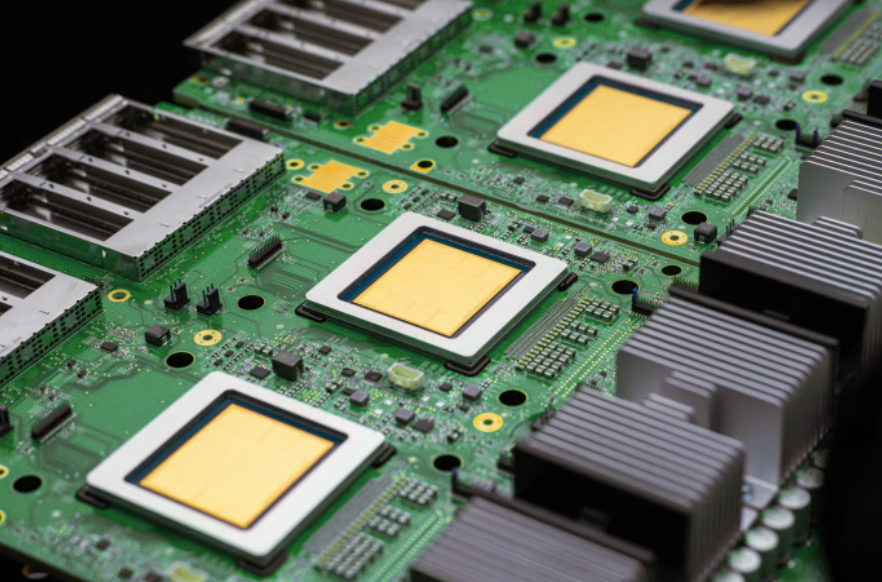
 Google AI Chip Deal Boosts Intel Foundry
Intel shares moved higher after reports suggested that Google may use Intel's manufacturing services to produce future Google AI chip products. The development immediately attracted investor attention, as it could represent a significant endorsement of Intel's foundry ambitions at a time when competition within the semiconductor industry remains intense.
The report arrives during a period when technology companies are investing heavily in AI infrastructure. Demand for advanced chips continues to expand as cloud providers, software companies, and data center operators race to support increasingly sophisticated AI applications.
For Intel, the reported Google AI chip deal carries importance beyond a short-term stock rally. It touches on a much larger question that investors have been asking for years: can Intel successfully transform itself into a major contract chip manufacturer capable of competing with industry leaders?
Why the Report Matters for Intel
Intel has spent the past several years attempting to rebuild its position within the global semiconductor industry. While the company remains one of the world's largest chipmakers, it has faced challenges as rivals gained market share in key growth segments. The rapid rise of artificial intelligence has intensified those competitive pressures, particularly as companies such as Nvidia have emerged as dominant suppliers of AI hardware.
The reported Google AI chip deal could help change market perceptions. A major technology company choosing Intel to manufacture advanced chips would signal confidence in Intel's production capabilities. That confidence is particularly important as Intel continues expanding its foundry business, which aims to manufacture chips for external customers rather than solely producing its own products.
Interestingly, the market reaction suggests investors view the potential partnership as more than just another customer agreement. Many see it as a validation of Intel's long-term strategy.
Google's Growing AI Ambitions
Google has become one of the largest investors in artificial intelligence infrastructure. The company operates extensive data center networks and continues developing proprietary AI processors designed to improve performance while reducing operational costs. These custom chips support a wide range of services, including large language models, cloud computing products, and machine learning applications.
As AI workloads become increasingly complex, securing reliable manufacturing partners has become a strategic priority. The semiconductor supply chain remains highly concentrated, with a limited number of companies possessing the advanced manufacturing capabilities necessary to produce cutting-edge Google AI chip designs at scale.
If confirmed, the arrangement could diversify Google's manufacturing options while simultaneously providing Intel with a high-profile customer relationship. That dual benefit makes the reported Google AI chip agreement particularly noteworthy for both parties.
What It Means for the Semiconductor Industry
The broader semiconductor industry has undergone a dramatic transformation over the past few years. Artificial intelligence has emerged as one of the most important growth drivers across the technology sector, with companies investing billions of dollars into AI-related hardware, software, networking equipment, and cloud infrastructure.
Manufacturing leadership is no longer viewed solely as an operational advantage. It has become a critical component of national competitiveness, technological innovation, and supply chain resilience.
The reported Google AI chip deal highlights how major technology firms are actively seeking manufacturing capacity to support future growth. It also reflects the increasing strategic importance of semiconductor production within global technology competition.
This shift has encouraged significant investments across the semiconductor ecosystem, particularly in the United States, where government initiatives have supported domestic chip manufacturing expansion. The implications of a confirmed Google AI chip production partnership with Intel extend well beyond a single business transaction.
Investor Response and Market Sentiment
Investors responded positively to the report, pushing Intel shares higher as markets assessed the potential implications. Part of the enthusiasm stems from Intel's ongoing turnaround efforts. The company has invested heavily in manufacturing facilities, technology development, and foundry services. However, investors have often questioned how quickly those investments would generate meaningful customer demand.
A potential Google AI chip deal offers a possible answer. Securing one of the world's largest technology companies as a foundry customer could strengthen confidence in Intel's ability to attract additional business from other AI-focused firms.
- AI chip demand is expected to remain strong throughout 2026 and beyond.
- Revenue opportunities from foundry services could provide meaningful upside for Intel shareholders.
- A high-profile customer relationship with Google would enhance Intel's credibility in the foundry market.
- Market participants view the potential deal as a signal of broader demand for Intel's advanced manufacturing capabilities.
At the same time, investors recognize that reports of discussions or agreements do not automatically translate into immediate financial results. Execution remains an important factor.
Challenges Still Remain
Despite the positive reaction, Intel continues to face several challenges. Competition remains fierce across the semiconductor landscape.
- Taiwan Semiconductor Manufacturing Company and other leading foundries maintain strong positions within the advanced manufacturing market.
- Nvidia continues to dominate many AI hardware segments.
- AMD and other competitors remain aggressive in pursuing growth opportunities.
- Semiconductor manufacturing requires substantial capital investment and long development cycles.
Even if the reported Google AI chip deal moves forward, Intel must continue demonstrating that it can deliver competitive production technology, reliable manufacturing capacity, and attractive economics for customers. Those factors will ultimately determine whether the company can achieve its long-term foundry objectives.
A Potential Turning Point
The reported Google AI chip deal has generated considerable interest because it represents more than a single business relationship. It highlights the growing importance of AI infrastructure, the strategic value of semiconductor manufacturing, and Intel's efforts to reposition itself within a rapidly evolving industry.
While many details remain subject to confirmation, the market's response illustrates how significant customer wins can influence investor confidence. If Google ultimately chooses Intel to manufacture AI chips, the decision could strengthen Intel's standing in the global semiconductor market and provide additional momentum for its foundry business.
For investors, the story serves as another reminder that the AI boom continues to reshape competitive dynamics across the technology sector. Companies capable of securing a meaningful role within that ecosystem, such as Intel through a potential Google AI chip production agreement, are likely to remain closely watched throughout 2026.
