

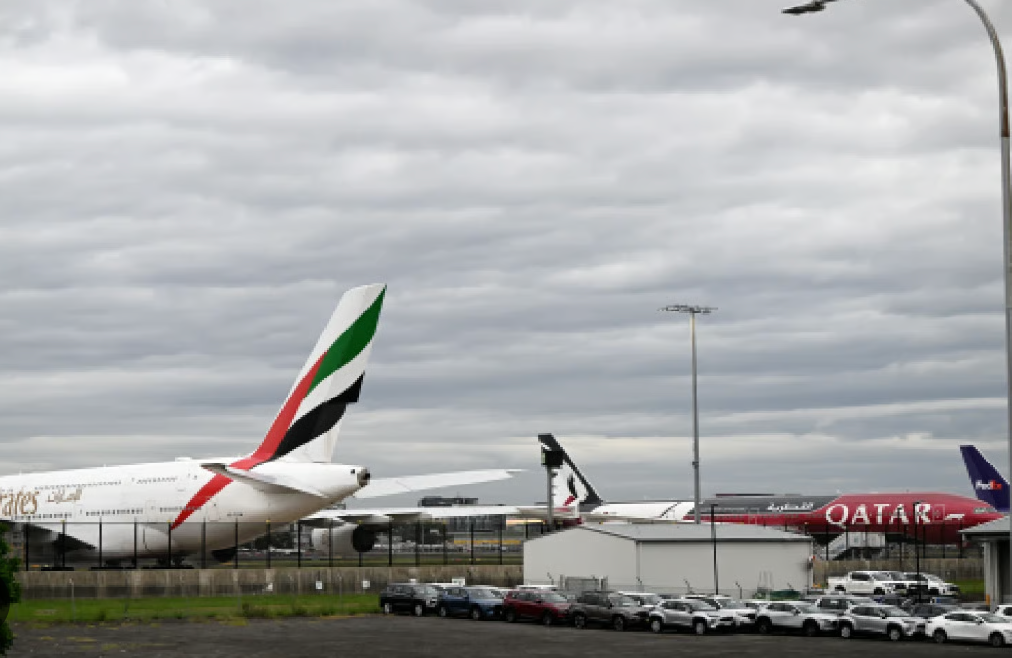
 Global Flight Routes Under Pressure
Airlines around the world have begun adjusting flight routes to the Middle East as geopolitical tensions continue to create uncertainty across the region. According to a recent report cited by Yahoo Travel, several major carriers are already reducing or suspending certain flight routes that pass through sensitive airspace.
These changes are not unusual during periods of instability. Aviation safety and operational efficiency remain the top priorities for airlines, particularly when security risks increase along popular international corridors.
Interestingly, the decision to alter flight routes can ripple far beyond the airline industry itself. Changes in flight routes influence ticket prices, fuel consumption, airline profitability, and even global tourism flows. What may appear to be a simple scheduling adjustment can carry broader economic implications.
Airlines Adjust Flight Routes to Manage Risk
Airlines constantly evaluate flight routes to ensure safety, cost efficiency, and operational reliability. When geopolitical tensions rise, those calculations quickly change.
Recent developments in the Middle East have prompted several carriers to reconsider their flight routes. Some airlines are suspending certain destinations entirely, while others are rerouting aircraft to avoid specific areas of airspace. These decisions are often made quickly as airlines monitor intelligence reports and government advisories.
The aviation sector is particularly sensitive to regional instability. Airspace restrictions can force airlines to fly longer flight routes, increasing fuel costs and travel time. In an industry where margins are already tight, even small adjustments to flight routes can affect profitability.
A single geopolitical event can reshape dozens of global flight routes within days.
Longer Flight Routes Increase Operational Costs
Changing flight routes may sound straightforward, yet the operational consequences can be significant.
When airlines avoid certain regions, aircraft must follow longer paths between destinations. These new flight routes consume more fuel and require additional flight planning. Pilots may need alternative refueling stops, while airlines must update scheduling systems and crew rotations.
Fuel costs represent one of the largest expenses for airlines. Even minor extensions to flight routes can increase fuel consumption by thousands of gallons per journey. The operational impact extends across multiple areas:
- Increased fuel consumption along longer flight routes
- Higher crew costs due to extended duty hours
- Additional wear on aircraft engines and components
- Revised scheduling and ground handling at alternative airports
Passenger Demand and Travel Confidence
Adjustments to flight routes also influence traveler behavior. When airlines cancel or reduce flights to a region, passengers often reconsider travel plans.
Travel demand in the Middle East has historically fluctuated alongside geopolitical developments. Airlines closely track booking data to determine whether passenger demand remains stable or begins to decline.
Modern aviation networks are highly interconnected. A reduction in flight routes to one region can shift passenger flows toward alternative hubs in Europe or Asia. According to Business Insider, airline networks are designed with enough redundancy to absorb short-term disruptions, but sustained instability can trigger longer-term structural changes across global flight routes.
Airlines frequently respond by reallocating aircraft to more profitable routes. That strategy allows carriers to maintain overall capacity while reducing exposure to uncertain markets. The most common responses include:
- Temporarily suspending flight routes to affected regions
- Extending connecting itineraries through safer transit hubs
- Offering flexible rebooking policies to retain passenger confidence
- Redeploying wide-body aircraft onto alternative long-haul flight routes
Aviation Markets React to Geopolitical Signals
Financial markets also pay close attention to changes in airline flight routes. Aviation stocks often react quickly when geopolitical events affect travel demand or operational costs.
Investors recognize that airline profitability depends on stable operating conditions. Rising fuel costs, airspace restrictions, or sudden route suspensions can quickly alter earnings expectations.
The global aviation industry has faced similar disruptions before. Events such as regional conflicts, airspace closures, and international sanctions have historically forced airlines to revise flight routes across entire continents. Aviation Week has documented multiple instances where geopolitical conflicts triggered widespread rerouting across major international flight routes within a matter of hours.
Yet airlines have also become more resilient over time. Advanced route planning software and improved risk monitoring allow carriers to adapt faster than in previous decades.
A Sector That Constantly Adapts
The latest adjustments to flight routes highlight how flexible the aviation industry has become. Airlines regularly adapt their networks to manage risk while maintaining service for global travelers.
Changes in flight routes are rarely permanent. Airlines typically reassess conditions on a daily basis. Once stability returns, many suspended flight routes gradually resume operations.
Still, the recent developments serve as a reminder of how closely aviation is tied to global events. Political tensions, security risks, and economic uncertainty can all influence airline strategies. As Reuters has reported, the speed at which airlines now adapt their flight routes reflects years of investment in real-time operational monitoring.
For now, airlines continue to monitor developments while adjusting flight routes where necessary. The broader travel industry will be watching closely.
Flight routes are more than just lines on a map. They reflect the state of global mobility.
