

مارکیٹ بصیرت
Trump’s Policy Uncertainty Pushes the U.S. Dollar Lower
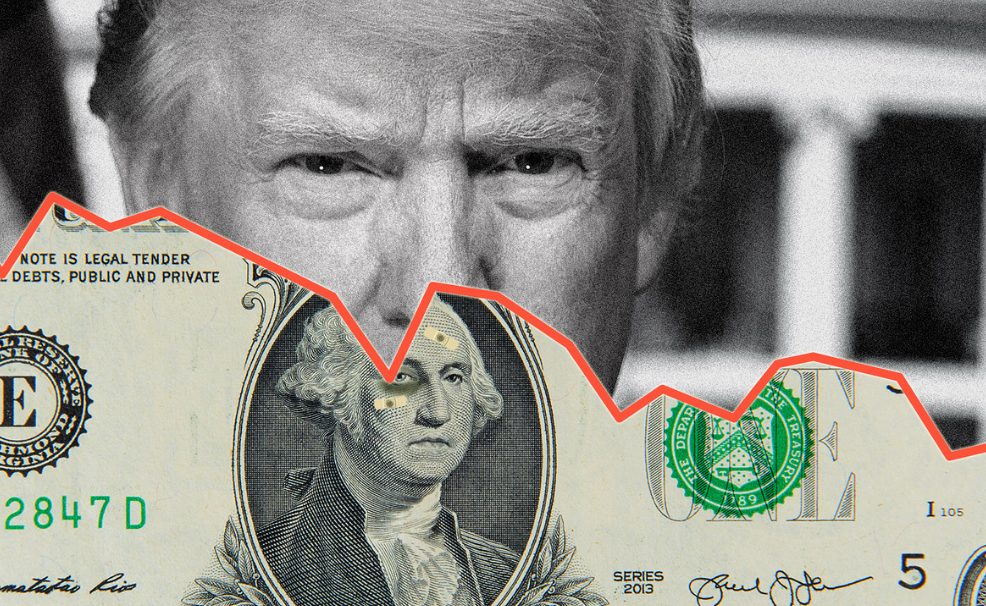 Trump's Policy Weakens the U.S. Dollar
The U.S. dollar has come under renewed pressure as Trump's policy stance introduces fresh uncertainty into global currency markets. According to market coverage published on 6 February 2026, the dollar weakened against a basket of major currencies as investors reassessed political risk linked to Donald Trump's economic signals and policy direction.
This latest move reflects a shift in market psychology. For much of the past year, the dollar benefited from relative economic resilience and higher interest rates. That support has begun to erode as traders focus less on macro fundamentals and more on the implications of Trump's policy rhetoric, particularly on trade, fiscal discipline, and institutional independence.
Interestingly, the dollar’s decline was not driven by a single policy announcement. Instead, it followed a series of statements and campaign signals that revived memories of earlier periods of policy unpredictability.
Currency Markets React to Trump's Policy Signals
Foreign exchange markets tend to react swiftly to political risk, especially when it involves the world’s reserve currency. As Trump's policy messaging gained attention, the U.S. Dollar Index slipped, while the euro, yen, and Swiss franc recorded modest gains.
According to Finance Commerce, the market's sensitivity to Trump's policy signals highlights how political narratives can override traditional economic indicators in driving short-term currency movements.
Currency strategists noted that Trump's policy uncertainty has begun to alter positioning. Investors are reducing exposure to the dollar as a defensive asset and increasing allocations to currencies perceived as more insulated from political turbulence.
Trade and Fiscal Concerns Resurface
A key concern surrounding Trump's policy outlook relates to trade. Renewed references to tariffs, bilateral trade pressure, and economic nationalism have unsettled markets that had grown accustomed to relative stability in global trade relations.
Such rhetoric revives fears of retaliatory measures and supply chain disruption. Historically, these conditions have weighed on the dollar’s performance, particularly when investors expect wider current account imbalances or slower global growth.
At the same time, fiscal questions have returned to the spotlight. Trump's policy approach has included expansive spending proposals alongside criticism of existing fiscal frameworks. Currency markets tend to react negatively when budget discipline becomes uncertain, especially at a time when public debt levels remain elevated.
Impact on Bonds, Commodities, and Risk Assets
The dollar’s weakness has rippled across asset classes. U.S. Treasury yields showed uneven movement as investors balanced political risk against expectations for future interest rate policy. Gold prices edged higher, reflecting renewed demand for hedges amid currency volatility.
Equity markets also responded cautiously. While a weaker dollar can support multinational earnings, the broader concern lies in the uncertainty surrounding Trump's policy trajectory. Markets generally prefer predictability. When that disappears, risk premiums rise across equities, bonds, and currencies alike.
Notably, emerging market currencies saw mixed reactions. Some benefited from the softer dollar, while others remained constrained by domestic vulnerabilities. This uneven response highlights how Trump's policy uncertainty affects markets in layers rather than through a single channel.
A Broader Market Reassessment
The current environment illustrates how political narratives can reshape market behaviour even in the absence of concrete policy changes. Trump's policy signals have prompted investors to reassess assumptions that had supported the dollar in recent months.
Whether this adjustment evolves into a prolonged trend will depend on clarity. Key factors for stability include:
- Clear and consistent policy communication.
- Institutional continuity in economic management.
- Credible frameworks for fiscal and trade policy.
Uncertainty, by contrast, often leads to repositioning and volatility. For now, currency markets appear to be recalibrating risk rather than panicking. Still, the message is clear. Political uncertainty has become a meaningful factor in dollar pricing, and traders are responding accordingly.
DISCLAIMER: Derivative products carry high risk and may result in the loss of your entire invested capital. Before trading, ensure you fully understand the legal framework, product characteristics, and your broker’s trading rules. Always trade responsibly and with caution.
RISK WARNING: Margin trading with leverage is not suitable for all investors due to its high risk. THERE ARE NO GUARANTEED RETURNS in trading. Beware of any claims promising assured profits. Only use capital you can afford to lose. Before engaging in any transaction, ensure you understand the risks and assess both your experience and risk tolerance.
