

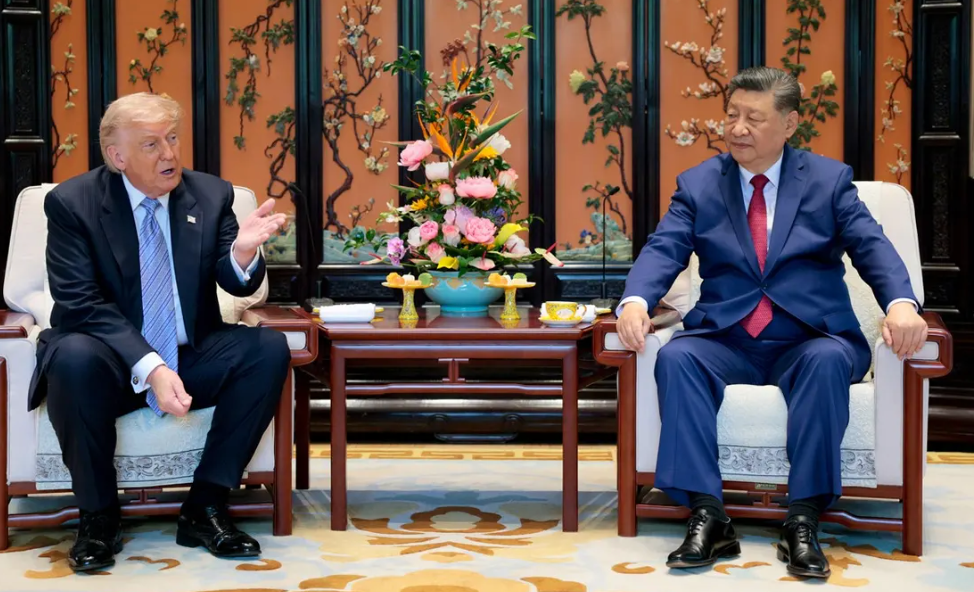
 Trump Xi Meeting: Trade and Geopolitical Shifts
Global investors are paying close attention to the latest Trump Xi meeting after several important policy signals emerged from discussions between the United States and China. Markets reacted cautiously on May 19, 2026, as analysts attempted to interpret what the Trump Xi meeting could mean for trade flows, tariffs, technology restrictions, and broader geopolitical stability.
Interestingly, the tone of the discussions appeared more strategic than confrontational. That alone caught the attention of financial markets. After years of escalating tensions between Washington and Beijing, even subtle changes in diplomatic language can influence equities, commodities, currencies, and investor confidence worldwide.
The Trump Xi meeting quickly became one of the most discussed geopolitical developments across financial media this week. Investors are now trying to understand whether the talks mark the beginning of a more stable relationship between the world's two largest economies, or simply a temporary pause in an ongoing rivalry.
Trade Tensions Are Moving Into a New Phase
One of the biggest takeaways from the Trump Xi meeting was the apparent shift away from purely tariff-focused negotiations toward broader economic influence and supply chain control.
During earlier trade disputes, tariffs dominated headlines. This time, discussions reportedly focused more heavily on technology leadership, manufacturing independence, energy security, and critical supply chains. Let that sink in for a moment. The conversation is no longer limited to import taxes or export volumes. It now touches the entire structure of global economic power.
This matters because multinational companies remain deeply exposed to both economies. Firms involved in semiconductors, artificial intelligence, electric vehicles, and industrial manufacturing could face changing regulations depending on how future negotiations unfold.
The Trump Xi meeting also highlighted concerns surrounding strategic industries. Analysts noted that both countries appear increasingly determined to reduce dependency on each other in sectors considered nationally important.
That creates uncertainty for global investors.
Technology shares in Asia showed mixed performance following the news, while U.S. futures traded cautiously as markets evaluated the broader implications for cross-border business activity.
Markets Are Paying Closer Attention to Geopolitical Risk
Another major shift from the Trump Xi meeting involves how geopolitical risks are now directly influencing financial markets on a daily basis.
Not long ago, many investors treated geopolitical headlines as short-term noise. That perception has changed dramatically over the past few years. Wars, sanctions, trade restrictions, and diplomatic conflicts are increasingly affecting commodity prices, bond yields, and currency movements.
The Trump Xi meeting reinforced that reality.
According to CNBC, both sides acknowledged the need to maintain communication channels despite ongoing disagreements over Taiwan, technology exports, and military activity in the Asia-Pacific region. While no major breakthrough was announced, markets viewed the willingness to continue dialogue as a modest positive sign.
Still, uncertainty remains elevated.
Gold prices remained relatively supported during Asian trading hours as some investors continued seeking safe-haven assets. Meanwhile, the Chinese yuan and regional equities experienced cautious trading conditions amid uncertainty surrounding future U.S.-China policy direction.
What makes the current environment particularly complex is the overlap between economics and national security. Financial markets can no longer separate the two as easily as before.
The Trump Xi meeting demonstrated how interconnected these issues have become.
China's Economic Position Is Receiving Renewed Scrutiny
The third major shift involves growing attention toward China's domestic economic situation and how it may shape future negotiations with the United States.
China continues facing several economic challenges, including weaker property activity, uneven consumer spending, and slower industrial momentum. At the same time, the country remains a critical driver of global manufacturing and commodity demand.
The Trump Xi meeting therefore arrived at a sensitive moment for Beijing.
Some analysts believe China may prefer a more stable external environment to support economic recovery efforts. Others argue that Washington may use economic leverage more aggressively as the U.S. election cycle intensifies.
Either way, the Trump Xi meeting placed China's economic resilience back into the spotlight.
Investors are now closely monitoring whether future discussions could ease pressure on international trade or lead to additional restrictions in strategic sectors. Semiconductor companies, electric vehicle manufacturers, and major exporters may remain particularly sensitive to future developments.
Meanwhile, oil markets also continue watching the relationship carefully. Any meaningful improvement in U.S.-China relations could support expectations for stronger trade activity and higher energy demand globally.
That possibility remains highly relevant for commodity traders.
Why Financial Markets Are Reacting Carefully
Despite headlines suggesting a calmer diplomatic tone, investors are not rushing into risk assets aggressively. There are several reasons for that hesitation:
- The Trump Xi meeting did not produce a formal agreement or detailed policy framework
- Election-related uncertainty in the United States continues influencing market expectations
- Traders remain concerned about how future export controls and technology regulations could affect multinational corporations
As a result, financial markets are treating the Trump Xi meeting as an important signal rather than a definitive turning point.
Some institutional investors described the discussions as constructive but incomplete. Others emphasized that structural rivalry between the United States and China is unlikely to disappear anytime soon.
That cautious interpretation explains why markets showed measured rather than euphoric reactions.
Even so, the Trump Xi meeting may still prove significant over the coming months. Diplomatic tone often shapes investor psychology before policy changes become visible in economic data. Markets understand this well.
And in 2026, sentiment can move prices almost as quickly as fundamentals themselves.
Broader Implications for Global Investors
The Trump Xi meeting ultimately reflects a larger transformation taking place across the global economy. Trade relationships are evolving. Supply chains are being redesigned. Strategic industries are becoming increasingly politicized.
For investors, this creates both risks and opportunities:
- Companies with diversified international operations may become more attractive if geopolitical uncertainty continues rising
- Safe-haven assets could remain supported whenever tensions escalate
- Sectors tied to infrastructure, energy security, artificial intelligence, and domestic manufacturing may continue attracting long-term capital flows
The situation remains fluid. Markets are likely to respond not only to official agreements, but also to speeches, diplomatic gestures, and policy hints coming from both Washington and Beijing in the weeks ahead.
That is precisely why the Trump Xi meeting has captured such strong attention across global financial markets.
