

Market Insights
European Shares Slip as US Iran Tensions Weigh on Investor Sentiment
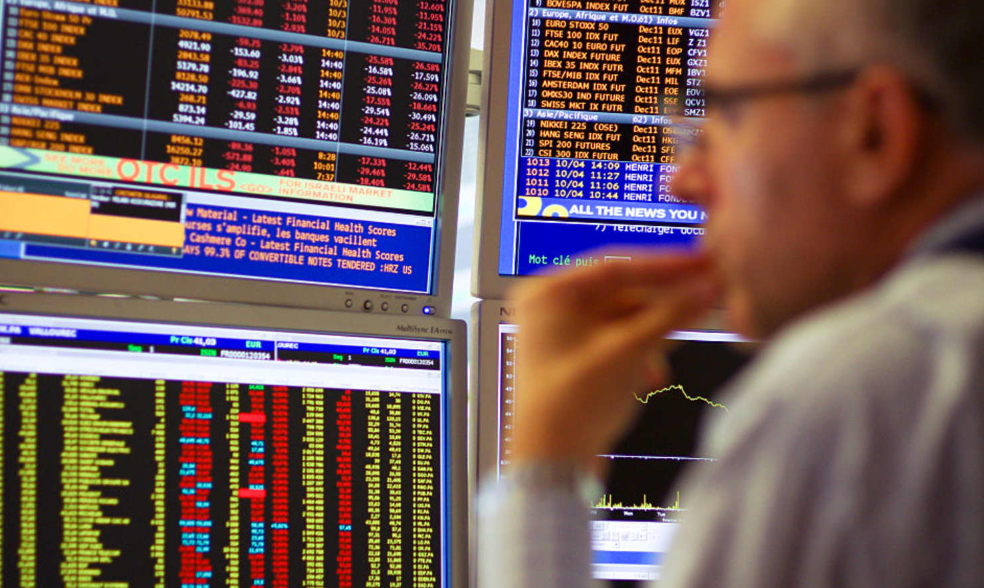
European shares started the week on weaker footing as investors reacted to renewed military tensions between the United States and Iran, prompting another wave of cautious trading across regional equity markets. Rising geopolitical uncertainty, combined with a sharp increase in oil prices, encouraged investors to reduce exposure to risk-sensitive assets while shifting attention toward sectors expected to benefit from higher energy prices.
The decline in European shares reflects a broader pattern seen whenever geopolitical events threaten global economic stability. Although corporate earnings and monetary policy remain key drivers of long-term market performance, sudden geopolitical developments often reshape short-term investor behaviour.
According to Reuters, the pan-European STOXX 600 index edged lower after reports of fresh military strikes involving the United States and Iran raised concerns over a wider regional conflict.
Geopolitical Risk Returns to Centre Stage
The latest weakness in European shares follows escalating military action in the Middle East, where reciprocal strikes between the United States and Iran have increased fears of further instability across the region.
Financial markets generally respond quickly to geopolitical uncertainty because conflict can affect trade routes, commodity prices, inflation expectations, and business confidence. This latest episode has been no exception.
Interestingly, the market reaction extended beyond energy commodities. Investors also reassessed exposure to cyclical sectors that typically perform best during periods of economic stability.
As uncertainty rises, portfolio managers often seek greater balance by reducing positions in industries considered more vulnerable to global shocks.
STOXX 600 Faces Broad-Based Selling Pressure
The STOXX 600, widely regarded as a benchmark for European shares, recorded modest losses as most major regional markets traded lower.
Germany's DAX, France's CAC 40, and several other European indices experienced declines as investors adopted a more defensive stance. While the overall market weakness remained relatively contained, sector performance varied considerably.
Energy companies outperformed following the sharp increase in crude oil prices, supported by expectations that higher oil prices could strengthen earnings for producers and integrated energy firms. Meanwhile, travel, consumer discretionary, and industrial shares generally faced greater selling pressure due to concerns over rising fuel costs and slower economic activity.
- Outperformers: Energy and integrated oil producers
- Underperformers: Travel, consumer discretionary, and industrials
- Steady performers: Healthcare and utilities
That divergence illustrates how geopolitical developments rarely affect every sector equally.
Oil Prices Add Another Layer of Uncertainty
One of the primary reasons European shares weakened was the simultaneous jump in global oil prices. Brent crude climbed sharply after investors considered the possibility that military tensions could eventually disrupt energy exports from the Middle East.
Although no significant supply interruption has yet occurred, markets continue assigning a geopolitical premium to crude prices because of the strategic importance of the Strait of Hormuz.
Let that sink in. Even the possibility of disruption can influence inflation expectations across major economies. For European businesses, higher energy costs may place additional pressure on operating expenses, particularly within manufacturing, transportation, and logistics sectors.
Investors Balance Geopolitics and Monetary Policy
The recent decline in European shares comes during a period when investors are already evaluating interest rate expectations across several major economies.
Inflation has gradually moderated compared with previous years, allowing central banks to consider more balanced monetary policy decisions. However, rising energy prices could complicate that outlook if sustained increases begin feeding into broader consumer prices.
As a result, markets are now balancing two competing forces:
- Improving inflation trends supporting a more accommodative policy environment over time
- Geopolitical risks threatening to reverse that progress through higher commodity prices
This combination has encouraged investors to remain cautious rather than aggressively increase equity exposure.
Defensive Sectors Attract Renewed Interest
Periods of geopolitical uncertainty frequently encourage investors to rotate toward sectors considered more resilient.
Healthcare, utilities, and energy companies often outperform during such episodes because their earnings tend to be less sensitive to fluctuations in consumer spending and economic growth. That trend was once again visible as European shares traded lower.
Energy stocks benefited from stronger oil prices, while more economically sensitive industries struggled to attract buying interest. Financial institutions also remained under close observation as investors assessed the potential implications of higher inflation expectations and future interest rate decisions.
Global Markets Remain Closely Connected
The weakness in European shares also reflects the increasingly interconnected nature of modern financial markets. Events occurring thousands of kilometres away can rapidly influence investor behaviour across Europe, Asia, and North America.
Institutional investors continuously evaluate geopolitical developments alongside economic data, corporate earnings, and monetary policy. As new information becomes available, capital is quickly reallocated between asset classes and regions.
That explains why European markets reacted almost immediately to developments in the Middle East despite no direct impact on European corporate fundamentals. Market sentiment often changes faster than economic conditions themselves.
Caution Continues to Shape Market Direction
For now, the outlook for European shares remains closely tied to geopolitical developments.
Should diplomatic efforts reduce tensions between the United States and Iran, investor confidence could improve, allowing markets to refocus on corporate earnings and economic fundamentals. Conversely, further military escalation may continue supporting energy prices while weighing on broader equity indices.
The latest decline highlights how quickly investor sentiment can shift when geopolitical uncertainty enters the equation. Although underlying economic conditions remain relatively stable across much of Europe, markets are once again reminding investors that external events can temporarily overshadow domestic fundamentals.
As traders monitor developments in the Middle East, volatility is likely to remain elevated, with energy prices, inflation expectations, and geopolitical headlines continuing to influence the direction of European shares.
DISCLAIMER: Derivative products carry high risk and may result in the loss of your entire invested capital. Before trading, ensure you fully understand the legal framework, product characteristics, and your broker’s trading rules. Always trade responsibly and with caution.
RISK WARNING: Margin trading with leverage is not suitable for all investors due to its high risk. THERE ARE NO GUARANTEED RETURNS in trading. Beware of any claims promising assured profits. Only use capital you can afford to lose. Before engaging in any transaction, ensure you understand the risks and assess both your experience and risk tolerance.
