

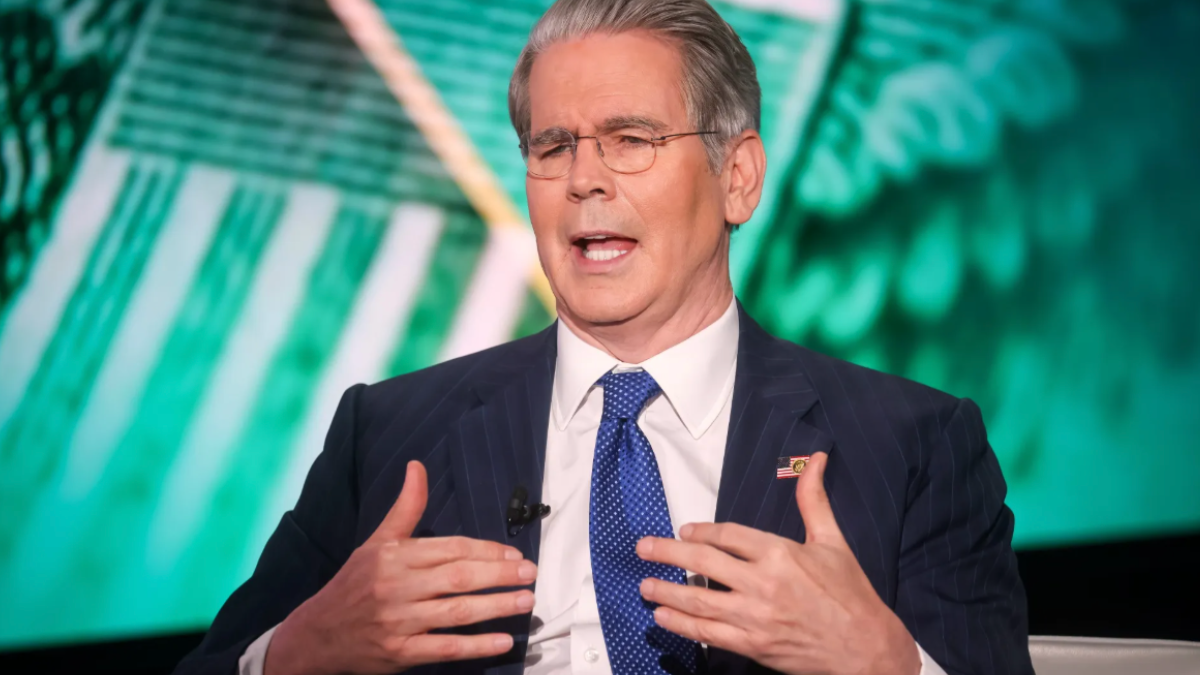
 US Treasury Secretary Cites Japan in Rate Surge
The US Treasury Secretary suggested a sharp rise in U.S. bond yields may be linked to market turbulence in Japan, offering a new perspective on a day of broad selling across American financial assets. According to Davos Forum reports.
A "Triple Decline" and an Unusual Explanation
On a day marked by a "triple market decline"—with U.S. stocks, bonds, and the dollar all falling—the US Treasury Secretary challenged the dominant narrative. While many blamed new tariff threats from the Trump administration, he pointed to cross-Pacific financial contagion. "It is very difficult to separate out the spillover effects from Japan," Secretary Bescent stated, reframing the day's market stress.
"It is equivalent to about 0.5% in terms of U.S. long-term interest rates," the US Treasury Secretary said, quantifying the impact from Japan's bond market.
The Japanese Catalyst: 27-Year Yield Highs
The Secretary's argument hinges on dramatic moves in Japan. Yields on Japanese 10-year bonds soared to 2.380%, a 27-year high, driven by fears that promised tax cuts will worsen the country's fiscal health. This sell-off created a ripple effect.
He revealed ongoing contact with Japanese officials, expecting them to soon act to calm markets.Reassessing Global Rate Drivers
The comments from the US Treasury Secretary signal a shift in how policymakers view market dynamics. The immediate triggers for U.S. rate moves may now lie as much in foreign fiscal dramas as in domestic data. This interconnectedness presents a new challenge for investors, who must now monitor:
- Fiscal policy debates in major economies like Japan.
- Synchronized sell-offs in global bond markets.
- Official statements aimed at containing market volatility across borders.
A New Paradigm for Market Volatility
Ultimately, the US Treasury Secretary has underscored a fragile new paradigm. Volatility can transmit instantly from one major economy's bond market to another, bypassing traditional trade or currency channels. For markets, this means the source of the next interest rate spike may be external. For the US Treasury Secretary and his global counterparts, it necessitates unprecedented levels of policy coordination to prevent localized fiscal concerns from spiraling into worldwide financial instability.
