

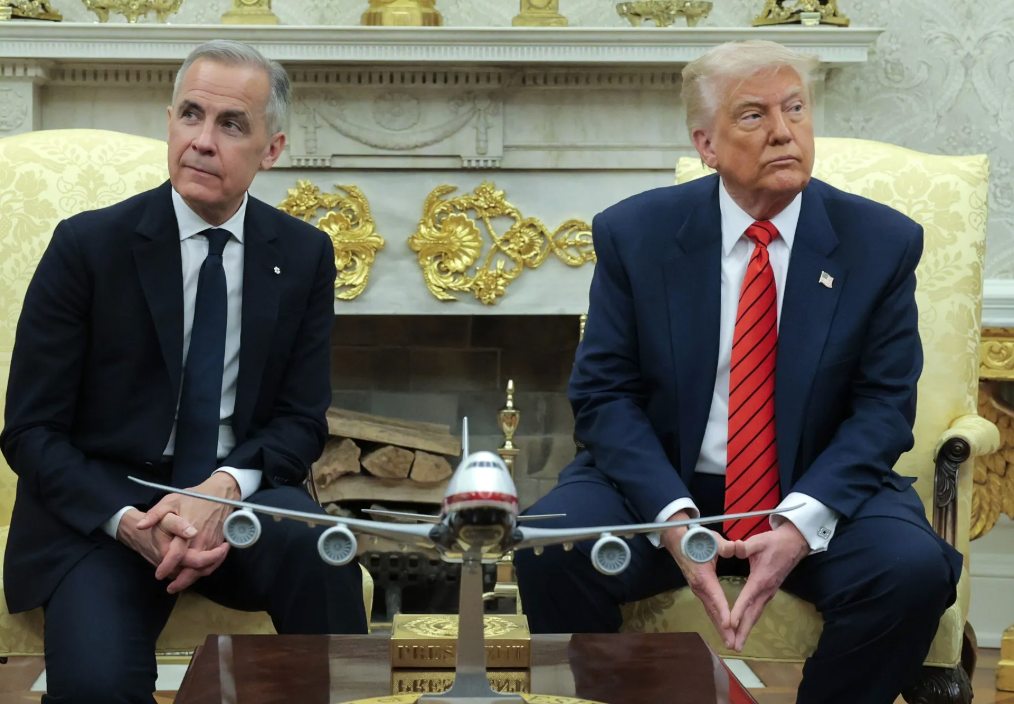
 US-Canada Trade Talks Resume Amid Fresh USMCA Uncertainty
The future of US-Canada trade talks has moved back into the spotlight after U.S. President Donald Trump said he was unconcerned about the future of the United States-Mexico-Canada Agreement (USMCA), even as officials from Washington and Ottawa prepare for another round of negotiations.
The comments have introduced a fresh layer of uncertainty into North American trade relations. While discussions between the two countries are expected to continue, Trump's remarks have prompted investors to reassess the direction of regional trade policy and its potential implications for businesses operating across the continent.
Trade agreements often provide stability for companies making long-term investment decisions. When questions emerge over their future, markets naturally pay closer attention. That is precisely why the latest US-Canada trade talks have become one of the most closely followed developments this week.
Why the US-Canada Trade Talks Matter
The US-Canada trade talks extend well beyond tariffs. The United States and Canada maintain one of the world's largest bilateral trading relationships, with hundreds of billions of dollars in goods and services crossing the border every year. Industries including automotive manufacturing, agriculture, energy, industrial equipment and consumer products all depend heavily on predictable trade rules.
The USMCA, which replaced the North American Free Trade Agreement in 2020, established updated provisions covering:
- Digital trade
- Labour standards
- Automotive production requirements
- Dispute resolution mechanisms
Trump's latest comments have raised questions about whether future trade negotiations could result in significant changes to that framework. For businesses, uncertainty surrounding the US-Canada trade talks may influence investment planning, supply chain decisions and cross-border expansion strategies.
Trump's Remarks Raise Fresh Questions
According to Reuters, Trump indicated that preserving the USMCA was not a priority for him as negotiations with Canada continue. Although negotiations remain scheduled, the remarks suggest that Washington could seek a different approach to future trade arrangements.
Interestingly, such statements often carry weight even before any official policy changes occur. Financial markets frequently react to expectations rather than confirmed decisions. Investors therefore monitor political messaging almost as closely as formal negotiations.
That helps explain why the latest developments surrounding the US-Canada trade talks have drawn considerable market attention despite the absence of immediate policy announcements.
Canada Faces Another Round of Negotiations
Canadian officials are expected to continue discussions with their U.S. counterparts in an effort to preserve stable economic ties. Canada relies heavily on access to the U.S. market, with exports to the United States accounting for a significant share of its international trade.
A constructive outcome from the US-Canada trade talks would help reduce uncertainty for exporters and manufacturers operating across both countries.
Negotiations involving trade policy are rarely straightforward. Market participants understand that headline risk can remain elevated throughout the process, especially when political priorities shift.
Market Reaction Could Extend Beyond North America
Trade negotiations between major economies rarely remain isolated events. Should the US-Canada trade talks become increasingly contentious, investors may reassess broader expectations for global trade growth.
Currency markets are particularly sensitive to these developments. The Canadian dollar often reacts to trade headlines because Canada's export sector remains closely tied to U.S. demand. Any perception that negotiations could become more difficult may contribute to increased volatility in the USD/CAD currency pair.
Equity markets could also respond selectively. Companies with substantial cross-border supply chains, especially within the automotive and manufacturing sectors, may experience greater share price volatility if investors begin pricing in potential disruptions. Meanwhile, businesses focused primarily on domestic markets could remain relatively insulated from direct trade-related risks.
Businesses Will Watch Supply Chains Closely
One of the most important aspects of the US-Canada trade talks involves supply chain stability. Modern manufacturing rarely occurs within a single country. Vehicle components, industrial machinery and consumer goods often cross the U.S.-Canada border multiple times before reaching final consumers.
Changes to tariffs, customs procedures or trade regulations could increase production costs for manufacturers throughout North America. That possibility explains why businesses are following every stage of the US-Canada trade talks with considerable interest.
Even modest changes to trading rules can affect pricing decisions, investment plans and long-term production strategies.
Investors Remain Focused on Policy Direction
For investors, the latest headlines arrive at a time when markets are already navigating multiple sources of uncertainty, including inflation, interest rate expectations and slowing global growth. Trade policy now adds another variable.
- If negotiations ultimately produce greater clarity, markets could respond positively as uncertainty declines.
- Prolonged discussions or proposals that significantly alter existing trade arrangements may contribute to higher market volatility.
Businesses value predictability almost as much as favourable policy. Stable rules often encourage investment, while prolonged uncertainty tends to delay corporate decision making. That broader principle explains why developments surrounding the US-Canada trade talks continue to receive close attention from global investors.
A Broader Perspective
The latest US-Canada trade talks highlight how political developments can quickly influence financial markets, even before concrete policy changes take effect. While negotiations remain ongoing, Trump's comments have introduced fresh questions about the future of North American trade and the role of the USMCA.
For investors, businesses and policymakers, the coming weeks may provide greater clarity. Until then, attention is likely to remain firmly fixed on the progress of negotiations, official statements from both governments and any signals that could shape the next chapter of economic relations between the United States and Canada.
