

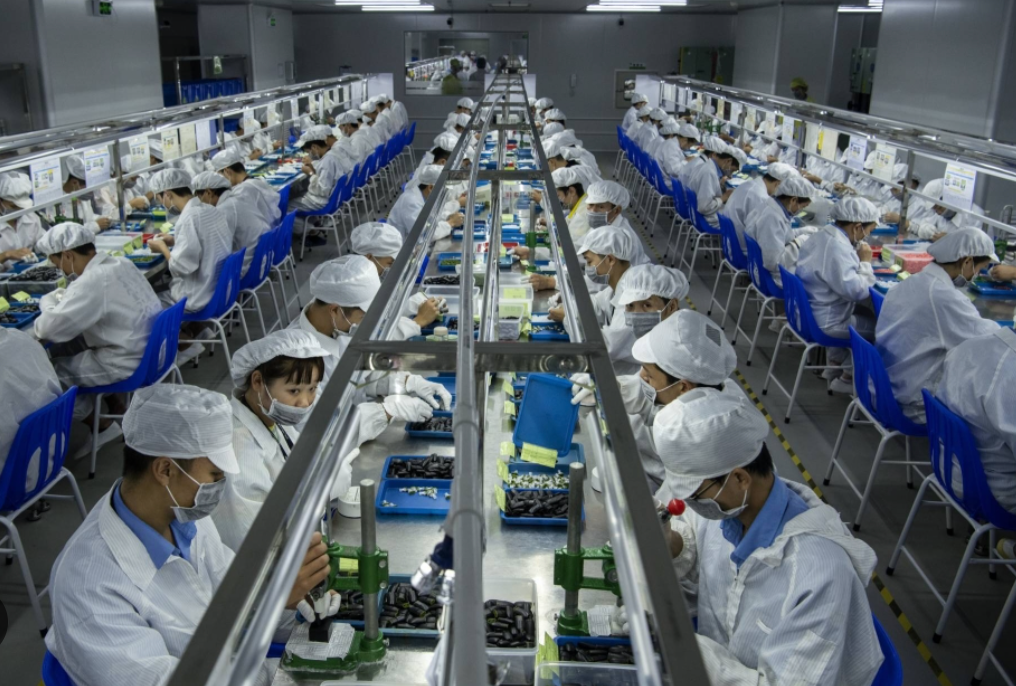
 How One China Factory Adapts to Tariffs and Trade Tensions
China manufacturing is once again under the spotlight. According to Reuters, a report published on April 6, 2026 highlights how one China factory has adapted to years of tariffs, policy shifts, and ongoing trade tensions with the United States. What once appeared to be temporary disruptions have evolved into a long-term operating reality.
Interestingly, the story is less about survival in crisis mode and more about adaptation. The China factory did not simply wait for conditions to improve. It adjusted its pricing, supply chain, and customer base. What began as a reaction has turned into a strategy.
What began as a reaction to tariffs has turned into a deliberate, long-term strategy for China factory operators navigating an uncertain global trade environment.
China Factory Adjusts to Tariffs Impact
The tariffs introduced during earlier phases of the US-China trade conflict continue to shape every China factory today. For many producers, tariffs increased costs and reduced competitiveness in key export markets, particularly in the United States.
In response, the China factory featured in the Reuters report shifted part of its production and sourcing strategy. Some operations were diversified to reduce dependency on direct exports affected by tariffs. Others focused on improving efficiency to maintain margins despite higher costs.
China manufacturing has shown a clear pattern of resilience in this environment. Rather than exiting the market, many China factory operators have chosen to adapt. This includes:
- Renegotiating supplier contracts to reduce input costs
- Optimizing logistics and distribution channels
- Targeting alternative international markets beyond the United States
- Building greater flexibility into production scheduling
Supply Chain Shifts Reshape China Factory Operations
One of the most notable outcomes of prolonged tariffs is the restructuring of global supply chains. A China factory is no longer operating in the same ecosystem as before. The entire sourcing and distribution framework has fundamentally changed.
Factories are increasingly exploring Southeast Asia and other regions as complementary production bases. This allows businesses to maintain access to global markets while mitigating tariff exposure. For many operators, a single China factory now functions as part of a broader, multi-country production network.
At the same time, domestic supply chains within China have become more integrated. Companies are relying more on local suppliers to reduce external vulnerabilities. This shift has quietly strengthened internal industrial networks and reduced dependence on imported components.
These adjustments are not temporary fixes. They represent structural changes in how every China factory operates in a more fragmented global trade environment. According to Reuters, these shifts are now considered permanent features of the industry's new operating model.
Balancing Cost Pressures and Market Demand
Tariffs have introduced persistent cost pressures across China manufacturing. For the average China factory, raw materials, labor, and compliance costs have all become more complex to manage simultaneously.
To offset these pressures, factories are adopting a mix of strategies. The approaches vary depending on the size and sector of each China factory, but common responses include:
- Passing a portion of increased costs to international customers through revised pricing agreements
- Investing in automation and advanced manufacturing technologies to improve productivity
- Moving up the value chain by focusing on higher-margin, more specialized products
- Reducing operational overhead through lean manufacturing principles
Demand dynamics also play a critical role. While US demand remains important, a growing number of China factory operators are prioritizing emerging markets. Regions such as Southeast Asia, the Middle East, and Africa are becoming key growth areas. This diversification reduces reliance on any single market and provides a buffer against geopolitical shocks.
Trade Tensions Continue to Influence China Factory Strategy
Trade tensions between the United States and China remain a defining factor for every China factory in the export sector. Policy uncertainty has made long-term planning significantly more complex and has forced manufacturers to rethink traditional business models.
Companies are now building flexibility into their operations at every level. A resilient China factory today maintains multiple sourcing options, adjusts production volumes based on real-time market conditions, and monitors trade policy developments continuously.
Uncertainty itself has become a constant. Businesses operating any China factory are no longer waiting for clarity before making decisions. They are planning around volatility as a fixed condition, not a temporary challenge.
According to Reuters, manufacturers who treat uncertainty as a permanent feature of the business environment are outperforming those who continue to wait for trade conditions to stabilize.
This shift in mindset reflects a broader transformation. The modern China factory is evolving from a cost-driven model to a more strategic, risk-aware approach that incorporates geopolitical analysis into everyday operational decisions.
A New Normal for the China Factory
The experience of one factory reflects a wider trend across the industry. A China factory today is no longer reacting to tariffs as isolated events. It is adapting to a new normal shaped by ongoing trade tensions and persistent global uncertainty.
The adjustments made today will likely define the industry for years to come. Key structural changes now underway include:
- More regional supply chains that reduce exposure to long-haul trade disruptions
- Flexible production strategies that allow rapid reallocation of output across markets
- Risk management frameworks embedded into the core decision-making of every China factory
- Greater investment in technology to offset rising labor and compliance costs
For investors and market participants, this evolution carries important implications. Changes in how a China factory operates can influence global trade flows, currency movements, and even inflation trends across interconnected economies.
The question now is not whether tariffs will disappear. It is how effectively a China factory can continue to adapt in an environment where uncertainty remains a permanent feature of global commerce. Based on current evidence, the answer appears to be: more effectively than many predicted.
