

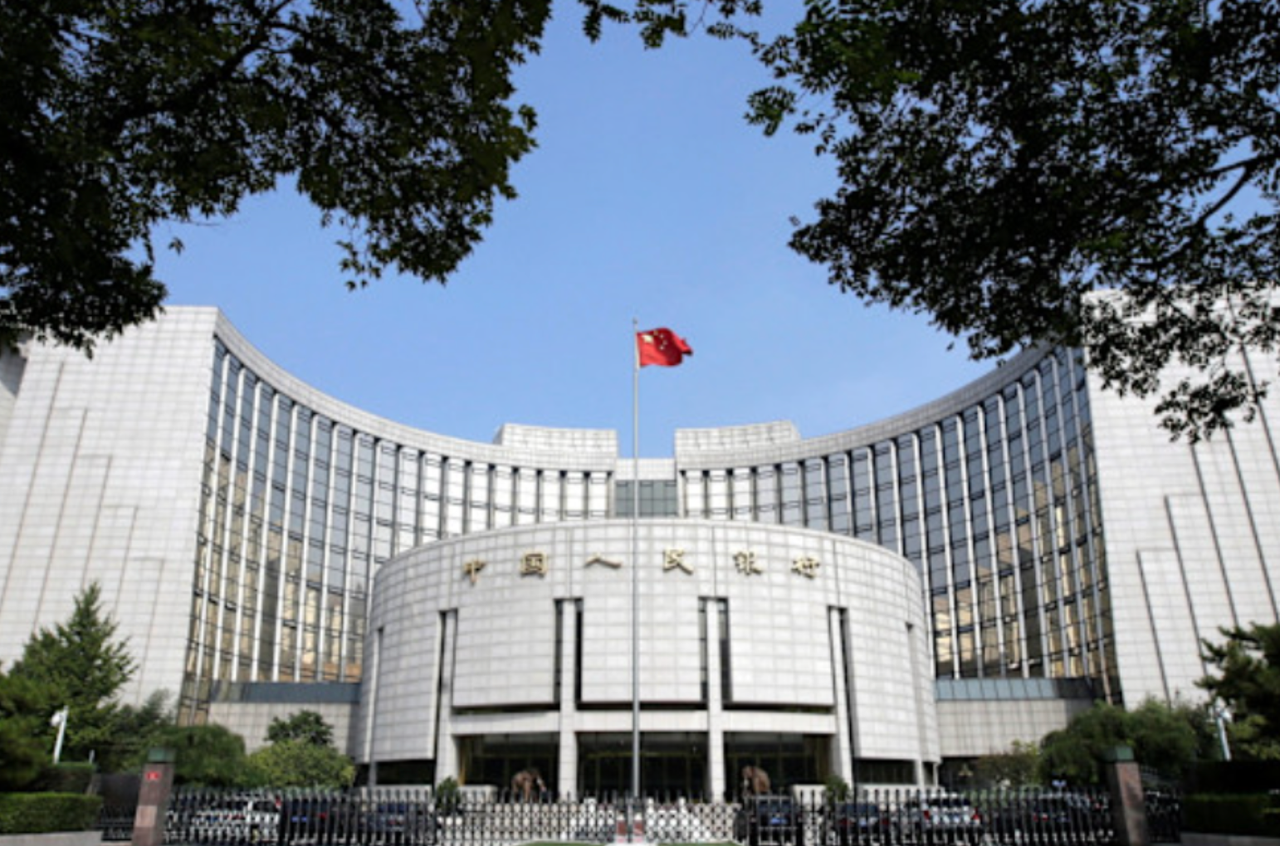
 China's Central Bank Pledges Growth Support
China's Central Bank has moved to reassure markets by pledging stronger financial support to revive domestic demand, signalling a renewed policy focus on economic stabilisation. The announcement, reported by Reuters on 11 February 2026, highlights growing concern among policymakers that consumption and private investment remain subdued despite earlier stimulus measures.
For global investors, the response from China's Central Bank carries weight far beyond local markets. Domestic demand has become a central pillar of China's growth strategy, particularly as external demand faces pressure from trade tensions and slower global expansion.
Policy Signals From China's Central Bank
China's Central Bank emphasised its intention to ensure ample liquidity and targeted financial support for key sectors of the economy. Officials pointed to measures aimed at supporting small businesses, stabilising property markets, and encouraging consumer spending through improved credit access.
Interestingly, the messaging from China's Central Bank reflects a shift in tone. Rather than relying on broad stimulus, policymakers appear focused on precision tools designed to rebuild confidence. Confidence, not capacity, is increasingly seen as the binding constraint on growth.
The central bank also reiterated its commitment to maintaining reasonable credit growth, suggesting that monetary easing will be calibrated rather than aggressive.
Domestic Demand at the Core of Growth Strategy
Domestic demand has emerged as the weakest link in China's post-pandemic recovery. While industrial output and exports have shown resilience at various points, household consumption has lagged. Property sector stress, cautious spending behaviour, and labour market uncertainty have weighed on sentiment.
China's Central Bank acknowledged these challenges directly. By prioritising financial support for consumption and private enterprise, policymakers aim to shift growth drivers inward. This approach aligns with broader government objectives to reduce reliance on exports and heavy infrastructure investment.
According to Financial Times, from a market perspective, stronger domestic demand could provide a more sustainable foundation for growth, though progress is likely to be gradual.
Implications for Financial Markets
The response from China's Central Bank has implications across asset classes. Equity markets may find support if policy measures translate into improved earnings expectations, particularly for consumer and service-oriented companies.
Bond markets, meanwhile, are watching closely for signs of further rate adjustments or liquidity injections. While officials stopped short of announcing specific cuts, the commitment to supportive conditions suggests limited tolerance for tightening financial stress.
Currency markets also remain sensitive. Stable policy signals from China's Central Bank could help limit volatility in the yuan, especially amid shifting global interest rate dynamics.
Market impacts include:
- Equities - Support for consumer and service sector stocks
- Bonds - Anticipation of continued accommodative policy
- Currency - Reduced yuan volatility expectations
- Commodities - Potential demand boost for industrial metals
Global Context and External Pressures
China's renewed policy focus comes against a complex global backdrop. Slowing growth in major economies, geopolitical uncertainty, and evolving trade relationships continue to shape external demand.
By reinforcing domestic demand, China's Central Bank aims to insulate the economy from external shocks. This strategy also reflects recognition that global conditions may remain uneven throughout 2026.
According to Bloomberg, for commodity markets, stronger Chinese consumption could support prices for industrial metals and energy. However, analysts caution that policy transmission takes time, and near-term effects may be muted.
The strategic pivot by China's Central Bank represents an acknowledgment that external demand cannot be relied upon as the primary growth engine in the current global environment.
Confidence as a Policy Objective
Perhaps the most significant takeaway lies in the emphasis on confidence. China's Central Bank has made clear that financial conditions alone are not enough. Businesses and households must feel secure enough to spend and invest.
This distinction matters. Previous stimulus cycles focused on scale. The current approach prioritises effectiveness. Whether this strategy succeeds will depend on execution, coordination with fiscal policy, and broader structural reforms.
China's Central Bank is attempting to address psychological barriers to spending:
- Property market uncertainty affecting household wealth perception
- Labour market concerns limiting consumer confidence
- Business sentiment constraints on private investment
- Credit availability versus willingness to borrow
A Measured Policy Pivot
China's Central Bank is signalling resolve without urgency. The message is deliberate, aimed at steadying expectations rather than surprising markets. Such an approach suggests policymakers are balancing growth support with financial stability concerns.
According to Reuters, as domestic demand remains under pressure, further measures may follow. Markets will continue to assess whether policy support translates into tangible economic momentum.
The calibrated approach from China's Central Bank contrasts with previous stimulus episodes, reflecting lessons learned from past cycles where excessive credit growth created financial imbalances.
