

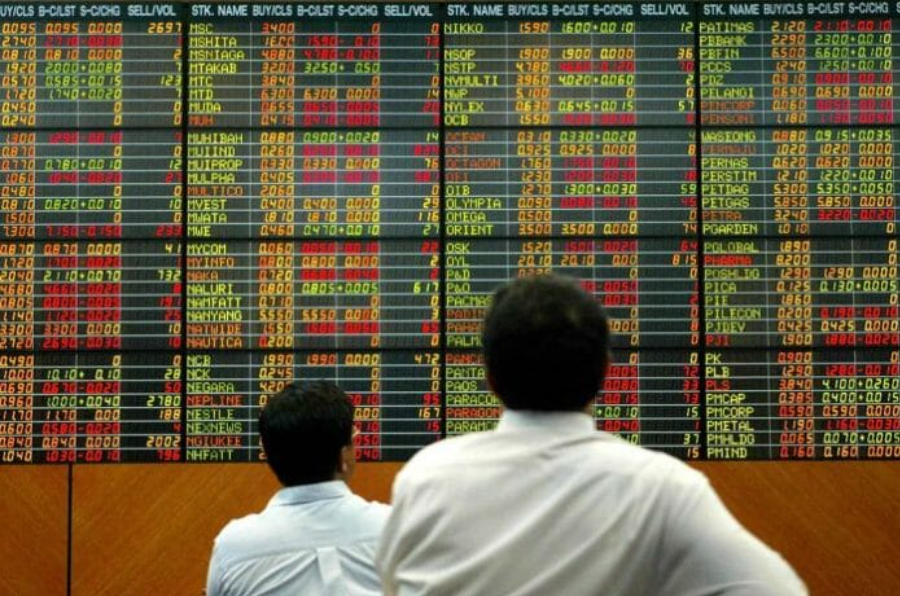
 Asian Shares Fall as Chipmakers Drag Down Regional Markets
Asian shares fall became one of the dominant themes across global financial markets on Thursday as semiconductor stocks weighed heavily on regional benchmarks. Investors adopted a cautious stance ahead of the closely watched US nonfarm payrolls report, while renewed weakness in major chipmakers added pressure to technology shares.
Japan's Nikkei 225, Taiwan's benchmark index and South Korea's Kospi all traded lower during the session, reflecting broad-based caution across Asia. Technology companies, particularly semiconductor manufacturers and suppliers, accounted for much of the decline as investors continued to reassess valuations following an extended rally in artificial intelligence related stocks.
According to Business Times, there was no single event behind the pullback. Instead, several market forces converged at the same time. Economic uncertainty, softer corporate sentiment and anticipation surrounding US monetary policy all encouraged investors to reduce risk exposure before another important round of economic data.
Chipmakers Lead the Regional Decline
The primary reason Asian shares fall across the region was renewed selling pressure in semiconductor stocks.
Taiwan Semiconductor Manufacturing Co. (TSMC), one of the world's largest contract chip manufacturers, traded lower alongside several major suppliers throughout Asia. Japanese chip equipment companies also faced selling as investors locked in profits after months of strong gains linked to artificial intelligence investment.
The semiconductor sector has delivered exceptional returns over the past two years, driven largely by explosive demand for AI infrastructure. However, elevated valuations mean investors have become increasingly sensitive to any indication that growth could moderate.
Even relatively modest declines among leading chipmakers were enough to pull broader equity indices lower because technology stocks now represent a significant share of many Asian markets.
Investors Turn Their Attention to US Jobs Data
Another factor explaining why Asian shares fall is the upcoming US employment report.
Financial markets around the world are waiting for fresh labour market data that could provide important clues about the Federal Reserve's next policy decision. Earlier this week, weaker-than-expected private payroll figures from ADP suggested hiring momentum may be slowing in the United States.
That report strengthened expectations that the Federal Reserve could eventually begin reducing interest rates if economic conditions continue to soften. However, investors remain cautious.
The official nonfarm payrolls report often produces larger market reactions because it provides a more comprehensive assessment of employment trends. A stronger reading could reduce expectations for interest rate cuts, while weaker figures may further support the case for monetary easing.
AI Optimism Meets Valuation Concerns
Artificial intelligence continues to reshape investor expectations across the technology sector.
Demand for AI chips remains exceptionally strong, supported by continued spending from major cloud providers and enterprise customers. Companies such as Nvidia have reported record revenues, while suppliers throughout Asia continue to benefit from long-term investment in advanced semiconductor manufacturing.
Yet even strong structural trends cannot eliminate short-term market volatility. Recent trading suggests investors are becoming more selective. Rather than buying every technology company associated with AI, portfolio managers are increasingly evaluating:
- Earnings quality
- Valuation multiples
- Future revenue expectations
That shift may explain why Asian shares fall despite the broader optimism surrounding artificial intelligence. Markets rarely move in straight lines. Periods of consolidation often emerge after extended rallies, particularly in sectors that have significantly outperformed the wider market.
Global Market Sentiment Remains Cautious
Beyond the technology sector, broader market sentiment has also become more defensive.
Investors continue monitoring geopolitical developments, trade policy discussions and central bank decisions across several major economies. These factors have encouraged many institutional investors to temporarily reduce exposure to higher-risk assets while awaiting greater clarity.
Bond markets also reflected this cautious positioning. US Treasury yields remained relatively stable as traders balanced weaker employment indicators against persistent inflation concerns. Currency markets showed limited movement, while commodity prices delivered mixed performance.
The combination of these factors contributed to the broader environment in which Asian shares fall, even though economic conditions across much of Asia remain relatively stable.
Semiconductor Stocks Continue to Drive Market Direction
One notable feature of today's trading session is the growing influence of semiconductor companies on overall market performance.
Technology stocks now account for a substantial proportion of many regional indices. As a result, relatively small movements in leading chipmakers can significantly affect broader equity benchmarks. This trend has become increasingly apparent over the past year.
- When semiconductor stocks rally, regional markets often follow.
- When major chip manufacturers weaken, broader selling pressure tends to emerge, even when other sectors remain resilient.
For investors, this means monitoring semiconductor earnings, production forecasts and AI investment trends has become increasingly important when evaluating overall market direction.
Markets Await the Next Catalyst
Although Asian shares fall dominated today's headlines, investors recognise that market sentiment could change quickly depending on upcoming economic data.
The US employment report remains the immediate focus. Beyond that, investors will continue assessing inflation trends, Federal Reserve commentary and corporate earnings as the second-quarter reporting season approaches.
Technology companies are also expected to provide updated guidance regarding AI spending, semiconductor demand and capital expenditure during upcoming earnings announcements. Those updates could determine whether recent weakness represents a temporary pause or the beginning of a broader market rotation. For now, caution appears to be the prevailing theme.
A Market Searching for Direction
The latest decline in Asian shares fall reflects a market balancing strong long-term optimism with near-term uncertainty. Semiconductor companies remain central to the investment narrative, supported by continued demand for AI infrastructure. At the same time, elevated valuations leave little room for disappointment.
As investors await fresh economic data from the United States, market direction is likely to remain closely tied to expectations surrounding interest rates and corporate earnings. Short-term volatility may continue, but the longer-term outlook for the technology sector will ultimately depend on whether earnings growth continues to justify current valuations.
For now, the semiconductor industry remains firmly at the centre of global market attention, making every development within the sector increasingly significant for investors across Asia and beyond.
