

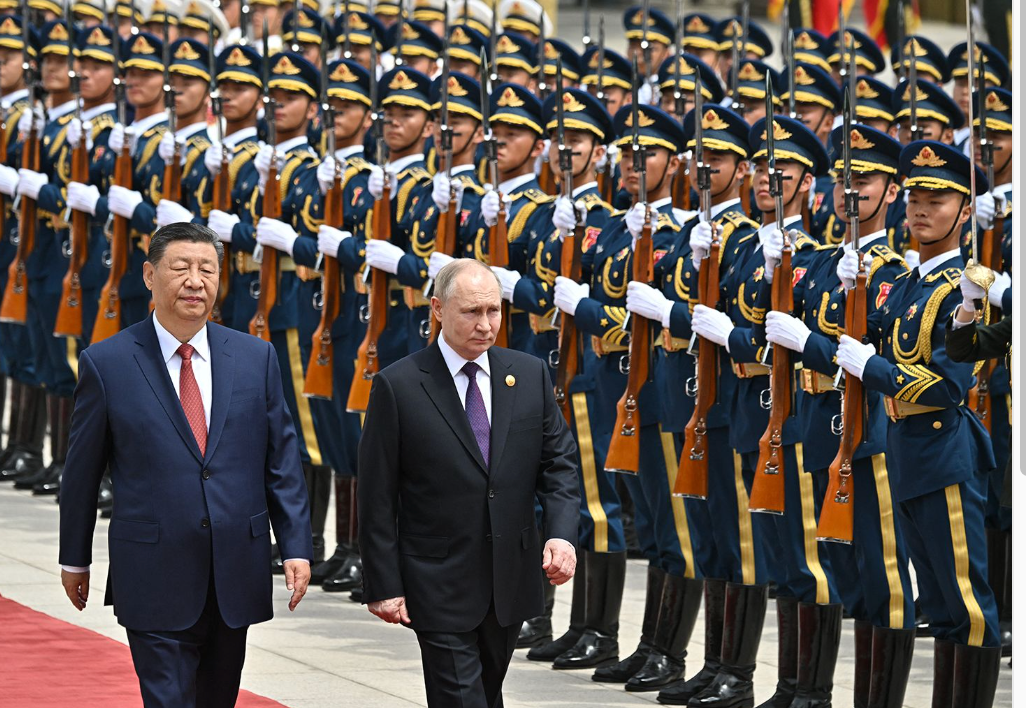
 Trump Xi Putin: Market Impact of Neutral Iran Stance
Trump's comments on China and Russia's neutral stance in the Iran conflict highlight shifting geopolitical dynamics that investors are closely watching. Geopolitical developments remained a major focus for investors on 18 June 2026 after U.S. President Donald Trump publicly thanked Chinese President Xi Jinping and Russian President Vladimir Putin for maintaining what he described as a neutral stance in the Iran conflict.
The comments came during a period of heightened attention on Middle East developments, energy markets, and international diplomacy. While global investors have primarily focused on military tensions involving Iran and recent ceasefire discussions, the remarks by Trump introduced another important dimension to the market narrative: the role of major world powers in preventing broader geopolitical escalation.
For financial markets, diplomacy often carries significance beyond political headlines. Investor sentiment, commodity prices, currency movements, and risk appetite can all be influenced by how major nations position themselves during periods of international uncertainty.
The latest developments suggest that the neutral stance in the Iran conflict adopted by Xi and Putin may be helping to reduce concerns about a wider global confrontation.
Why the Neutral Stance in the Iran Conflict Matters
The neutral stance in the Iran conflict has attracted significant attention because both China and Russia maintain strategic relationships with Iran while also possessing considerable influence on the global stage. According to Reuters, the diplomatic posture of Beijing and Moscow has been described by analysts as a deliberate effort to avoid direct alignment with either side of the conflict.
In previous geopolitical crises, markets often reacted sharply when major powers aligned themselves directly with opposing sides. Such scenarios can increase the likelihood of sanctions, military escalation, trade disruptions, and prolonged uncertainty.
This time, however, Xi and Putin have largely emphasized diplomatic engagement and restraint. The acknowledgment by Trump of their position reflects the importance Washington places on preventing the conflict from expanding into a broader international crisis.
As a result, the position held by Trump, Xi, and Putin within the current geopolitical framework has become an important factor influencing investor expectations. The dynamic between these three leaders is now central to how analysts are interpreting near-term market risk.
Market Reaction Remains Cautiously Positive
Financial markets generally prefer stability and predictability. The prospect of major global powers remaining outside direct involvement in the conflict has helped support investor confidence in recent trading sessions.
Energy markets, which experienced heightened volatility during the initial stages of the Iran crisis, have shown signs of stabilization. Traders continue monitoring developments closely, but fears of an immediate multinational escalation have eased somewhat.
The neutral stance endorsed by Trump in his comments about Xi and Putin has also contributed to improved sentiment across equity markets. Major stock indices have demonstrated resilience as investors assess the likelihood that diplomatic efforts could prevent further deterioration in international relations.
- Equity markets have shown signs of stabilization amid reduced escalation fears
- Energy prices have moderated following diplomatic signals from Beijing and Moscow
- Safe-haven demand for gold remains present but has not surged aggressively
- Currency markets have reflected a modest improvement in overall risk appetite
That does not mean risks have disappeared. Geopolitical situations can evolve rapidly. A single development has the potential to alter market expectations within hours. Nevertheless, the absence of direct involvement from China and Russia has reduced one of the scenarios investors feared most.
Implications for Oil and Commodity Markets
Oil remains one of the most sensitive assets during periods of geopolitical uncertainty. The Middle East continues to play a critical role in global energy supply, making regional developments highly relevant to commodity traders.
The restraint demonstrated by both Xi and Putin, as acknowledged by Trump, has helped moderate concerns regarding broader disruptions to international energy flows. If major powers had become actively involved, investors may have priced in a significantly higher geopolitical risk premium across crude oil markets.
Sometimes what countries choose not to do can be just as influential as their direct actions. The decision by China and Russia to remain neutral has, in practical terms, removed a potential accelerant from an already volatile situation.
Gold markets have exhibited similar behavior. Safe-haven demand remains present, but the absence of escalating involvement from China and Russia has prevented a more aggressive flight toward defensive assets. The interplay between Trump, Xi, and Putin on this matter continues to shape how commodity traders are positioning themselves.
What Trump's Comments Signal to Investors
The decision by Trump to publicly recognize the positions of Xi and Putin may carry broader diplomatic significance. Markets often interpret public statements from political leaders as indicators of future policy direction. By highlighting China's and Russia's restraint, Trump appeared to emphasize cooperation and stability rather than confrontation.
For investors, such messaging can influence expectations surrounding international trade, sanctions policy, and diplomatic negotiations. According to Reuters, senior market strategists noted that the tone of the statement was notably conciliatory, which markets interpreted as a positive signal regarding near-term geopolitical risk.
The comments may also indicate a desire among major powers to prevent geopolitical tensions from undermining global economic growth. At a time when inflation, interest rates, and economic expansion remain central market concerns, stability has become an increasingly valuable asset.
- Diplomatic signaling: Public acknowledgment by Trump of Xi and Putin's restraint reduces immediate fears of superpower confrontation
- Trade implications: Positive diplomatic signals involving China reduce concerns about near-term trade disruptions
- Energy security: Russia's neutral stance limits upward pressure on global oil and gas prices
- Market confidence: Combined restraint from all three leaders supports broader investor risk appetite
Broader Impact on Global Markets
The importance of the diplomatic framework involving Trump, Xi, and Putin extends beyond the Middle East. Global financial markets are deeply interconnected. Geopolitical events can affect supply chains, commodity prices, foreign exchange markets, and investor confidence across multiple regions.
Companies involved in manufacturing, transportation, technology, and international trade all have an interest in avoiding prolonged geopolitical disruptions. As a result, investors continue to monitor diplomatic developments alongside traditional economic indicators.
Recent market behavior suggests participants are becoming more sensitive to geopolitical headlines than they were earlier in the year. Every statement from political leaders now carries the potential to influence short-term market direction. This environment places greater importance on diplomatic signals, including the positions adopted by figures such as Trump, Xi, and Putin.
Diplomacy Remains a Key Market Driver
The neutral stance in the Iran conflict adopted by China and Russia has emerged as an important factor shaping market sentiment during a period of geopolitical uncertainty. The public recognition of this position by Trump underscores the growing role that diplomacy between Trump, Xi, and Putin plays in influencing investor expectations.
While challenges remain and tensions have not fully disappeared, markets have responded positively to signs that major powers are seeking stability rather than escalation. The relationship between these three world leaders has become a key variable that financial analysts are tracking alongside traditional economic metrics.
Investors will continue monitoring developments involving Iran, the United States, China, and Russia in the weeks ahead. For now, diplomatic restraint appears to be providing a measure of confidence at a time when financial markets remain highly sensitive to geopolitical risk. The triangular dynamic between Trump, Xi, and Putin will remain a defining theme for global markets in the near term.
