

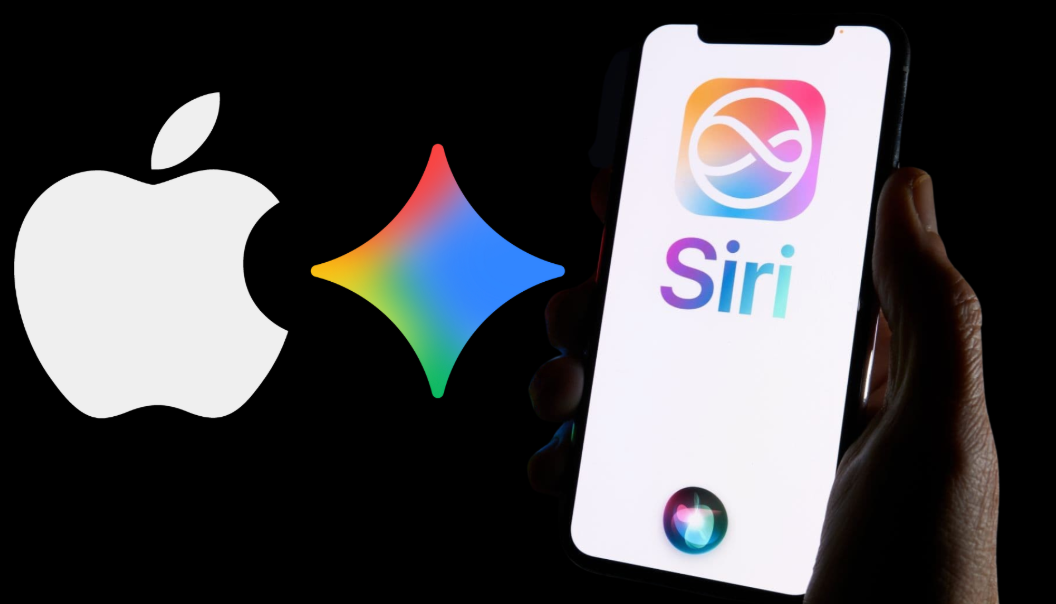
 Apple AI Strategy: Siri Rebuilt With Google AI
The artificial intelligence race entered a new phase this week after reports revealed details of Apple's efforts to rebuild Siri using technology connected to Google's AI models. The development has drawn significant attention across financial markets and the technology sector because it highlights a notable shift in Apple's approach to artificial intelligence.
For years, Apple maintained a reputation for building most of its critical technologies internally. Yet the latest reports suggest that the company's evolving Apple AI Strategy may involve a greater willingness to leverage external AI capabilities when necessary. The move comes as competition intensifies among the world's largest technology companies, all seeking leadership positions in generative AI and intelligent assistants.
Investors, analysts, and developers are paying close attention. Siri has long been viewed as one of Apple's most important consumer-facing products, yet many critics argued that it lagged behind newer AI-powered assistants developed by competitors. Interestingly, the latest developments suggest Apple is determined to close that gap.
Why Apple's AI Direction Matters
Artificial intelligence has become one of the most influential themes in global equity markets during the past three years. Companies linked to AI infrastructure, semiconductor manufacturing, cloud computing, and software development have attracted significant investor interest.
Against this backdrop, the Apple AI Strategy carries weight beyond the performance of Siri itself.
Apple serves more than a billion active devices worldwide. Any meaningful enhancement to Siri could affect user engagement, software adoption, hardware sales, and future service revenue. When a company of Apple's scale introduces AI improvements, the impact often extends across the broader technology ecosystem.
The reported rebuild of Siri reflects the reality that AI development has become increasingly complex and resource-intensive. Training advanced language models requires enormous computing power, access to vast datasets, and specialized semiconductor infrastructure. As a result, even the largest technology companies have begun exploring collaborations and integrations rather than relying solely on internal development.
Siri's Long Road to Modern AI
When Siri was first introduced, it was considered a breakthrough in voice assistant technology. Users could ask questions, set reminders, send messages, and perform simple tasks through voice commands. However, the AI landscape changed dramatically following the rise of large language models.
New systems developed by companies such as Google, OpenAI, Anthropic, and others demonstrated significantly improved reasoning, contextual understanding, and conversational capabilities. Consumer expectations evolved rapidly. Siri, despite its integration within Apple's ecosystem, often appeared less capable when compared with newer AI tools.
This challenge appears to have influenced the current Apple AI Strategy. Rather than relying exclusively on traditional voice assistant architecture, Apple reportedly explored more advanced AI frameworks capable of delivering richer and more natural interactions.
The company that built one of the world's most successful consumer ecosystems is now racing to modernize a product that once helped define smartphone innovation.
The gap between Siri and its competitors became increasingly difficult to ignore. The following limitations were frequently cited by users and industry analysts alike:
- Reduced contextual understanding compared to newer large language model-based assistants
- Limited ability to handle complex, multi-step conversational queries
- Slower integration of generative AI capabilities relative to rival platforms
- Inconsistent performance across Apple's diverse device ecosystem
Google's Growing Influence in AI
Reports indicate that Google's AI technology played a role in helping Apple accelerate Siri's transformation. While the exact implementation details remain limited, the development highlights Google's expanding influence within the AI sector.
Google has invested heavily in artificial intelligence for more than a decade. Its AI division has produced major advancements in machine learning, language processing, and multimodal systems. The relationship is particularly noteworthy because Apple and Google frequently compete across multiple product categories, including smartphones, operating systems, digital advertising, and cloud services.
Yet the demands of AI development are creating unusual partnerships across the technology industry. The emergence of this collaboration demonstrates how competitive dynamics are evolving. The focus is increasingly shifting from traditional rivalries toward securing access to the most capable AI models and infrastructure.
For investors evaluating the Apple AI Strategy, that trend may prove significant in the years ahead.
Market Implications for Technology Stocks
Technology investors have closely monitored AI-related announcements throughout 2026. Major AI developments have often influenced valuations across software, semiconductor, and cloud computing sectors. The reported Siri overhaul reinforces several market themes.
The evolving Apple AI Strategy fits neatly within each of the following observed industry trends:
- AI remains a strategic priority. Capital spending on AI infrastructure continues to rise, supporting demand for advanced chips, data centers, and networking equipment.
- Partnerships are becoming more common. The complexity of AI development means companies are increasingly willing to work with external providers when it accelerates innovation.
- Consumer AI products are maturing. Early demonstrations and prototypes are gradually being replaced by practical implementations designed to improve everyday user experiences.
Market participants are therefore assessing whether improved AI capabilities can strengthen Apple's competitive position while supporting future revenue opportunities.
The Bigger Picture for the AI Race
The reported Siri rebuild underscores how quickly the AI landscape continues to evolve. Only a few years ago, discussions centered on which companies possessed the most advanced AI research capabilities. Today, the conversation increasingly focuses on deployment, user adoption, and commercial execution.
Apple's decision to accelerate its AI efforts reflects broader industry realities. Consumers expect smarter devices. Businesses expect more capable software. Investors expect measurable returns from AI investments.
Whether the latest Apple AI Strategy ultimately transforms Siri into a leading AI assistant remains to be seen. However, the development signals that Apple is prepared to adapt its approach as competitive pressures intensify.
For financial markets, the message is clear. Artificial intelligence remains one of the most powerful forces shaping technology investment decisions, corporate strategy, and long-term industry growth. As the race continues, every major announcement from Apple, Google, Microsoft, and other technology leaders will likely attract close scrutiny from investors searching for clues about the future direction of the global AI economy.
