

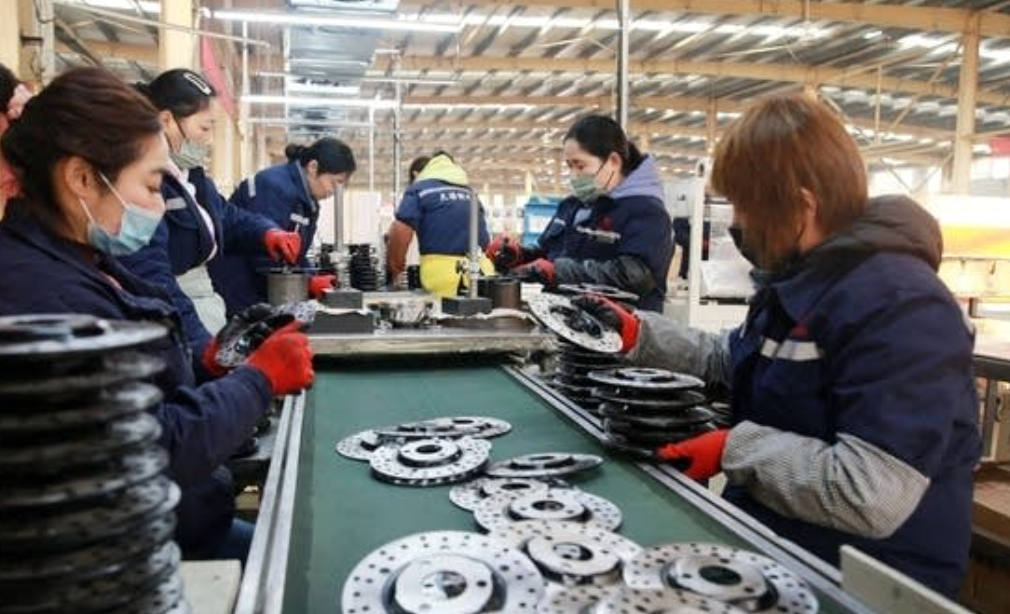
 China Factory Inflation Hits 4-Year High
China's latest inflation data has delivered a fresh signal that global geopolitical tensions are beginning to ripple through the world's second-largest economy. Producer prices in May rose at their fastest pace in nearly four years, driven largely by surging energy costs following escalating tensions involving Iran and the broader Middle East.
The sharp rise in China factory inflation comes at a time when investors are closely monitoring the economic consequences of higher oil prices. As crude markets reacted to supply concerns linked to the Iran conflict, manufacturers across China faced increasing costs for energy, transportation, and raw materials.
While consumer inflation remained relatively subdued, the acceleration in China factory inflation suggests that upstream cost pressures are building rapidly. For global markets, the development highlights how geopolitical events can quickly influence industrial activity, supply chains, and inflation expectations far beyond the regions directly involved.
China Factory Inflation Reaches Multi-Year High
According to official data released this week, China factory inflation, measured by the Producer Price Index (PPI), rose sharply in May and recorded its strongest reading since 2022. According to CNBC, this marks one of the most significant upticks in Chinese producer prices in recent years.
The increase was largely attributed to higher energy costs, particularly oil-related products. Crude prices climbed significantly during the month as traders reacted to concerns that Middle East tensions could disrupt global energy supplies.
China remains one of the world's largest energy importers. As a result, movements in oil markets often have a direct and measurable impact on manufacturing costs across a broad range of industries, making China factory inflation especially sensitive to global commodity price swings.
Interestingly, the rise in China factory inflation occurred despite ongoing concerns about domestic demand. In recent months, policymakers have focused on stimulating consumption and supporting economic growth. However, rising input costs now present a new challenge for manufacturers attempting to preserve profit margins.
Oil Prices Become a Major Inflation Driver
The connection between oil markets and China factory inflation has become increasingly evident. Higher crude prices affect far more than fuel expenses alone.
- Transportation costs rise as fuel surcharges increase across logistics networks.
- Petrochemical products become more expensive, raising costs for plastics and synthetic materials.
- Industrial production costs increase across multiple sectors reliant on energy-intensive processes.
- Eventually, these pressures can influence broader inflation trends in consumer goods.
The Iran conflict has added another layer of uncertainty to global energy markets. Investors remain concerned that further escalation could disrupt key shipping routes or reduce energy exports from major producers in the region.
As a result, oil prices have remained elevated compared with levels seen earlier in the year. China factory inflation has therefore become an important indicator of how geopolitical risks are filtering through the global economy. While energy markets often react immediately to political developments, inflation data provides concrete evidence of how those price movements affect real-world economic activity.
A geopolitical event thousands of miles away is influencing production costs inside factories across China. That interconnected reality continues to shape modern financial markets and global supply chains.
Consumer Inflation Remains Relatively Contained
Despite the surge in China factory inflation, consumer price pressures have remained more moderate. China's Consumer Price Index (CPI) showed only limited increases during May, suggesting that many manufacturers have not yet fully passed higher costs on to consumers.
This distinction matters significantly. Historically, rising producer prices do not always translate into immediate consumer inflation. Companies often absorb part of the increase through lower profit margins, particularly when consumer demand remains fragile or competitive pressures restrict pricing power.
However, sustained growth in China factory inflation could eventually create broader pricing pressures if elevated energy costs persist through the second half of the year. Economists are therefore watching future inflation reports closely. Should oil prices remain high for an extended period, businesses may have little choice but to increase prices for goods and services, ultimately pushing consumer inflation higher.
For central banks and policymakers worldwide, such developments could complicate efforts to balance growth objectives with inflation control — particularly at a time when many economies are still navigating the effects of earlier rate-hiking cycles.
Implications for Global Markets
The latest China factory inflation figures carry significance well beyond China's borders. As the world's largest manufacturing hub, China plays a critical role in global supply chains. Rising production costs can influence export prices, corporate earnings, and international trade flows across virtually every major economy.
Investors are particularly focused on sectors with heavy exposure to raw materials and energy costs. The following industries may all face pressure if China factory inflation continues to accelerate:
- Industrial manufacturing — facing higher raw material and energy input costs.
- Transportation and logistics — exposed to rising fuel surcharges and freight rates.
- Chemical and petrochemical producers — directly affected by crude oil price movements.
- Consumer goods manufacturers — at risk of margin compression if cost pass-through becomes necessary.
Meanwhile, commodity markets are likely to remain sensitive to developments surrounding the Iran conflict. Financial markets have demonstrated repeatedly that inflation expectations can shift quickly when energy prices experience sharp movements. The recent increase in China factory inflation reinforces concerns that geopolitical risks remain an important factor shaping the global economic outlook.
At the same time, some analysts argue that technology-driven productivity improvements and artificial intelligence adoption could help offset certain cost pressures over time. Even so, energy remains a fundamental input across virtually every sector of the economy, limiting the extent to which innovation alone can neutralise inflationary pressure in the near term.
Markets Assess the Next Phase
The rise in China factory inflation serves as a reminder that inflation dynamics remain highly dependent on global events. Recent data suggests that geopolitical tensions are once again influencing commodity markets, production costs, and investor sentiment.
According to Reuters, market participants are closely watching China's next round of economic data releases to assess whether the spike in China factory inflation represents a temporary shock or the beginning of a more sustained upward trend in producer prices.
While consumer inflation remains relatively stable for now, producer prices indicate that businesses are facing increasing pressure beneath the surface. Whether these cost increases become a broader inflation challenge will depend largely on future energy market developments and the trajectory of the Iran conflict.
For investors, policymakers, and corporate leaders, the latest China factory inflation figures provide an important snapshot of how quickly external shocks can affect economic conditions. The coming months may offer greater clarity. For now, rising China factory inflation has become one of the clearest signals that geopolitical risks continue to shape the global economic landscape — and that the consequences of those risks are already visible in manufacturing data.
