

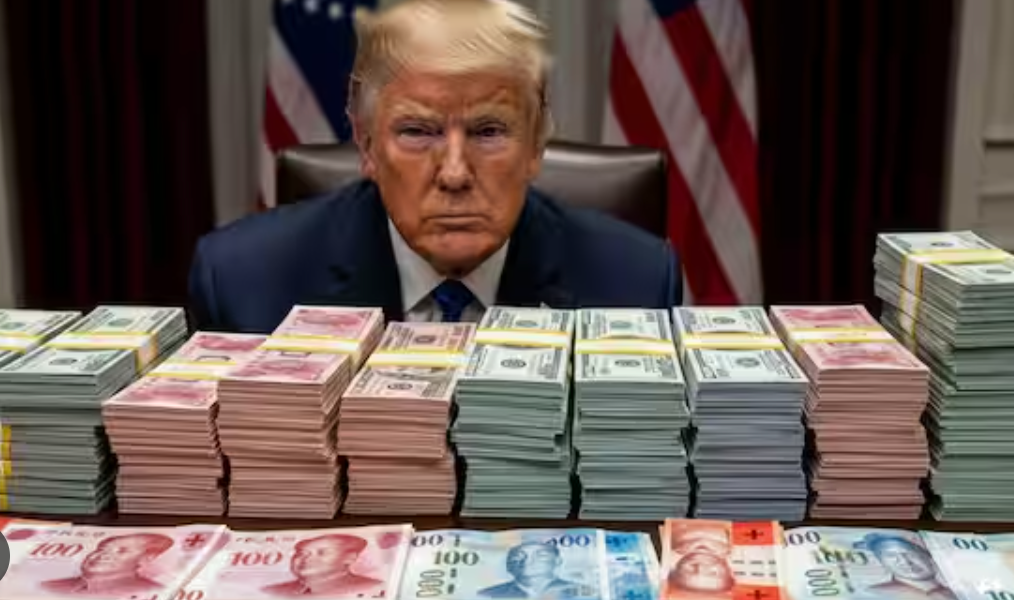
 De-Dollarization Trend: What Investors Should Know
A growing number of wealthy investors are reassessing their exposure to the United States as the de-dollarization trend gains traction across global financial markets. According to CNBC, private banks, wealth managers, and family offices are increasingly directing capital toward international assets amid concerns about the long-term outlook for the U.S. dollar.
The move does not necessarily signal an immediate loss of confidence in the United States. Rather, it reflects a broader effort among affluent investors to diversify currency exposure and reduce concentration risk. As geopolitical tensions, fiscal deficits, and changing trade relationships reshape the global economic landscape, the de-dollarization trend has become a key theme influencing investment decisions.
For investors, policymakers, and traders alike, the growing de-dollarization trend may offer important clues about where global capital is heading next.
Why the De-Dollarization Trend Is Attracting Attention
The de-dollarization trend refers to the gradual reduction of dependence on the U.S. dollar in international trade, reserves, and investment portfolios.
For decades, the dollar has enjoyed unparalleled dominance as the world's primary reserve currency. Central banks, multinational corporations, and institutional investors have traditionally favored dollar-denominated assets due to their liquidity, stability, and deep financial markets.
However, recent developments have encouraged investors to reconsider that position. Rising government debt, persistent fiscal deficits, geopolitical fragmentation, and changing global trade patterns have contributed to renewed discussions surrounding the de-dollarization trend.
Interestingly, many wealth managers are not advocating a complete departure from U.S. assets. Instead, they are recommending broader diversification across currencies, regions, and asset classes.
That distinction matters. The de-dollarization trend is increasingly viewed as a risk management strategy rather than a prediction of an imminent dollar collapse.
Wealthy Investors Seek Greater Geographic Diversification
According to CNBC, private banking clients and ultra-high-net-worth investors are increasingly allocating capital to Europe, Asia, and emerging markets.
Several factors are driving this shift:
- Valuation opportunities: International markets may offer attractive valuations compared with certain U.S. assets that have experienced substantial gains over recent years.
- Dollar volatility protection: Holding assets denominated in euros, Swiss francs, Singapore dollars, or selected Asian currencies can provide diversification benefits if the dollar weakens over time.
- Geopolitical uncertainty: Investors are seeking portfolios less dependent on any single economy, encouraging broader geographic spread.
The de-dollarization trend has therefore evolved beyond currency management. It now influences broader asset allocation decisions across global portfolios.
Concerns About U.S. Fiscal Conditions
One recurring concern cited by market participants involves the long-term trajectory of U.S. government debt.
Federal borrowing levels have risen significantly over the past decade, while interest expenses continue to increase as higher rates affect government financing costs.
Even investors who remain optimistic about the U.S. economy are increasingly choosing to spread their capital across multiple regions.
The de-dollarization trend appears to be driven as much by prudence as by skepticism. According to CNBC, this behavioral shift among high-net-worth individuals reflects careful portfolio rebalancing rather than outright capital flight from American markets.
What This Means for the U.S. Dollar
The dollar remains the dominant reserve currency and continues to play a central role in global trade and finance.
Despite growing interest in the de-dollarization trend, few analysts expect the dollar to lose its leadership position in the foreseeable future. Replacing the dollar would require an alternative currency with comparable liquidity, transparency, and market depth. Such alternatives remain limited.
However, even modest reductions in global demand for dollar-denominated assets can influence capital flows, bond markets, and currency valuations over time.
As a result, investors are paying close attention to whether the de-dollarization trend remains a niche wealth management strategy or develops into a broader institutional movement.
Potential Beneficiaries of the De-Dollarization Trend
Several asset classes could benefit if the de-dollarization trend continues to expand.
- Gold: Remains one of the most frequently cited beneficiaries. Central banks around the world have increased gold purchases in recent years, partly as a means of diversifying reserves away from dollar exposure.
- Foreign equities: European stocks, Asian technology companies, and selected emerging market assets have become increasingly prominent within diversified global portfolios.
- Alternative reserve currencies: Currency markets could experience shifts as investors increase allocations to non-dollar assets such as the euro, yen, and renminbi.
While the pace of change remains uncertain, the direction of travel within the de-dollarization trend is becoming more noticeable across institutional and private wealth channels alike.
A Shift Worth Watching
The growing de-dollarization trend reflects an important evolution in global investment behavior.
The United States continues to attract significant capital and remains central to the global financial system. Yet wealthy investors are increasingly seeking opportunities beyond traditional dollar-heavy portfolios. Diversification, geographic balance, and currency exposure have become key considerations in portfolio construction.
Whether the de-dollarization trend develops into a long-term structural transformation remains an open question. What is clear, however, is that some of the world's largest investors are adjusting their strategies to prepare for a more multipolar financial landscape.
According to CNBC, that reallocation of capital is already visible in private banking flows, wealth manager recommendations, and family office positioning across major financial centers globally. For market participants, that shift deserves close attention.
