

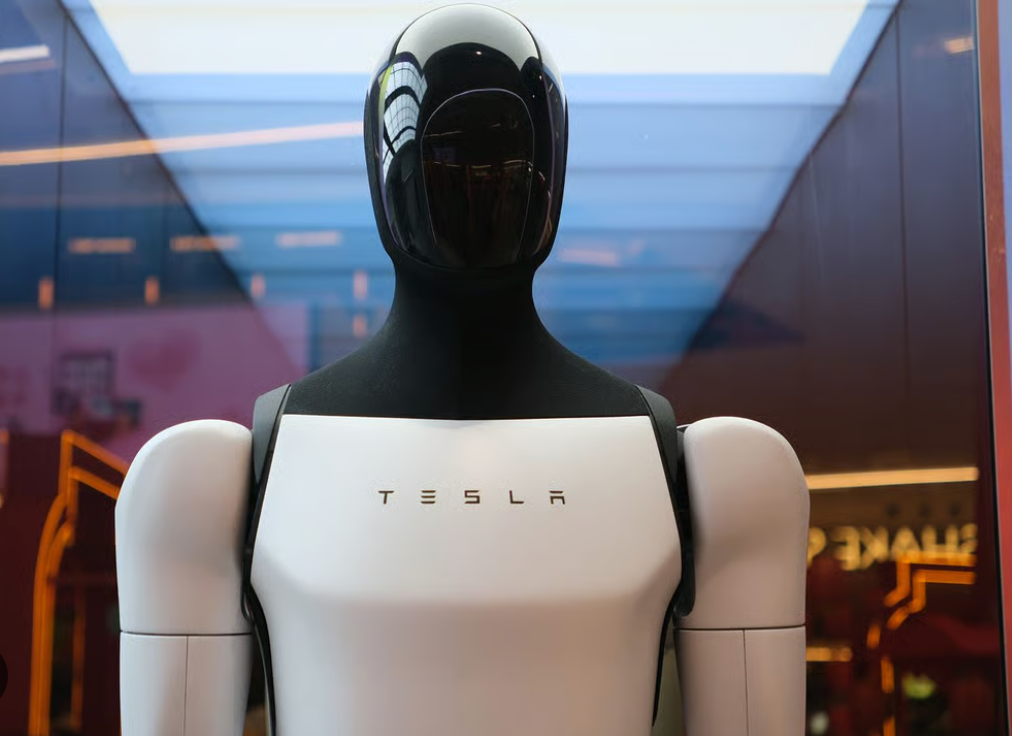
 Tesla Optimus Robot Moves Closer to Reality
The conversation around automation has entered a new phase. Tesla Optimus robot development, once viewed as an ambitious concept, is now edging closer to real-world application. Recent developments reported by major technology analysts suggest that the Tesla Optimus robot is no longer just a futuristic idea. It is becoming a tangible part of the broader AI robotics landscape.
The Tesla Optimus robot represents a significant step in Elon Musk's long-term vision of integrating artificial intelligence into physical environments. While earlier demonstrations focused on prototypes, the latest updates indicate measurable progress in mobility, task execution, and real-world usability. That shift is drawing attention not only from technology enthusiasts but also from investors watching the future of automation unfold.
Interestingly, the Tesla Optimus robot is being positioned as more than a technological showcase. It is increasingly framed as a potential solution to labor shortages and rising operational costs across industries. This positioning has important implications for markets and long-term economic strategy.
From Concept to Application: Progress in Development
The Tesla Optimus robot was first introduced as part of Tesla's broader AI strategy. At the time, skepticism was widespread. Questions centered on feasibility, scalability, and timing. Fast forward to today, and the narrative is beginning to change significantly.
Recent demonstrations suggest that the Tesla Optimus robot is improving in both precision and adaptability. Tasks that once required controlled environments are now being tested in more dynamic settings. This matters because real-world deployment depends on flexibility, not just technical capability.
According to technology industry sources, Elon Musk has indicated that the Tesla Optimus robot could eventually handle repetitive or physically demanding tasks. Manufacturing, logistics, and service industries are often mentioned as potential use cases. If such applications materialize, the impact could extend far beyond Tesla itself.
A functional humanoid robot capable of performing routine tasks at scale would represent a structural shift in how businesses operate and compete globally.
Competitive Landscape in AI Robotics
The progress of the Tesla Optimus robot is unfolding within a highly competitive environment. Companies across the technology sector are investing heavily in AI robotics. From industrial automation to advanced machine learning, the race is intensifying with new players entering regularly.
Key competitors include firms developing specialized robotics solutions:
- Nvidia continues to develop AI hardware supporting robotics applications
- Boston Dynamics maintains focus on mobility and robotics engineering
- Other emerging players in the automation space
Against this backdrop, Tesla's approach stands out due to its integration of AI software with hardware development. The Tesla Optimus robot benefits from Tesla's existing expertise in artificial intelligence, particularly in computer vision and neural networks. These capabilities, originally developed for autonomous driving, are now being applied to advanced robotics solutions.
This cross-application of technology is worth noting. It allows Tesla to leverage existing infrastructure while accelerating development timelines for the Tesla Optimus robot. Investors appear to be factoring this strategic advantage into their expectations.
Market Implications and Investor Sentiment
The advancement of the Tesla Optimus robot is influencing market sentiment, particularly in the technology sector. Shares of companies linked to AI and automation have shown increased investor attention as market participants reassess growth opportunities.
According to Yahoo Finance, the Tesla Optimus robot is often viewed as a long-term catalyst rather than an immediate revenue driver. However, the perception of progress can still impact valuation metrics. Markets tend to price in future potential, especially when it comes to disruptive technologies that could reshape industries.
At the same time, practical considerations remain important:
- Scaling production to commercial levels
- Ensuring comprehensive safety standards
- Achieving cost efficiency and profitability
- Meeting regulatory compliance requirements
These factors will determine how quickly the Tesla Optimus robot can transition from development to widespread deployment. Central to this discussion is the broader question of adoption rates and market timing.
Broader Shift Toward Automation Across Industries
The development of the Tesla Optimus robot reflects a larger trend within the global economy. Automation is no longer limited to software systems. It is increasingly moving into physical spaces, reshaping workflows and operational models across sectors.
This shift is being driven by several interconnected factors:
- Labor shortages in key sectors requiring solutions
- Rising operational costs pressuring profit margins
- Efficiency demands from competitive markets
- Technological advancement making automation viable
The Tesla Optimus robot fits into this narrative as a potential bridge between digital intelligence and physical execution. It represents an attempt to bring AI out of data centers and into everyday operational environments.
Adoption timing will likely vary by industry. High-volume manufacturing may lead adoption of the Tesla Optimus robot, followed by logistics and warehousing. Service industries could take longer, depending on cost considerations and task complexity.
Current Status and Future Outlook
The Tesla Optimus robot is not yet a mainstream commercial product. That remains clear from current market analysis. However, the latest updates suggest that meaningful technical progress is being made consistently. The gap between concept and practical application is narrowing with each development cycle.
Markets are paying close attention. Investors are watching not just what the Tesla Optimus robot can accomplish today, but what it could represent in the coming years. The potential applications and market implications are substantial.
For now, the Tesla Optimus robot stands as a symbol of how rapidly technology can advance when ambition meets execution. The story is still unfolding, and significant developments are expected in coming months and years.
