

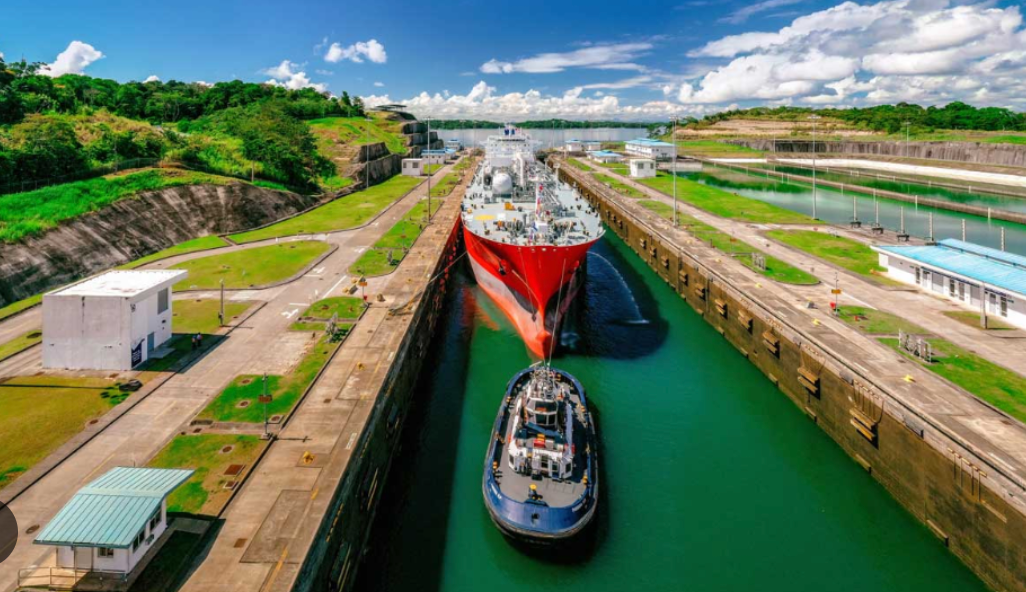
 Panama Canal Traffic Rises Amid Global Shipping Shifts
Global shipping patterns rarely change overnight. Yet recent developments suggest otherwise. The Panama Canal traffic has surged sharply, driven by disruptions linked to the ongoing Middle East conflict. As tensions escalate near critical maritime chokepoints such as the Strait of Hormuz, shipping companies are being forced to rethink their routes. The result is a sudden and noticeable shift toward alternative pathways, with the Panama Canal emerging as a key beneficiary.
Interestingly, this is not just a logistical story. It reflects deeper structural stress in global trade flows. When one route becomes uncertain, the entire system adjusts.
A Sudden Shift in Global Shipping Routes
The spike in Panama Canal traffic comes at a time when security concerns in the Middle East are intensifying. According to Reuters, vessels are increasingly avoiding traditional routes passing through the Red Sea and the Suez Canal due to heightened risks.
Shipping firms are not taking chances. The cost of delays, potential attacks, or insurance premiums has risen significantly. As a result, many operators are choosing longer but safer routes. The Panama Canal, which connects the Atlantic and Pacific Oceans, has quickly become a preferred alternative.
This shift is not trivial. Rerouting ships adds time and expense. However, in the current climate, predictability is valued more than speed.
Why the Panama Canal Is Seeing More Traffic
To understand the rise in Panama Canal traffic, it helps to look at the broader context. The Middle East conflict has introduced uncertainty into one of the world's most critical shipping corridors. Oil tankers, container ships, and bulk carriers are all affected.
The Strait of Hormuz alone handles a significant portion of global oil exports. Any disruption there sends ripples across energy markets. Naturally, companies seek alternatives. While the Panama Canal cannot replace all affected routes, it offers a viable option for certain trade flows, particularly between Asia and the Americas.
Moreover, recent improvements in canal capacity have made it more adaptable to increased demand. Larger vessels can now pass through, making the Panama Canal a more attractive choice for global shipping lines.
Market Implications and Cost Pressures
The increase in Panama Canal traffic is already having financial implications. Shipping costs are rising, and these increases often filter through to consumers. Higher freight rates can affect everything from fuel prices to consumer goods.
Energy markets are particularly sensitive. As oil shipments are rerouted, delivery times extend, and supply chains become more complex. This can contribute to price volatility in benchmarks such as Brent and WTI crude.
A Broader Signal for Global Trade
Beyond immediate market reactions, the surge in Panama Canal traffic highlights a broader trend. Global trade is becoming more fragile. Geopolitical risks are no longer isolated events. They have direct and immediate consequences for supply chains.
What does this mean going forward? Companies may begin to diversify routes more aggressively. Governments might invest in alternative infrastructure. At the same time, reliance on key chokepoints will remain a structural vulnerability.
Control over critical trade routes has always been important. In times of conflict, it becomes even more significant.
Key Factors Driving Panama Canal Traffic Growth
Several factors explain why the Panama Canal has become increasingly important during this period:
- Enhanced security and predictability compared to routes through the Strait of Hormuz
- Recent infrastructure upgrades allowing larger vessel passage through the Panama Canal
- Rising insurance premiums and delays associated with Red Sea and Suez Canal routes
- Direct connectivity between Asian and American markets via the Panama Canal
Where Things Stand Now
For now, the rise in Panama Canal traffic serves as a real-time indicator of shifting global dynamics. Shipping patterns are adapting, markets are adjusting, and the ripple effects continue to spread.
The situation remains uncertain. Much depends on how the Middle East conflict evolves. If tensions persist, these new routing patterns through the Panama Canal could become more entrenched. If conditions stabilize, traffic may normalize.
Either way, the episode underscores a simple reality. Global trade is interconnected, and disruptions in one region can quickly reshape the entire system. The Panama Canal stands as a critical infrastructure asset in an increasingly volatile geopolitical landscape.
