

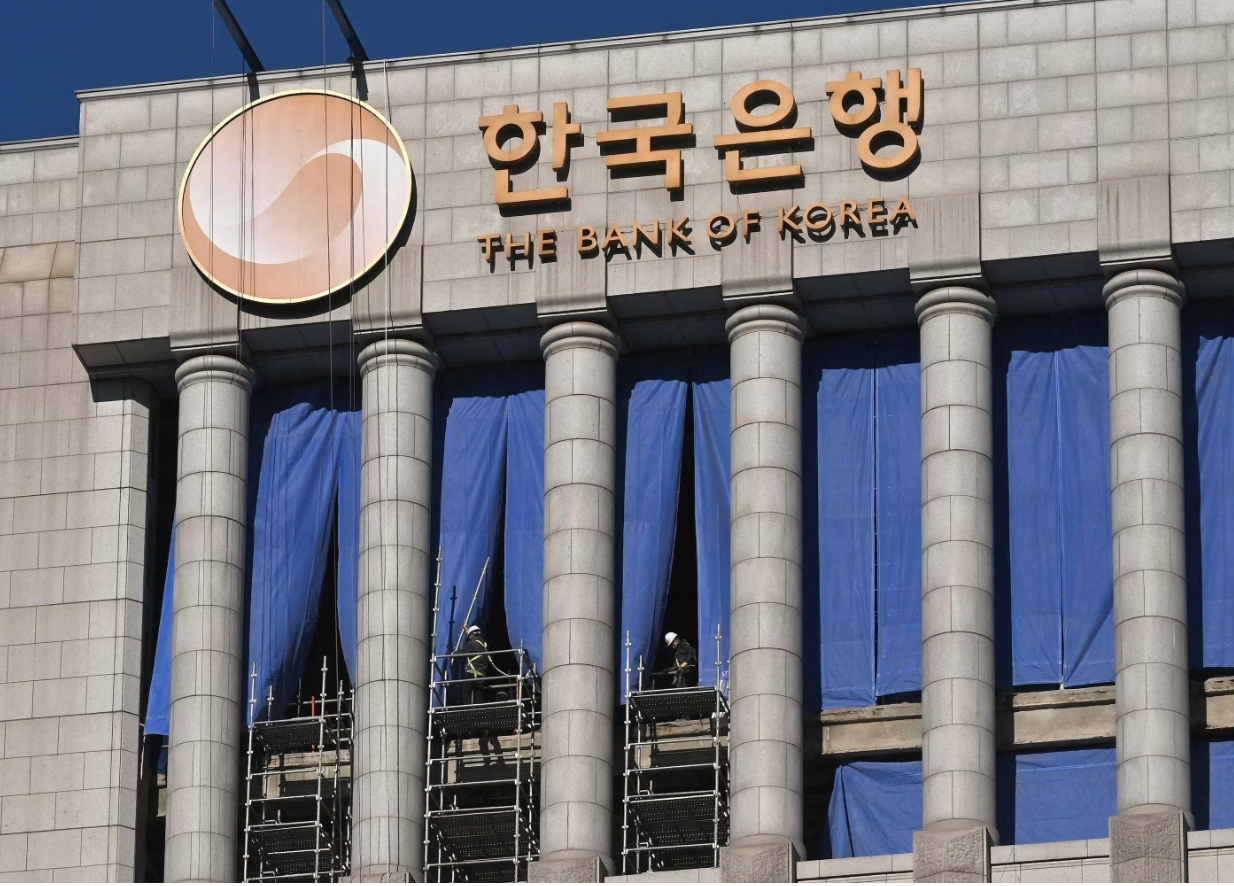
 Bank of Korea Keeps Further Rate Hikes Under Consideration
The Bank of Korea remains open to additional monetary tightening after minutes from its July policy meeting showed that board members continue to see meaningful inflation and financial-stability risks.
At its meeting on 16 July, the Monetary Policy Board unanimously raised the base rate by 25 basis points, from 2.50% to 2.75%. It was South Korea’s first interest-rate increase in three and a half years.
Minutes released on 4 August showed that policymakers favoured carefully determining the timing and pace of any further tightening. Several members nevertheless indicated that pre-emptive action could be necessary if inflationary pressure, economic momentum or financial imbalances remain elevated.
One board member argued that the July Bank of Korea rate hike alone might not be sufficient to return inflation sustainably to the central bank’s 2% target. Another emphasised that delaying an appropriate policy response could make price stability more difficult to restore.
The minutes do not guarantee another increase in August, but they confirm that further monetary tightening remains an active policy option.
July Inflation Provides Only Partial Relief
South Korea’s headline inflation moderated in July, but the underlying data gave the Bank of Korea limited room to declare that price pressures were under control.
The Consumer Price Index rose 2.8% year on year in July, slowing from 3.2% in June and coming below the 3.0% median forecast in a Reuters poll. On a monthly basis, consumer prices declined 0.2%, representing the first monthly decrease in eight months.
Lower energy costs played an important role. Petroleum-product prices fell 5.5%, while government fuel-price controls were estimated to have reduced the annual inflation rate by approximately 0.3 percentage points.
However, core inflation excluding food and energy accelerated to 2.6%, its highest level since December 2023. This suggests that price pressure connected to domestic demand and less volatile components of the consumer basket has not eased as quickly as headline inflation.
- Headline inflation: Lower fuel costs provided near-term relief.
- Core inflation: Underlying price pressure remained persistent.
- Energy risk: Renewed supply disruption could reverse part of the improvement.
- Policy implication: Softer CPI does not eliminate the possibility of another rate increase.
Strong Exports Support a Hawkish Policy Outlook
South Korea’s economy continues to receive substantial support from exports, particularly semiconductors and technology products linked to global artificial-intelligence investment.
According to Reuters, exports increased 62.8% year on year in July to USD 98.89 billion, exceeding the 59% growth forecast in its survey. Semiconductor exports rose 179%, while computer exports climbed 404%.
The export recovery contributed to a USD 30.32 billion trade surplus. It also indicates that external demand remains strong despite uncertainty surrounding global interest rates and geopolitical conditions.
This economic resilience may strengthen the case for another Bank of Korea rate hike if inflation remains above target.
What Further Tightening Could Mean for the Korean Won
Additional tightening would generally be expected to support the Korean won by increasing the return available on won-denominated assets. Expectations of a higher policy rate could therefore place downward pressure on USDKRW, all else being equal.
The actual currency response will depend on several external and domestic factors:
- Federal Reserve policy and US Treasury yields.
- Global demand for safe-haven currencies.
- Energy-import costs and South Korea’s trade balance.
- Foreign investment flows into Korean equities and bonds.
- Geopolitical developments affecting oil supply.
- The relative pace of tightening across Asian central banks.
A Bank of Korea rate hike would not guarantee sustained won appreciation. If US rates rise faster, global risk appetite deteriorates or energy prices surge, the dollar could remain supported against the Korean currency.
Korean Equities Face Competing Forces
The potential for another rate increase creates a mixed outlook for the KOSPI and Korean equities.
Higher rates can affect stocks through increased borrowing costs and higher discount rates. Companies dependent on domestic credit, property activity or consumer spending may face greater pressure if monetary policy becomes more restrictive.
At the same time, the Korean equity market continues to receive support from powerful semiconductor demand. Samsung Electronics, SK Hynix and other export-oriented companies may benefit from AI infrastructure investment, higher memory-chip prices and expanding global data-centre demand.
- Banks: Wider interest margins could provide support, although rising defaults would be a risk.
- Property-related shares: Higher financing costs may pressure valuations and demand.
- Consumer stocks: More expensive credit could weaken discretionary spending.
- Technology exporters: Strong external demand may offset some domestic rate pressure.
- Foreign-sensitive shares: A firmer won could attract capital but reduce the translated value of overseas earnings.
Household Debt and Asset Prices Remain Policy Risks
The Bank of Korea is not assessing inflation in isolation. Household debt, housing-market conditions, financial liquidity and asset prices also influence its policy decisions.
Higher rates can restrain leverage, but they also increase repayment burdens for existing borrowers. This creates a difficult balance: tightening too slowly may allow financial risks to build, while tightening too aggressively may weaken consumption and strain indebted households.
Policymakers are monitoring:
- Demand-side and cost-related inflation.
- Economic growth and domestic consumption.
- Foreign-exchange movements.
- Household debt and property conditions.
- Liquidity in asset markets.
- Energy supply risks.
- Semiconductor exports and external demand.
What Traders Should Monitor Before the August Decision
The Bank of Korea’s next policy decision is scheduled for 27 August. Markets will assess whether policymakers deliver another consecutive increase or wait for additional evidence.
- Inflation expectations and incoming price data.
- Movements in core and services inflation.
- USDKRW and broader US-dollar performance.
- Brent and WTI oil prices.
- Household borrowing and property-market activity.
- Semiconductor exports and manufacturing orders.
- Foreign capital flows into Korean markets.
- Federal Reserve policy expectations.
- Public remarks from Bank of Korea officials.
A further increase would take the base rate to 3.00%. Traders should distinguish between the probability of another increase during 2026 and the probability of an immediate move in August.
Market Outlook
The latest minutes reinforce a hawkish Bank of Korea policy outlook. Although headline inflation eased in July, persistent core inflation, strong export growth and financial-stability concerns mean policymakers cannot yet assume that inflation is moving sustainably toward the 2% target.
For the Korean won, stronger expectations of further tightening may provide support. Nevertheless, global dollar movements, oil prices and risk sentiment will remain major influences on USDKRW.
For equities, the outlook is more balanced. A further Bank of Korea rate hike could pressure rate-sensitive sectors and domestic demand, while semiconductor exporters continue to benefit from strong international demand connected to AI investment.
The 27 August meeting is therefore likely to be an important event for Korean markets. Incoming inflation data, currency movements and signs of continued economic resilience will determine whether the central bank acts immediately or maintains its tightening bias.
DISCLAIMER: Derivative products carry high risk and may result in the loss of your entire invested capital. Before trading, ensure you fully understand the legal framework, product characteristics, and your broker’s trading rules. Always trade responsibly and with caution.
RISK WARNING: Margin trading with leverage is not suitable for all investors due to its high risk. THERE ARE NO GUARANTEED RETURNS in trading. Beware of any claims promising assured profits. Only use capital you can afford to lose. Before engaging in any transaction, ensure you understand the risks and assess both your experience and risk tolerance.
