

بینشهای بازار
Japan Manufacturers Remain Optimistic as Chip Demand Stays Strong
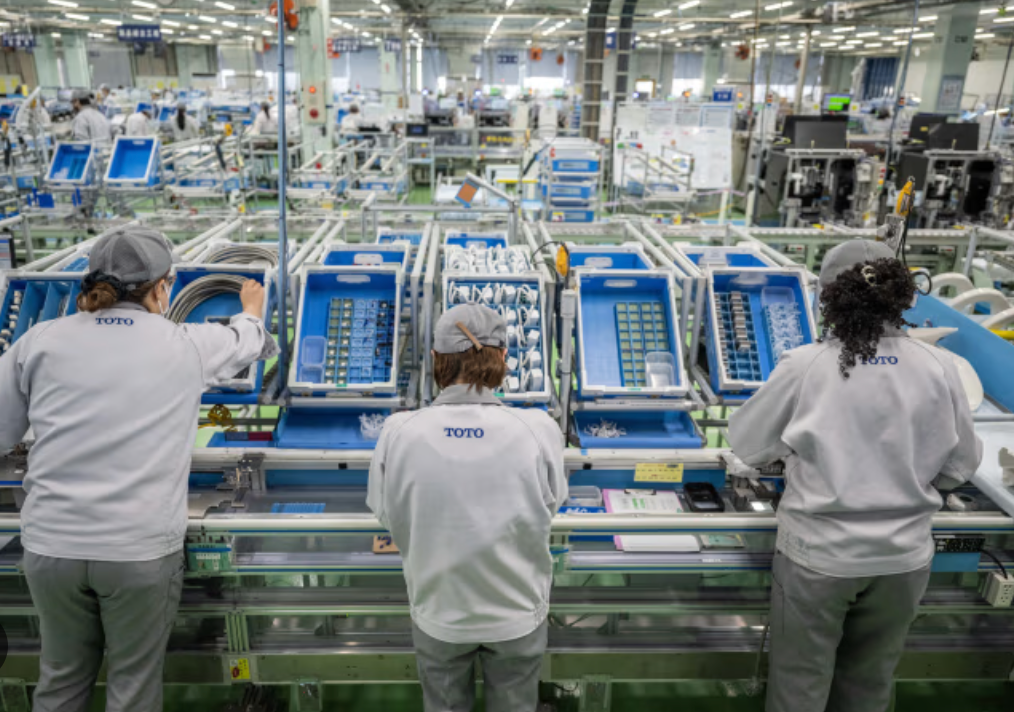
Japan's economy is sending mixed signals. Manufacturing companies continue to benefit from strong Japan semiconductor demand, yet businesses in the services sector are becoming increasingly cautious as operating costs remain elevated.
The latest Reuters Tankan survey published on July 15 shows that confidence among Japanese manufacturers held steady in July, supported by growing orders linked to semiconductors, AI servers, and electronic components. Meanwhile, confidence among non-manufacturers weakened as higher energy costs, a weaker yen, and rising borrowing costs continued to squeeze profit margins. According to Reuters.
The contrast highlights an economy moving in two different directions. Export-oriented industries tied to technology continue to perform well, while domestic service businesses face a much more difficult operating environment.
Interestingly, this divergence could become one of the defining themes for Japan's economy during the second half of 2026.
Japan Semiconductor Demand Continues to Strengthen
The Reuters Tankan survey showed the manufacturers' sentiment index remained unchanged at +13 in July, reflecting stable business confidence despite ongoing global uncertainty. Companies cited stronger demand for memory chips, AI-related servers, and semiconductor components as major drivers behind improving order books. According to Reuters.
Several manufacturers even reported that incoming orders had reached levels rarely seen before.
One precision machinery executive participating in the survey noted that production capacity has become a growing concern because orders continue arriving faster than factories can comfortably handle.
That comment illustrates how Japan semiconductor demand is shifting from a recovery story toward a capacity challenge.
Demand is no longer limited to consumer electronics. Artificial intelligence infrastructure continues to require advanced processors, high-bandwidth memory, networking equipment, and specialized semiconductor components. As global investment in AI expands, Japanese suppliers remain deeply integrated throughout the semiconductor supply chain.
That trend has created a relatively solid foundation for manufacturers, even as geopolitical risks continue to generate uncertainty elsewhere.
Services Sector Faces a Different Reality
While factories remain optimistic, service businesses are dealing with a much tougher environment.
Confidence among non-manufacturers declined from +32 in June to +25 in July. Businesses pointed to several factors, including higher energy prices, elevated financing costs, geopolitical tensions in the Middle East, and the continued weakness of the Japanese yen. According to Reuters.
Many service companies have fewer opportunities to offset rising expenses through exports. Key pressures include:
- Higher energy and fuel costs
- Elevated financing and borrowing costs
- A weaker yen raising import prices
- Reduced pricing power with price-sensitive consumers
Hotels, restaurants, retailers, transportation firms, and other domestic businesses must absorb higher operating costs while trying to remain competitive for consumers who are becoming more price sensitive.
Although tensions in the Middle East eased following the tentative US-Iran ceasefire reached in June, business leaders remain cautious because regional instability has not completely disappeared. Energy prices continue to influence transportation, logistics, and operating expenses across multiple industries. According to Reuters.
AI Investment Continues Supporting Japan Semiconductor Demand
The broader semiconductor industry continues receiving fresh investment.
This week, Tower Semiconductor announced plans to invest approximately $3 billion to expand its manufacturing operations in Japan, backed by roughly $1 billion in Japanese government support. The project aims to increase production of silicon photonics and advanced semiconductor technologies used in AI and data center applications. According to Reuters.
The announcement reinforces the broader theme surrounding Japan semiconductor demand. Rather than slowing, investment across AI infrastructure continues to accelerate.
Governments, chipmakers, and cloud computing companies are all expanding capacity to prepare for future demand. Japan has positioned itself as a critical supplier within that ecosystem, providing advanced materials, manufacturing expertise, and specialized semiconductor production capabilities.
Inflation Remains a Key Challenge
Despite encouraging manufacturing data, inflation continues to complicate Japan's economic outlook.
Higher wholesale prices and imported energy costs have already pushed many companies to increase prices. The Bank of Japan has acknowledged that geopolitical developments could encourage further price increases later this year, keeping inflation risks firmly on policymakers' radar. According to Reuters.
A weaker yen adds another layer of complexity. Japanese exporters generally benefit when the currency declines because overseas earnings become more valuable once converted back into yen. However, domestic businesses relying on imported fuel, food, or raw materials face significantly higher costs.
That creates a difficult balancing act for policymakers. Supporting economic growth while containing inflation remains one of the Bank of Japan's biggest challenges heading into the remainder of 2026.
What Investors Are Watching
Financial markets will likely continue monitoring several important developments over the coming months, including:
- Whether Japan semiconductor demand remains strong enough to offset weakness in other sectors
- Whether rising service-sector costs begin affecting consumer spending more broadly
- How the Bank of Japan's policy decisions respond to persistent inflation and strengthening wage growth
Strong manufacturing activity combined with persistent inflation could influence future monetary policy expectations, particularly if wage growth and corporate pricing continue strengthening. According to Reuters.
Currency markets may also respond accordingly. Any shift in expectations for Japanese interest rates could influence the USD/JPY exchange rate and broader capital flows throughout Asia.
A Divided Economy Creates a Mixed Outlook
Japan's latest business survey presents an economy with two distinct narratives.
On one side, Japan semiconductor demand continues supporting manufacturers as AI investment, memory chip recovery, and technology spending generate healthy order pipelines. Business confidence remains resilient despite geopolitical uncertainty.
On the other side, service-sector companies continue navigating higher operating expenses, elevated financing costs, and inflationary pressures that are reducing confidence.
Neither story should be viewed in isolation.
Together, they illustrate how technological investment is helping offset broader economic challenges without eliminating them entirely. Whether manufacturing strength can continue compensating for domestic weakness will become one of the most important questions for Japan's economy during the months ahead.
DISCLAIMER: Derivative products carry high risk and may result in the loss of your entire invested capital. Before trading, ensure you fully understand the legal framework, product characteristics, and your broker’s trading rules. Always trade responsibly and with caution.
RISK WARNING: Margin trading with leverage is not suitable for all investors due to its high risk. THERE ARE NO GUARANTEED RETURNS in trading. Beware of any claims promising assured profits. Only use capital you can afford to lose. Before engaging in any transaction, ensure you understand the risks and assess both your experience and risk tolerance.
