

Análisis de mercado
China SpaceX Competition Intensifies as Reusable Rocket Race Accelerates
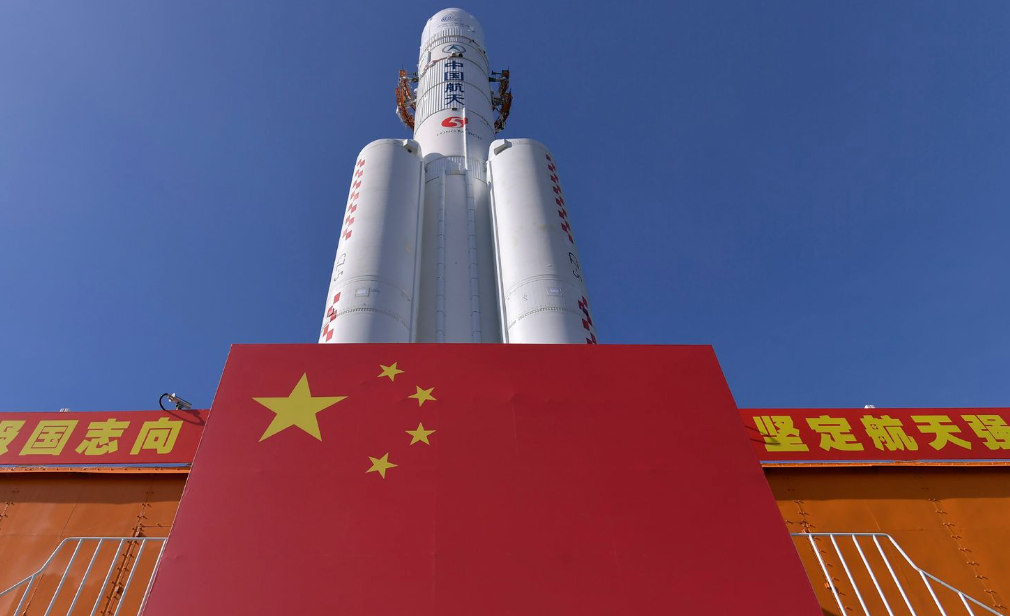 China SpaceX Competition Intensifies in 2026
The China SpaceX competition has entered a new phase after China's successful recovery of an orbital-class rocket booster, an achievement that many industry observers consider a milestone for the country's commercial space ambitions. According to Morgan Stanley, this development represents the most significant long-term competitive challenge to SpaceX, even as the American company continues to dominate global launch activity.
The latest assessment comes after China successfully recovered the Long March 10B booster, placing the country among a very small group capable of demonstrating reusable rocket technology. Although repeated launches and successful reflights remain essential before a fully operational reusable system can be established, the achievement signals that the China SpaceX competition is becoming increasingly meaningful for investors and the broader aerospace industry.
China's Reusable Rocket Milestone
Reusable launch vehicles have transformed the economics of space exploration. By recovering and reusing rocket boosters, launch providers can significantly reduce mission costs while increasing launch frequency.
For years, SpaceX has maintained a commanding advantage through its Falcon 9 program, completing hundreds of successful booster landings and routine reflights. Interestingly, that technological edge is now facing growing pressure.
According to Morgan Stanley, the China Aerospace Science and Technology Corporation (CASC) has become only the third organization, after SpaceX and Blue Origin, to recover an orbital-class booster.
While the demonstration alone does not guarantee commercial readiness, it represents a major technical breakthrough in the ongoing China SpaceX competition. Industry experts have long expected China to reach this stage eventually. The surprise lies more in the pace of progress than in the achievement itself.
Morgan Stanley Sees China as the Biggest Long-Term Rival
Morgan Stanley believes the China SpaceX competition deserves close attention because China's ambitions extend well beyond individual rocket launches.
The country's commercial space ecosystem now includes both state-backed organizations and rapidly expanding private aerospace companies such as:
- LandSpace
- Galactic Energy
- Space Pioneer
Together, these firms are investing heavily in launch technology, satellite deployment, and reusable launch systems.
The investment bank maintained its Overweight rating on SpaceX with a price target of $300, reflecting confidence in the company's current leadership. At the same time, analysts cautioned investors against underestimating China's accelerating capabilities.
Launch Numbers Highlight the Growing Gap
Launch frequency remains one of the clearest indicators of operational capability.
- SpaceX completed 165 Falcon 9 orbital launches during 2025, maintaining its position as the world's busiest launch provider.
- China, meanwhile, carried out approximately 90 orbital launches during the same period, making it the second-largest launch market globally.
Those figures still illustrate a sizeable gap. However, they also demonstrate how quickly the China SpaceX competition is developing. Higher launch cadence provides valuable engineering data, operational experience, and greater commercial confidence, all of which contribute to faster technological improvement.
Earlier estimates from U.S. Space Force officials suggested China remained three to five years behind in reusable rocket technology. Morgan Stanley now believes the successful Long March 10B recovery could shorten that timeline considerably.
Beyond Rockets: A Much Bigger Space Strategy
The China SpaceX competition is not limited to launch vehicles.
China is simultaneously expanding multiple strategic initiatives across the space economy. Among the most notable projects are the planned Guowang and Qianfan low-Earth orbit satellite constellations, which together target roughly 28,000 satellites.
Even more striking is China's proposed filing for more than 190,000 non-geostationary satellites over the coming years. If pursued at scale, those projects could reshape satellite communications, broadband connectivity, and Earth observation markets.
Another ambitious initiative involves the country's "Star Compute" orbital computing network. The project aims to deploy approximately 2,800 satellites capable of providing distributed computing infrastructure directly from space.
Why Investors Should Pay Attention
For financial markets, the China SpaceX competition represents more than a technological story.
Growing competition could influence launch pricing, commercial satellite deployment, supply chain investment, aerospace manufacturing, and government procurement priorities across several countries.
Companies participating in launch services, satellite manufacturing, semiconductor production, defence technology, and advanced materials may all experience indirect effects as investment in the global space economy continues to expand.
At the same time, stronger competition often accelerates innovation. History has shown that industries facing capable rivals frequently experience faster technological progress and broader commercial adoption.
SpaceX still enjoys considerable advantages. Its reusable rocket fleet has accumulated years of operational experience, its Starlink network continues to expand globally, and its launch cadence remains unmatched.
Nevertheless, the direction of travel appears increasingly clear. China's progress is reducing the technological distance, and future competition may become far more balanced than previously anticipated.
A Changing Landscape for the Commercial Space Industry
The China SpaceX competition is gradually becoming one of the defining themes within the global aerospace sector.
SpaceX continues to lead through proven technology, operational efficiency, and an extensive commercial customer base. Morgan Stanley's positive outlook reflects those strengths. Yet China's successful reusable rocket demonstration highlights that the competitive landscape is no longer static.
According to Investing, investors, policymakers, and aerospace companies will likely monitor future booster recoveries, launch frequency, satellite deployment, and commercial partnerships with increasing interest over the coming years.
The commercial space industry has always rewarded technological leadership. Maintaining that leadership, however, becomes considerably more challenging as capable competitors narrow the gap.
DISCLAIMER: Derivative products carry high risk and may result in the loss of your entire invested capital. Before trading, ensure you fully understand the legal framework, product characteristics, and your broker’s trading rules. Always trade responsibly and with caution.
RISK WARNING: Margin trading with leverage is not suitable for all investors due to its high risk. THERE ARE NO GUARANTEED RETURNS in trading. Beware of any claims promising assured profits. Only use capital you can afford to lose. Before engaging in any transaction, ensure you understand the risks and assess both your experience and risk tolerance.
