

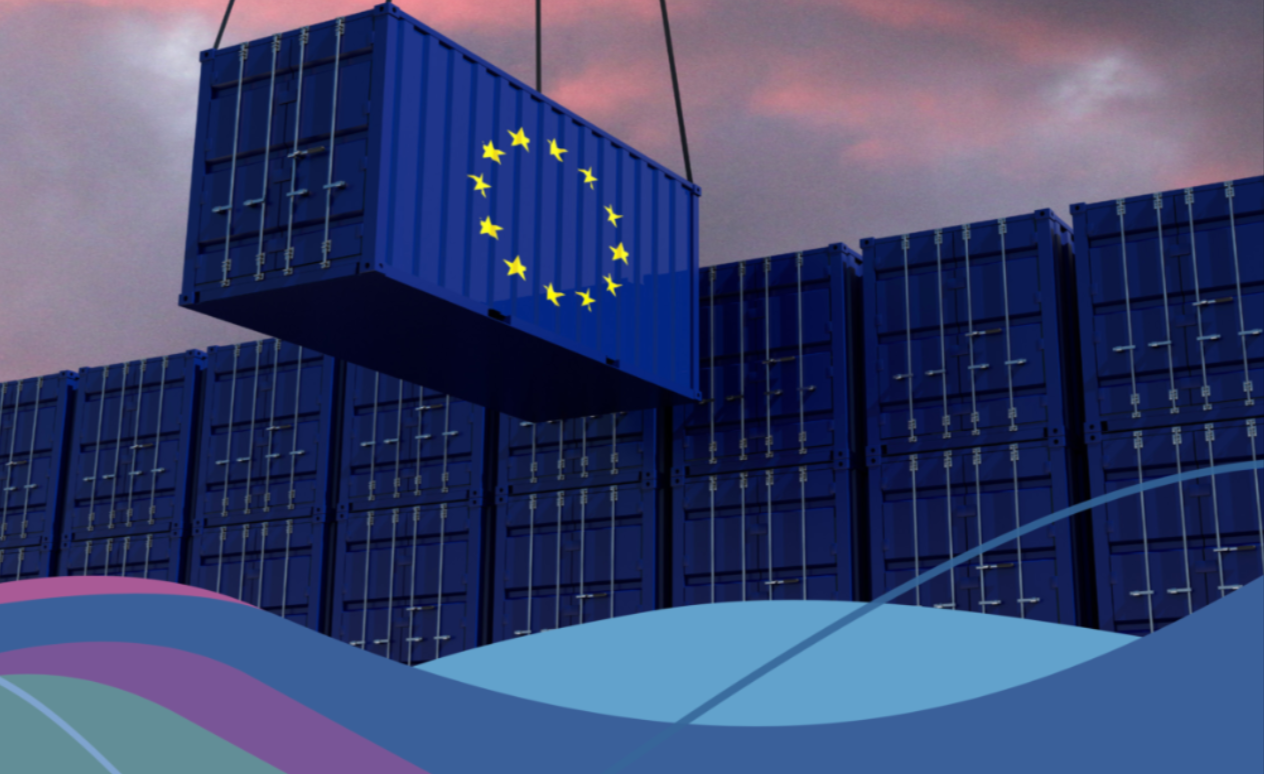
 EU Trade Tariffs Return to Global Focus
The issue of EU trade tariffs has resurfaced as the European Union calls on the United States to reinstate previously agreed tariff measures. With the anniversary of a suspended trade arrangement approaching, discussions between the European Union and the United States government are gaining urgency. According to Reuters, this request reflects mounting concern that existing compromises may not hold without renewed commitment from both sides.
The timing of this renewed attention to EU trade tariffs is not accidental. Trade agreements often rely on periodic reviews to maintain balance, and this particular moment appears to have triggered a reassessment of earlier concessions. What once seemed resolved is now back on the negotiating table, carrying significant implications for global markets and investor portfolios.
Understanding the Background of EU Trade Tariffs
The current debate over EU trade tariffs stems from a long-standing disagreement linked to industrial subsidies and competitive practices. In previous years, both parties imposed tariffs on key goods, ranging from metals to manufactured products, in response to what they viewed as unfair advantages. The origins of this dispute trace back to concerns about market access and fair competition standards.
A temporary suspension was later agreed upon, providing relief to industries on both sides. However, that pause was never meant to be permanent. As the agreement approaches its anniversary, the European Union is signaling that it expects the United States to follow through on commitments tied to EU trade tariffs restoration mechanisms. According to Reuters, negotiators continue to assess whether the foundational principles of the agreement remain viable.
Market Reactions to EU Trade Tariffs Developments
Financial markets have responded cautiously to the renewed focus on EU trade tariffs. Currency movements, particularly in EURUSD pairs, have shown mild sensitivity, reflecting uncertainty rather than outright risk aversion. Equity indices across Europe have also displayed measured reactions, with investors weighing the potential impact on export-driven sectors that could be affected by tariff changes.
Short-term volatility has remained contained, yet beneath the surface, there is growing awareness that EU trade tariffs discussions can escalate quickly into broader trade disputes. History offers several examples where seemingly routine negotiations evolved into complex international tensions affecting multiple industries. Traders are not just watching policy statements—they are interpreting tone, timing, and alignment between both sides regarding EU trade tariffs policies.
The potential reinstatement of EU trade tariffs carries broader implications beyond the transatlantic relationship, potentially affecting supply chains across multiple continents.
Supply Chain Implications of EU Trade Tariffs
The potential reinstatement of EU trade tariffs carries broader implications beyond the transatlantic relationship. Global supply chains, already under pressure from geopolitical shifts and economic realignments, could face additional friction if EU trade tariffs are reintroduced. Manufacturers relying on cross-border components may encounter rising costs, while exporters could see margins compressed.
At the same time, domestic industries in both regions might experience temporary support, depending on how EU trade tariffs are structured and implemented. There is also a strategic layer to consider. According to Reuters, trade policies are increasingly intertwined with national interests, particularly in sectors such as technology, energy, and manufacturing. As a result, decisions about EU trade tariffs are no longer purely economic—they reflect broader priorities.
- Manufacturing costs may rise due to higher tariffs on components
- Export competitiveness could be affected for companies dependent on tariff-free trade
- Supply chain diversification may accelerate to avoid tariff exposure
- Consumer prices could increase if tariff costs are passed downstream
Investor Sentiment Regarding EU Trade Tariffs
Investor sentiment surrounding EU trade tariffs remains balanced, though not entirely stable. On one hand, markets recognize that both the European Union and the United States have strong incentives to avoid escalation of trade disputes. On the other hand, political considerations can introduce unpredictability into discussions about EU trade tariffs policy.
Analysts suggest that negotiations may extend beyond the initial deadline, allowing for further adjustments and compromises regarding EU trade tariffs frameworks. However, the absence of clarity could prolong uncertainty, influencing investment decisions and capital flows. Interestingly, some investors view this situation as a test of policy coordination between major economies, where a cooperative outcome may reinforce confidence and a breakdown could trigger reassessment of risk.
- Monitor official statements from EU and US trade representatives about EU trade tariffs
- Assess exposure to affected sectors and geographies
- Consider hedging strategies if EU trade tariffs increase significantly
- Stay informed on tariff deadline announcements and negotiation progress
Strategic Implications of EU Trade Tariffs Policy
The renewed discussion around EU trade tariffs highlights a familiar pattern in global markets. Periods of stability are often followed by moments of reassessment, where underlying tensions resurface. For traders and investors, the key lies in understanding the broader context. The debate over EU trade tariffs is not merely about tariff rates—it is fundamentally about how major economies navigate competition while maintaining cooperation.
Signals from policymakers will be closely monitored in coming weeks and months. Each statement about EU trade tariffs, each negotiation update, has the potential to shift market sentiment significantly. According to Reuters, both sides have demonstrated willingness to engage in dialogue, suggesting that a complete breakdown remains unlikely in the near term.
The situation remains fluid and undeniably important for global financial markets. Understanding the trajectory of EU trade tariffs policy will be essential for anyone with exposure to international trade, cross-border investments, or currency markets. As developments unfold, attention to official announcements and policy signals will help stakeholders prepare for potential scenarios involving EU trade tariffs changes.
