

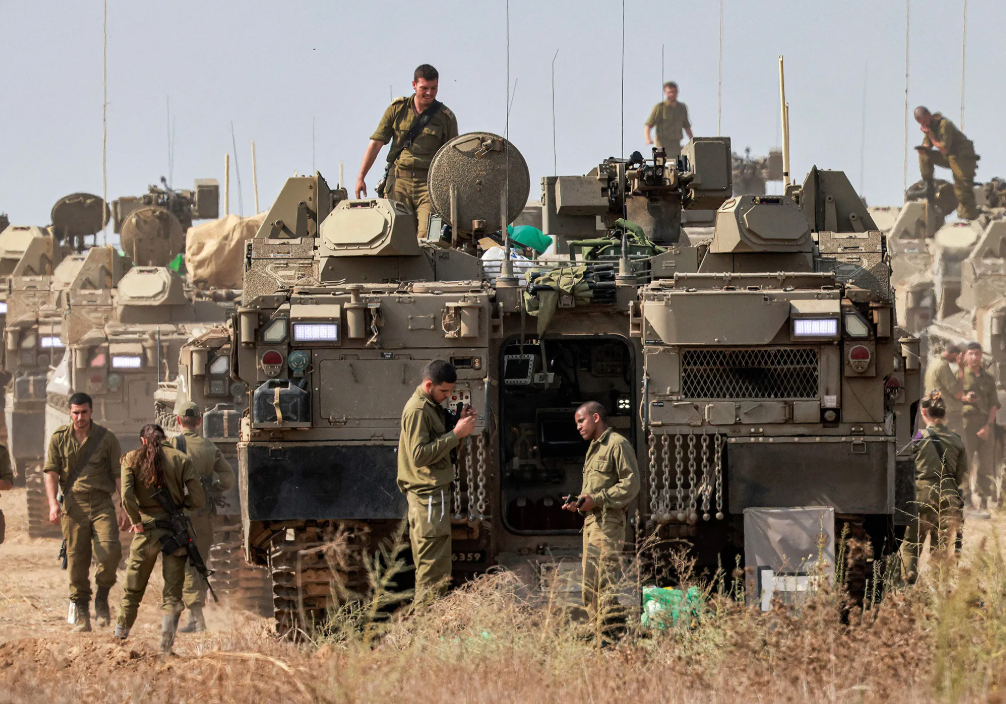
 Middle East War Shakes Global Economy
The latest developments surrounding the Middle east war are beginning to ripple across the global economy in ways that are hard to ignore. Fresh warnings from the International Monetary Fund suggest that the current conflict could trigger a combination of higher prices and slower growth worldwide.
That combination is not new, but it remains deeply uncomfortable. Economists often associate it with periods of instability, where inflation stays elevated while economic activity weakens. The Middle east war, according to IMF Managing Director Kristalina Georgieva, is now increasing the likelihood of such a scenario.
Interestingly, markets had initially reacted with caution rather than panic. Oil prices moved higher, but not dramatically at first. However, as tensions continue and risks around key supply routes grow, the conversation is shifting. The longer the Middle east war persists, the more likely it is that price pressures will spread beyond energy.
Rising Energy Costs at the Core
Energy markets remain at the center of the discussion. The Middle east war has raised serious concerns about disruptions to critical oil supply routes, particularly the Strait of Hormuz. This narrow passage handles a significant portion of global oil shipments. Any interruption, even a temporary one, could tighten supply quickly.
Oil prices have already shown clear signs of reacting. Brent crude has climbed as traders price in geopolitical risk. While there has been no full disruption yet, the market is forward-looking. It reflects what could happen, not just what has happened.
Higher oil prices feed directly into inflation through several channels:
- Transport and logistics costs rise across all industries
- Manufacturing becomes more expensive due to higher energy inputs
- Food prices increase as a result of elevated logistics and production expenses
- Consumer utility bills climb as energy suppliers pass on costs
The Middle east war, therefore, does not remain confined to one region. Its economic effects spread rapidly across interconnected global markets.
Inflation Pressures Building Again
Central banks have spent the past two years working to bring inflation under control. Progress has been uneven, but there were genuine signs of stabilization in several major economies. The Middle east war now complicates that hard-won progress significantly.
When energy prices rise, inflation expectations tend to follow in a predictable sequence:
- Businesses face higher input costs and begin adjusting prices upward
- Consumers feel pressure through fuel, utilities, and everyday goods
- Wage demands increase as workers seek to maintain purchasing power
- Inflation becomes more entrenched and difficult to reverse
Prolonged conflict in the Middle east war zone could reverse some of the hard-earned gains made in reducing global inflation over the past two years, with consequences that extend well beyond the immediate region.
That raises a key question for policymakers. Will central banks need to keep interest rates higher for longer? If that happens, borrowing costs remain elevated, investment slows, and growth weakens. The Middle east war, in this sense, creates a feedback loop between inflation and economic slowdown that is difficult to break.
Global Growth Faces New Headwinds
Growth projections were already modest before the latest escalation. Many economies are still adjusting to tighter financial conditions and shifting trade patterns. The Middle east war adds another significant layer of uncertainty to an already fragile outlook.
Slower growth can emerge through multiple channels simultaneously. Higher energy costs reduce consumer spending power. Businesses may delay expansion plans due to uncertainty. Trade flows could also be affected if shipping routes become less stable or if insurance costs for vessels operating near conflict zones rise sharply.
There is also a critical confidence factor. Markets tend to react not just to hard data, but to perception and expectation. When geopolitical risks increase due to events like the Middle east war, investors often become more cautious. Capital flows can shift quickly away from riskier assets.
The IMF's message is measured but clear. The Middle east war is not just a regional issue. It carries global economic consequences that could reshape expectations for 2026 and beyond.
Market Reactions and Investor Positioning
Financial markets have started to reflect the growing concerns tied to the Middle east war. Safe-haven assets such as gold have seen renewed interest from investors seeking shelter from geopolitical uncertainty. The US dollar has also remained firm, supported by its longstanding role as the world's primary reserve currency.
Equity markets, meanwhile, have shown mixed reactions across sectors:
- Energy sector: Has benefited from higher oil prices tied to the conflict
- Consumer discretionary: Faces pressure from reduced household spending power
- Interest-rate-sensitive sectors: Struggle with the prospect of prolonged tighter monetary policy
- Defense and aerospace: Has seen increased investor attention amid rising geopolitical tension
Volatility remains a defining theme. The Middle east war introduces variables that are genuinely difficult to predict. According to Reuters, investors are watching not only traditional economic indicators but also daily geopolitical developments, as headlines can move markets quickly and sharply.
At the same time, there is no clear consensus on how far the economic impact will ultimately go. Some analysts believe the effects may remain contained if major supply disruptions are avoided. Others argue that even the persistent risk of disruption is sufficient to keep markets on edge and investment decisions on hold.
A Broader Economic Shift in Motion
The current situation highlights how deeply interconnected the global economy has become. A conflict in one region can influence inflation, growth trajectories, and market sentiment across every continent. The Middle east war serves as a stark reminder of this reality and of the limits of purely domestic economic management.
Policymakers now face a delicate and uncomfortable balance. They must manage inflation risks without pushing economies into deeper slowdowns. That task becomes considerably more complex when external shocks, such as the geopolitical tensions generated by the Middle east war, arrive precisely when domestic conditions are already stretched.
There is also the longer-term structural question of energy security. Countries and trading blocs may accelerate efforts to:
- Diversify energy sources away from vulnerable supply routes
- Expand domestic renewable energy capacity
- Build larger strategic petroleum reserves as a buffer against future shocks
- Negotiate new bilateral energy agreements with more stable supplier nations
Such shifts, however, take years to implement fully. For now, the immediate focus of governments, central banks, and investors remains firmly on how the Middle east war evolves and how markets continue to respond.
The path ahead is uncertain, but the direction of risk is becoming increasingly clear. Higher prices. Slower growth. A deeply challenging environment for policymakers and investors alike — one that will not resolve quickly, and that demands careful, coordinated responses from institutions at every level of the global economic system.
