

Gold Prices Rise as Investors Seek Safety Amid Global Risks
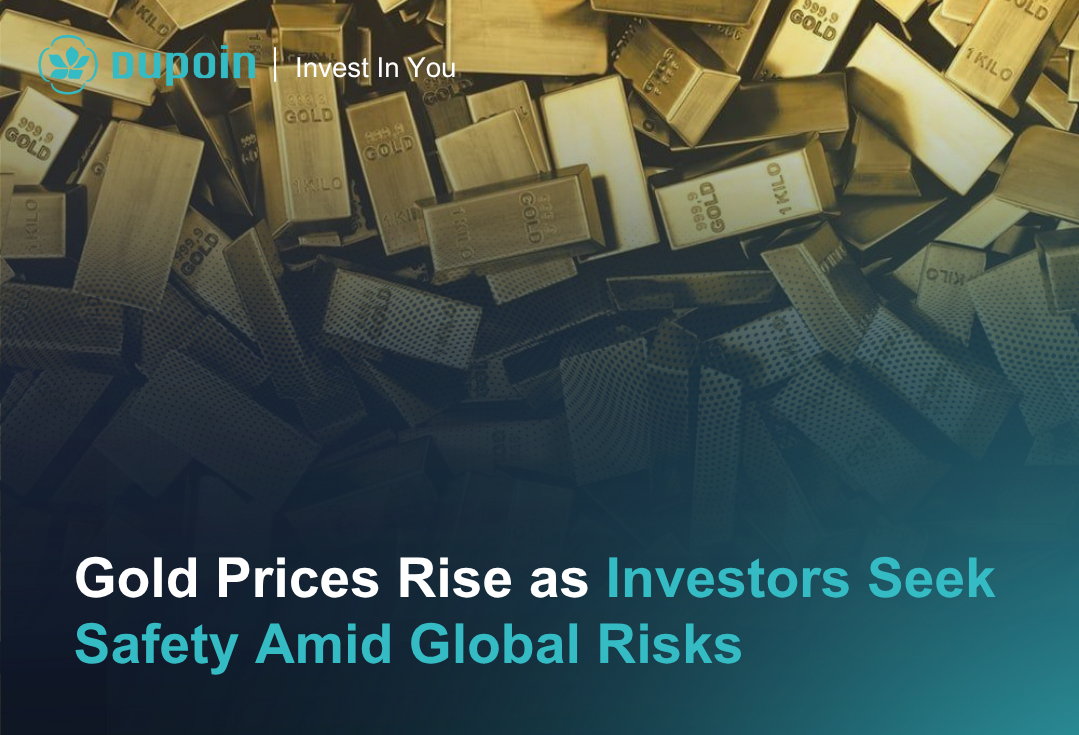
Gold prices have edged higher as investors increasingly seek refuge in safe-haven assets, responding to growing geopolitical tensions and concerns over a potential economic slowdown in both the United States and Europe. With markets facing a confluence of risks—including escalating conflicts, tightening monetary policies, and uncertain economic forecasts—gold's role as a store of value is becoming ever more prominent.
As of recent trading sessions, gold (XAU/USD) has been rising steadily, with prices making notable gains. The precious metal has benefitted from its reputation as a safe-haven asset, often serving as a hedge against uncertainty during times of global instability. Investors are flocking to gold as a means of protecting their portfolios from potential economic disruptions, with the metal serving as an attractive alternative to riskier assets such as stocks and bonds.
Geopolitical Tensions Drive Safe-Haven Demand
The recent uptick in gold prices can largely be attributed to heightened geopolitical tensions around the world. Growing concerns over conflicts in the Middle East, as well as the ongoing war in Ukraine, have intensified the demand for safe-haven assets. Geopolitical crises often prompt a flight to quality, where investors seek stability in assets that are less likely to be impacted by the volatility of global markets.
As international relations become increasingly strained, markets react to the uncertainty with heightened caution. Investors are no longer only focusing on traditional economic metrics but are also factoring in the risk of escalations that could potentially destabilize entire regions. In such an environment, gold stands out as one of the few assets that tend to maintain their value, or even appreciate, in the face of broader market declines or crises.
Moreover, as tensions rise in Asia and Europe, central banks and investors alike are revisiting their portfolios and adjusting their strategies. The notion of securing wealth amidst potential conflict has driven an influx of capital into gold, propelling its price upwards.
Economic Slowdown Fears in the US and Europe
Beyond geopolitical risks, concerns about a potential economic slowdown in both the United States and Europe have further fueled demand for gold. In the US, economic data has shown signs of slowing growth, with indicators pointing to a potential recession or at least a period of stagnation. Inflationary pressures, rising interest rates, and supply chain disruptions continue to weigh heavily on the economy, leaving many investors uncertain about the future.
In Europe, the situation is equally concerning, with sluggish economic growth compounded by the ongoing energy crisis, driven in part by Russia's invasion of Ukraine. The European Union is facing higher energy prices, inflationary pressures, and a contraction in industrial activity. As a result, many investors are questioning the region's ability to sustain growth, prompting them to shift their focus to more secure assets like gold.
Given these factors, the safe-haven appeal of gold has become more pronounced. As both the US and European economies show signs of vulnerability, gold provides a shield against the downside risks posed by weaker economic performance. Investors are increasingly viewing the precious metal as a form of insurance against further market volatility.
Central Bank Activity and the Role of Inflation
Another key driver of gold’s price movement is the ongoing activity by central banks, particularly in relation to interest rates and inflation. The Federal Reserve and the European Central Bank have raised interest rates over the past year in an effort to combat inflation, but with inflation remaining stubbornly high, markets are questioning how much more tightening can be expected. If central banks shift their focus towards stimulating growth rather than further tightening, the outlook for gold could remain positive.
In periods of high inflation, gold has historically been a strong performer. As inflation diminishes the purchasing power of traditional currencies, gold typically retains its value more effectively. This characteristic makes it particularly appealing in the current economic climate, where inflation rates in both the US and Europe are running at multi-decade highs.
Additionally, central banks have been adding gold to their reserves as a means of diversifying their holdings and reducing reliance on the US dollar. The trend of central bank gold purchases, coupled with private sector demand, has provided a strong base for gold’s price action in recent months.
The Future Outlook for Gold
Looking ahead, the outlook for gold remains favorable, although there are several variables to consider. While the metal's safe-haven appeal will continue to be a key factor, investors will also be closely watching central bank policies and economic data for clues as to the future direction of global markets. Any signs of economic recovery could dampen demand for gold, but for now, the prevailing risks point toward continued strength in the yellow metal.
Should geopolitical risks continue to escalate, and if economic data out of both the US and Europe continues to disappoint, gold is likely to maintain its upward momentum. In the short-term, traders and investors will likely remain cautious, with many looking to gold as a safeguard in uncertain times.
In conclusion, gold’s recent price action reflects its traditional role as a safe-haven asset in times of global uncertainty. As geopolitical tensions rise and fears of an economic slowdown persist in both the US and Europe, demand for gold is expected to remain strong. Investors looking to protect their portfolios from potential risks are likely to continue turning to gold, reinforcing its position as one of the most reliable assets in times of crisis.
Disclaimer
Derivative investments involve significant risks that may result in the loss of your invested capital. You are advised to carefully read and study the legality of the company, products, and trading rules before deciding to invest your money. Be responsible and accountable in your trading.
RISK WARNING IN TRADING
Transactions via margin involve leverage mechanisms, have high risks, and may not be suitable for all investors. THERE IS NO GUARANTEE OF PROFIT on your investment, so be cautious of those who promise profits in trading. It's recommended not to use funds if you're not ready to incur losses. Before deciding to trade, make sure you understand the risks involved and also consider your experience.
