

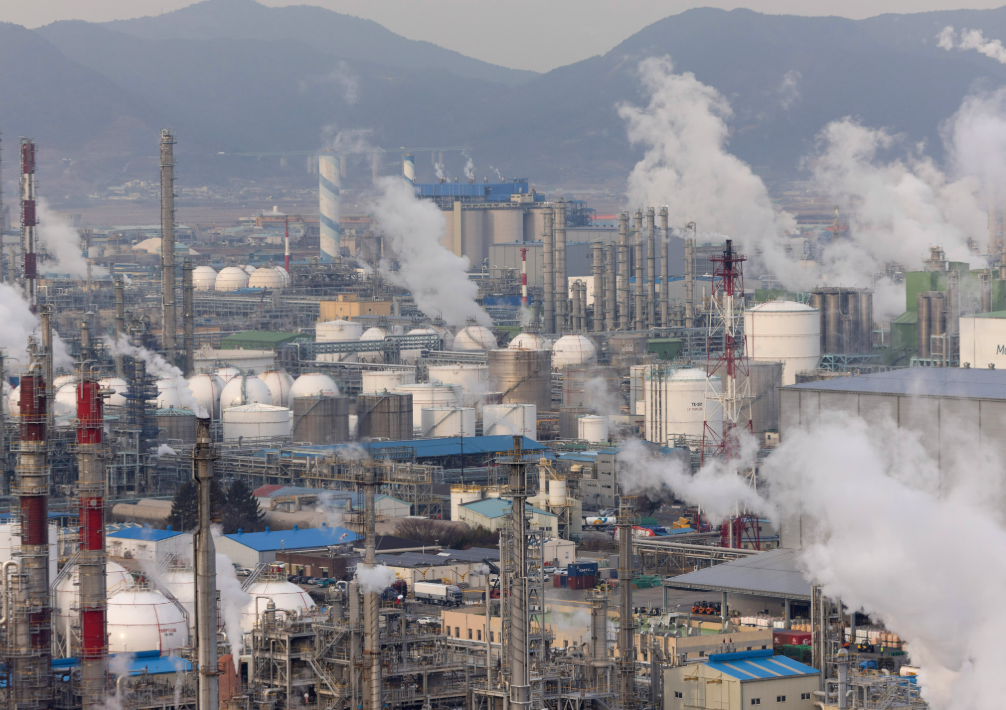
South Korea's manufacturing sector remained in expansion during June, but the pace of growth moderated as overseas demand began to lose momentum. After several months of strong factory activity supported by semiconductor exports and inventory rebuilding, manufacturers are now facing softer export orders and a more cautious global trading environment. The latest South Korea Manufacturing PMI suggests the sector is still growing, although businesses are becoming increasingly aware of external headwinds. According to Reuters, the slowdown reflects a broader normalization after an unusually strong stretch of export activity.
For investors, the latest South Korea Manufacturing PMI serves as another reminder that export-driven economies remain highly sensitive to shifts in global demand. While artificial intelligence-related technology spending continues to support semiconductor shipments, broader manufacturing activity is showing signs of cooling as international buyers become more selective.
South Korea Manufacturing PMI Remains Above Growth Threshold
The latest South Korea Manufacturing PMI remained above the 50-point mark, indicating that manufacturing activity continued to expand. However, the reading slowed from May's multi-year high, reflecting weaker growth in new export orders and a moderation in overall business activity. According to Reuters, this marks a shift from the exceptionally strong readings recorded earlier in the year.
Although production levels remained healthy, companies reported that overseas demand was no longer accelerating at the same pace seen earlier this year. Export orders, particularly from several major trading partners, softened as businesses adjusted inventories and reassessed purchasing plans.
Interestingly, domestic demand continued to provide some support. Local orders helped manufacturers maintain production levels even as international sales became less robust. That balance has prevented a sharper slowdown, at least for now.
Export Demand Begins to Cool
South Korea depends heavily on exports, making international demand one of the most important drivers of its economy. Electronics, semiconductors, automobiles, machinery, and chemicals account for a significant share of manufacturing output.
Recent months delivered exceptionally strong export growth, largely driven by booming demand for AI-related semiconductors. Semiconductor shipments reached record levels, lifting overall exports and helping manufacturers achieve their strongest expansion in years, according to Reuters.
June's South Korea Manufacturing PMI, however, points to a more balanced picture. Export demand has not disappeared; rather, it has started to normalize after an extraordinary period of growth. Companies reported slower growth in new export business as customers became more cautious amid uncertainty surrounding global trade, interest rates, and economic growth.
Even a modest slowdown in export orders can have a noticeable impact on South Korea, since external trade contributes heavily to industrial production and corporate earnings.
Semiconductor Industry Still Provides Support
Despite softer export momentum, the semiconductor industry remains a major source of resilience for the economy.
Global investment in artificial intelligence continues to generate strong demand for advanced memory chips produced by companies such as Samsung Electronics and SK Hynix. These firms remain key beneficiaries of expanding AI infrastructure worldwide, Reuters reports.
That strength is helping offset weaker performance in several traditional manufacturing industries. However, economists caution that relying heavily on semiconductor exports creates concentration risk. If AI investment eventually slows or inventory levels normalize, overall manufacturing growth could weaken more noticeably.
Global Trade Conditions Remain Uncertain
External conditions continue to present challenges for manufacturers across Asia.
Businesses are navigating changing trade policies, geopolitical uncertainty, fluctuating shipping costs, and varying demand across major markets. Some buyers have delayed purchasing decisions, while others continue managing inventory levels carefully after earlier stock-building activity.
Meanwhile, manufacturing surveys from several economies have shown mixed performances. China's manufacturing sector recently returned to modest expansion, supported by technology exports, although domestic demand remains relatively soft, according to Reuters.
These contrasting trends suggest that global manufacturing remains uneven rather than uniformly strong. For South Korea, whose economy is deeply integrated into global supply chains, maintaining export competitiveness will remain essential during the second half of the year.
What Investors Should Watch Next
The latest South Korea Manufacturing PMI is unlikely to trigger immediate concerns about economic weakness. Manufacturing continues to expand, employment remains relatively stable, and production is still supported by healthy semiconductor demand.
Nevertheless, investors should monitor several developments over the coming months:
- Export orders — a continued decline could eventually weigh on factory output and business confidence.
- Semiconductor demand — current strength has largely been driven by AI investment, and whether that momentum remains sustainable will shape South Korea's broader manufacturing outlook.
- Monetary policy — higher borrowing costs across major economies generally reduce business investment and consumer spending, potentially slowing international trade flows.
- Upcoming PMI releases — future South Korea Manufacturing data will show whether June represents a temporary moderation or the beginning of a broader slowdown.
Market Perspective
The latest South Korea Manufacturing PMI reflects an economy that is still expanding but gradually returning to a more sustainable pace after several exceptionally strong months.
Manufacturers continue to benefit from resilient semiconductor demand, yet softer export orders indicate that global buyers are becoming more cautious. While this does not necessarily signal an immediate downturn, it reinforces the importance of monitoring international demand as a key driver of South Korea's industrial performance.
For financial markets, the message is relatively clear:
- Watch export trends closely in the months ahead.
- Track semiconductor sales as a key support for growth.
- Follow future PMI readings for signs of resilience or further cooling.
As one of Asia's leading export economies, South Korea often provides an early signal of broader changes in global manufacturing and trade activity, according to Reuters. Whether the South Korea Manufacturing sector can sustain growth through the remainder of 2026 will depend largely on how global demand evolves from here.
