

رؤى السوق
Japan and South Korea Join Forces to Stabilise the Yen and Won Amid Currency Volatility
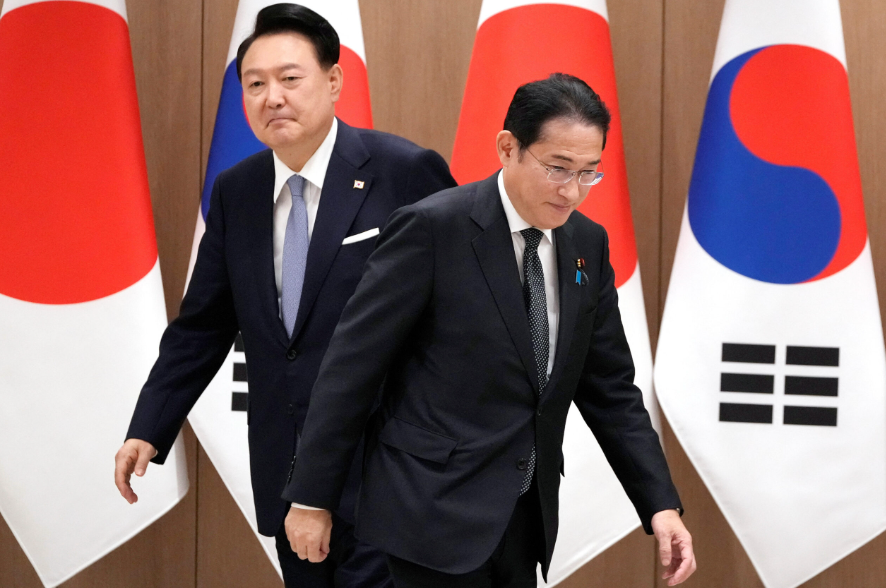 Japan Korea Joint Currency Intervention Stuns Forex Markets
A rare Japan Korea joint currency intervention has captured the attention of global financial markets after both countries reportedly stepped in to stabilise their currencies following a period of unusually sharp volatility. The coordinated action helped lift both the Japanese yen and the South Korean won, although part of those gains faded as investors reassessed the broader outlook for interest rates and central bank policy.
According to Reuters, joint currency intervention between Japan and South Korea is highly unusual, and that alone explains why the latest Japan Korea joint action has become one of the most closely watched events in the foreign exchange market. Beyond the immediate impact on exchange rates, the move highlights growing concerns among Asian policymakers over excessive currency fluctuations and their potential effect on economic stability.
Why Japan and South Korea Acted Together
The recent weakness in both the Japanese yen and the South Korean won had become increasingly difficult for policymakers to ignore. Although weaker currencies can support exports by making products more competitive overseas, rapid and unpredictable movements often create uncertainty for businesses, investors, and financial markets.
According to market participants cited by Bloomberg, authorities from Japan and South Korea stepped into the foreign exchange market after sharp swings threatened to undermine confidence. This Japan Korea joint effort is notable because neither country typically coordinates intervention with the other; currency operations are usually conducted independently, making this latest action particularly significant.
The move sent a strong signal that both governments were prepared to respond when market volatility became excessive.
Currency Intervention Explained
Currency intervention occurs when a country's monetary authorities buy or sell their own currency in the foreign exchange market. The objective is generally not to defend a fixed exchange rate; instead, policymakers seek to reduce disorderly price movements that may disrupt economic activity or financial stability.
In this case, the Japan Korea joint operation reportedly supported both domestic currencies after they experienced considerable pressure against the US dollar. Markets responded immediately, as the Japanese yen strengthened sharply while the South Korean won also recovered from recent lows, before both currencies later gave back part of their gains as trading normalised.
Why the US Dollar Has Been So Strong
The backdrop to this coordinated action remains the strength of the US dollar. Higher US interest rates have encouraged global investors to move capital into dollar-denominated assets that offer more attractive returns, and as a result, many Asian currencies have faced persistent depreciation pressure throughout the year.
The Japanese yen has been particularly vulnerable because Japan continues to maintain relatively low interest rates compared with the United States. Meanwhile, the South Korean won has also faced challenges as investors weigh slowing global trade, geopolitical risks, and changing expectations for economic growth. These external pressures have made it increasingly difficult for regional currencies to maintain stability without occasional policy support.
Why the Market Is Paying Close Attention
The decision by Japan and South Korea carries significance beyond the two countries involved. Global currency traders often interpret Japan Korea joint intervention as a stronger signal than unilateral action, since cooperation between neighbouring economies suggests authorities share similar concerns regarding market conditions. That perception can temporarily discourage speculative trading against affected currencies.
At the same time, investors understand that intervention alone rarely changes long-term market direction. Sustained currency trends are generally determined by economic fundamentals, including:
- Inflation trends across major economies
- Interest rate decisions by central banks
- Employment and labour market data
- Broader economic growth expectations
For that reason, attention is already shifting toward upcoming central bank meetings and economic indicators that may ultimately determine whether the recent gains in the Japanese yen and South Korean won can be maintained.
Implications for Investors
For foreign exchange traders, the latest Japan Korea joint intervention serves as another reminder that policy decisions can quickly reshape market sentiment. Unexpected government action often produces rapid price swings, wider bid-ask spreads, and increased volatility across major currency pairs, and the effects are rarely limited to the currencies directly involved.
Movements in the Japanese yen frequently influence global equity markets because Japan remains one of the world's largest economies and a major source of international investment capital. Similarly, fluctuations in the South Korean won are closely watched by investors with exposure to technology manufacturers, semiconductor companies, and Asian export markets. Commodity markets, bond yields, and regional stock indices may also experience secondary effects whenever significant currency intervention occurs.
The Bigger Picture
Although the immediate impact of the Japan Korea joint action attracted widespread attention, the longer-term outlook will depend on broader economic developments. Investors will continue monitoring the Bank of Japan's monetary policy, South Korea's economic performance, US interest rate expectations, and the direction of the US dollar.
- Should underlying pressures remain unchanged, further intervention cannot be ruled out if volatility intensifies again.
- For now, the actions taken by Japan and South Korea demonstrate that policymakers remain willing to respond when currency movements become unusually rapid.
Whether that support produces a lasting recovery for the Japanese yen and South Korean won will depend less on the intervention itself and more on how global monetary policy and economic conditions evolve over the months ahead. As Reuters and other financial outlets have noted, the episode underscores how seriously regional authorities now treat currency stability.
DISCLAIMER: Derivative products carry high risk and may result in the loss of your entire invested capital. Before trading, ensure you fully understand the legal framework, product characteristics, and your broker’s trading rules. Always trade responsibly and with caution.
RISK WARNING: Margin trading with leverage is not suitable for all investors due to its high risk. THERE ARE NO GUARANTEED RETURNS in trading. Beware of any claims promising assured profits. Only use capital you can afford to lose. Before engaging in any transaction, ensure you understand the risks and assess both your experience and risk tolerance.
