

رؤى السوق
Asian Stock Markets Slide as AI Concerns Shake Investor Confidence
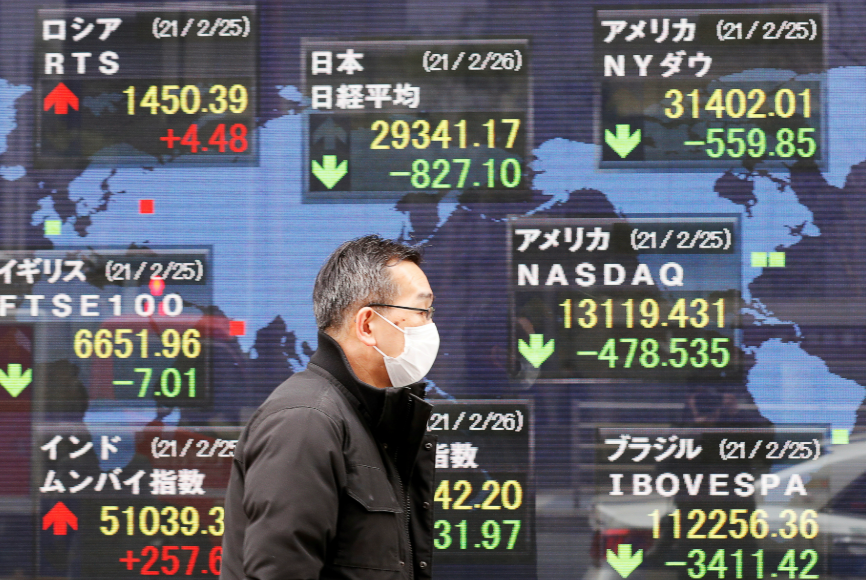 Asian Stock Markets Slide as AI Concerns Trigger Selloff
A fresh wave of selling swept across Asian stock markets on Tuesday as investors reacted to growing concerns surrounding the artificial intelligence sector. Technology and semiconductor shares led the decline, extending losses from Wall Street and highlighting how quickly sentiment can shift when one of the market's strongest growth themes comes under pressure.
The latest weakness in Asian stock markets reflects broader uncertainty surrounding AI-related valuations. According to Reuters, after months of exceptional gains driven by optimism over artificial intelligence, investors are becoming increasingly selective. Questions surrounding earnings expectations, capital spending and future growth have prompted many to reassess their positions.
Interestingly, the selloff does not necessarily signal a loss of confidence in artificial intelligence itself. Instead, it reflects a market that is beginning to distinguish between long-term opportunity and short-term valuation risk — a distinction that is becoming increasingly important for investors navigating today's technology sector.
Why Asian Stock Markets Came Under Pressure
The decline across Asian stock markets followed renewed weakness in global technology stocks, particularly companies closely linked to artificial intelligence.
Semiconductor manufacturers, chip equipment suppliers and AI infrastructure companies have enjoyed remarkable rallies over the past two years. Those gains were supported by surging demand for advanced processors, cloud computing capacity and data centre expansion. However, strong performance often raises expectations.
As investors began questioning whether current valuations fully reflect future earnings potential, selling pressure intensified across technology-heavy indices. The impact quickly spread through Asian stock markets, where many listed companies play critical roles within the global semiconductor supply chain.
- Japan's Nikkei index recorded notable losses in technology-linked shares
- South Korea's exporters faced pressure amid weaker chip demand sentiment
- Taiwan's semiconductor giants saw heightened trading volatility
- Hong Kong shares tracked broader regional technology weakness
AI Optimism Faces Its First Serious Test
Artificial intelligence has arguably been the defining investment story of the decade.
Global technology companies have committed hundreds of billions of dollars towards AI infrastructure, software development and advanced computing. Investors rewarded those ambitions by driving technology shares to record highs.
Now, Asian stock markets are showing what happens when expectations become exceptionally elevated. Even modest concerns surrounding future growth can trigger sizeable price movements.
Markets rarely move only because a company's outlook changes dramatically. Sometimes expectations simply become so ambitious that investors require even stronger evidence before committing additional capital.
That appears to be influencing current trading activity, according to Bloomberg market analysts tracking regional equity flows.
Semiconductor Stocks Remain at the Centre
Much of the pressure within Asian stock markets has centred on semiconductor companies.
Advanced chips remain essential for training and operating large artificial intelligence models. Demand from cloud providers and enterprise customers continues to support long-term industry growth.
Yet investors increasingly recognise that semiconductor companies face cyclical challenges alongside structural opportunities. Large investments in manufacturing capacity require sustained customer demand. Any suggestion that AI spending could moderate, even temporarily, naturally leads investors to reassess future earnings forecasts.
Consequently, chipmakers and their suppliers have become particularly sensitive to changing market sentiment.
Investor Sentiment Has Become More Cautious
The recent decline demonstrates how quickly market psychology can evolve.
For much of the past year, positive AI headlines consistently encouraged buying across technology sectors. Recently, however, investors have become more cautious. Rather than chasing momentum, many portfolio managers are focusing on valuation, earnings quality and long-term profitability.
This shift has contributed to increased volatility across Asian stock markets. Companies with the strongest AI narratives are no longer immune from profit-taking when broader market conditions become less supportive.
What This Means for Global Markets
Developments within Asian stock markets often provide an early indication of broader investor sentiment.
Asia hosts several of the world's largest semiconductor manufacturers, electronics companies and technology exporters. As a result, movements across regional equity markets frequently influence trading in Europe and the United States.
- Should AI-related selling continue, technology-heavy indices such as the Nasdaq could experience additional volatility
- Sectors less directly exposed to artificial intelligence may attract renewed investor interest as portfolios diversify
- Currency markets could respond if investors increasingly favour defensive assets during periods of heightened uncertainty
Long-Term AI Investment Story Remains Intact
Despite recent weakness, few analysts believe the broader artificial intelligence investment cycle has ended.
Businesses across multiple industries continue investing heavily in automation, machine learning and cloud infrastructure. Governments are also supporting AI research through national technology strategies and industrial policy initiatives. These structural trends remain supportive over the longer term.
The recent decline across Asian stock markets therefore appears to reflect a reassessment of valuation rather than a rejection of artificial intelligence as a transformative technology.
History shows that rapidly growing industries rarely move in a straight line. Periods of consolidation often occur after strong rallies, allowing expectations and valuations to realign before the next stage of growth.
A Broader Perspective
The latest decline in Asian stock markets serves as a reminder that even the strongest investment themes are subject to changing market sentiment. Artificial intelligence continues to reshape industries and attract significant investment, yet elevated expectations leave technology shares vulnerable whenever uncertainty emerges.
For investors, the coming weeks will be closely watched. Corporate earnings, AI spending plans and guidance from major technology companies will likely determine whether confidence returns or volatility persists. Until then, Asian stock markets are expected to remain highly sensitive to every new development surrounding the global AI sector.
DISCLAIMER: Derivative products carry high risk and may result in the loss of your entire invested capital. Before trading, ensure you fully understand the legal framework, product characteristics, and your broker’s trading rules. Always trade responsibly and with caution.
RISK WARNING: Margin trading with leverage is not suitable for all investors due to its high risk. THERE ARE NO GUARANTEED RETURNS in trading. Beware of any claims promising assured profits. Only use capital you can afford to lose. Before engaging in any transaction, ensure you understand the risks and assess both your experience and risk tolerance.
