

رؤى السوق
Japan Bond Market Concerns Grow Despite New Government Economic Plan
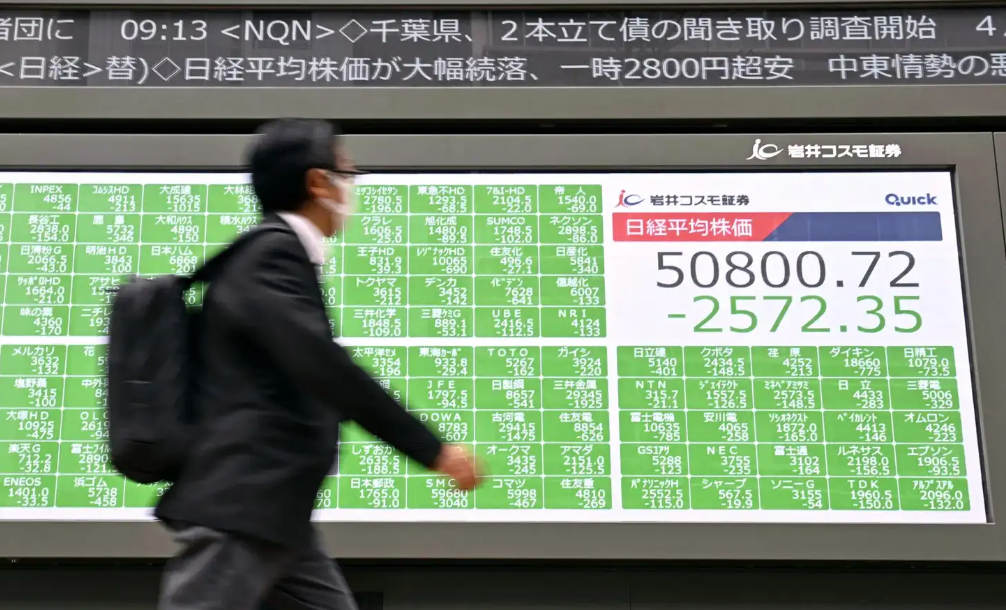 Japan Bond Market Faces New Fiscal Test
The Japan bond market remained the centre of investor attention after Prime Minister Sanae Takaichi unveiled her administration's first economic policy roadmap. Although the government presented plans to support growth and improve living standards, financial markets remained focused on rising Japanese government bond yields and concerns over the country's growing debt burden.
Rather than celebrating a fresh economic agenda, investors appeared more concerned about the government's ability to finance its spending ambitions without adding further pressure to the bond market. The reaction highlights a broader challenge facing Japan as it attempts to stimulate economic growth while maintaining confidence in one of the world's largest sovereign debt markets.
For traders and policymakers alike, the latest developments suggest that confidence will depend not only on new policy announcements but also on how those plans are funded.
Bond Market Remains the Primary Focus
The Japan bond market has experienced increased volatility in recent weeks as investors reassess the country's fiscal outlook.
Government bond yields have climbed steadily, reflecting expectations that Japan may issue additional debt to finance new spending initiatives. Higher yields generally indicate that investors are demanding greater returns to compensate for perceived risks, and that trend has become increasingly evident across longer-dated Japanese government bonds.
Interestingly, the latest policy blueprint did little to change that narrative.
While the administration outlined measures aimed at strengthening economic growth, supporting wages, encouraging investment, and improving productivity, investors continued to focus on the potential impact on government borrowing.
That response demonstrates how sensitive financial markets have become to fiscal policy in Japan after years of exceptionally low interest rates.
New Economic Roadmap Prioritises Growth
Prime Minister Sanae Takaichi's first economic roadmap outlines several priorities designed to strengthen Japan's long-term economic performance.
The government plans to encourage private sector investment, improve wage growth, expand support for strategic industries, and accelerate digital transformation. Energy security and measures to strengthen supply chains also remain key priorities as geopolitical risks continue to reshape global trade. Key priorities outlined include:
- Encouraging private sector investment
- Improving wage growth across industries
- Expanding support for strategic sectors
- Accelerating digital transformation
- Strengthening energy security and supply chains
The administration has also emphasised increasing household income while maintaining stable economic growth. These objectives broadly align with Japan's ongoing efforts to move beyond decades of low inflation and sluggish domestic demand.
However, markets appear to be asking a different question: can these ambitions be achieved without significantly increasing government borrowing? That uncertainty continues to dominate investor sentiment.
Rising Bond Yields Present a Challenge
The Japan bond market plays a crucial role in financing government spending.
Japan already carries one of the highest public debt levels among developed economies, with government debt exceeding twice the country's annual economic output. As borrowing costs rise, servicing that debt becomes increasingly expensive.
This creates a delicate balancing act for policymakers:
- Higher government spending may help stimulate economic activity in the short term
- Larger deficits could place additional upward pressure on bond yields
- Investor concern over fiscal sustainability could compound both effects
At the same time, the Bank of Japan is gradually moving away from years of ultra-loose monetary policy. Following earlier interest rate adjustments and reduced bond market intervention, investors now expect market forces to play a larger role in determining government borrowing costs.
That transition has introduced greater volatility into the Japan bond market, making each new policy announcement more significant than in previous years.
What It Means for the Bank of Japan
The latest developments may also influence future decisions by the Bank of Japan.
Central bank officials continue to monitor inflation, wage growth, and financial market stability as they gradually normalise monetary policy.
A sharp increase in government bond yields could complicate that process.
If borrowing costs rise too quickly, policymakers may need to balance inflation control with the need to maintain orderly financial markets. On the other hand, allowing yields to move more freely reflects the Bank of Japan's broader objective of returning monetary policy to more normal settings after years of extraordinary stimulus.
For now, officials are expected to proceed cautiously while closely monitoring market conditions.
Currency Markets Watch Closely
The Japanese yen also remains closely linked to developments in the Japan bond market.
Higher domestic bond yields can support the yen by narrowing the interest rate gap between Japan and other major economies. However, concerns over fiscal sustainability may offset some of that positive effect if investors become less confident about the country's long-term outlook.
As a result, USD/JPY traders are monitoring both government policy announcements and bond market movements for clues about future currency direction.
The interaction between fiscal policy, monetary policy, and investor confidence is likely to remain one of the dominant themes for Japanese financial markets throughout the second half of 2026.
Investors Want More Than Promises
Financial markets generally welcomed the government's commitment to supporting economic growth.
Nevertheless, the reaction suggests investors are looking beyond policy objectives.
Execution matters. Funding plans matter. Market confidence matters.
The Japan bond market has become a real-time assessment of how investors view the government's economic credibility.
If future budgets demonstrate fiscal discipline while supporting growth, confidence could gradually improve. However, if borrowing requirements continue to expand without a clear path toward long-term sustainability, bond yields may remain under upward pressure.
Market Perspective
The latest developments illustrate why the Japan bond market has become one of the most closely watched indicators of Japan's economic outlook.
Prime Minister Sanae Takaichi has presented an ambitious roadmap focused on growth, investment, and higher wages. Those priorities have been broadly welcomed, yet investors remain cautious as they assess how the government intends to finance its plans.
In the coming months, attention is likely to shift from policy announcements to implementation. Bond auctions, fiscal updates, inflation data, and future Bank of Japan meetings will all shape investor confidence.
For financial markets, the success of Japan's new economic strategy may depend as much on maintaining stability in the Japan bond market as it does on achieving stronger economic growth.
DISCLAIMER: Derivative products carry high risk and may result in the loss of your entire invested capital. Before trading, ensure you fully understand the legal framework, product characteristics, and your broker’s trading rules. Always trade responsibly and with caution.
RISK WARNING: Margin trading with leverage is not suitable for all investors due to its high risk. THERE ARE NO GUARANTEED RETURNS in trading. Beware of any claims promising assured profits. Only use capital you can afford to lose. Before engaging in any transaction, ensure you understand the risks and assess both your experience and risk tolerance.
