

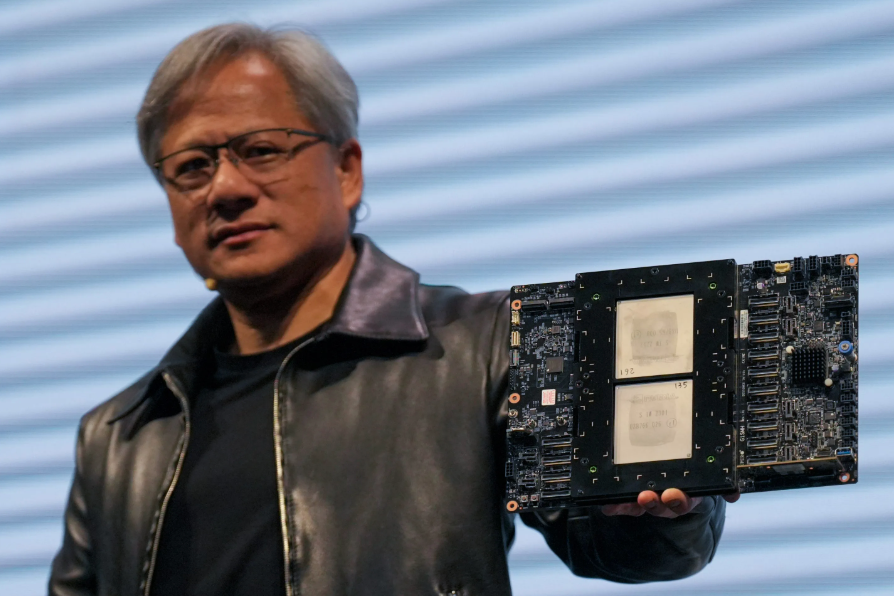
 Nvidia H200 Chip Sales Approved to China Firms
Global technology markets drew fresh attention on 15 May 2026 after reports revealed that the United States had approved Nvidia H200 chip sales to several Chinese companies, marking a potentially important development in the ongoing battle over artificial intelligence and semiconductor exports.
Approval Signals Potential Shift in US-China Relations
The decision comes at a delicate time for U.S.-China relations. Trade tensions, technology restrictions, and AI competition have remained central concerns for investors over the past two years. Against that backdrop, even limited approvals involving advanced chips now carry major implications for financial markets.
According to Reuters, the U.S. cleared Nvidia H200 chip sales to 10 Chinese firms as Nvidia CEO Jensen Huang continues efforts to maintain business opportunities in China while navigating increasingly complex export regulations.
Interestingly, markets interpreted the move as more than just a routine licensing decision. Some analysts viewed the approval as a possible signal that Washington may be willing to adopt a slightly more flexible approach toward certain commercial AI activities involving China. Others remained cautious, noting that broader restrictions on advanced semiconductor technology remain firmly in place.
Nvidia H200 Chip Technology and Market Demand
The Nvidia H200 chip is widely viewed as one of the company's important AI-focused products designed for high-performance computing and artificial intelligence workloads. Demand for AI chips has surged globally following the rapid expansion of generative AI technologies, cloud computing infrastructure, and large language models.
That demand has transformed Nvidia into one of the most influential companies in global markets. Investors now monitor Nvidia almost as closely as central banks. The company's growth trajectory has become deeply connected to the broader AI investment boom, influencing technology stocks, semiconductor suppliers, and even energy infrastructure discussions tied to data center expansion.
The latest Nvidia H200 chip sales approval attracted significant market interest because China remains one of the world's largest technology markets.
Chinese firms continue seeking access to advanced AI hardware despite tighter export controls imposed by the United States over national security concerns. For Nvidia, maintaining some level of access to China carries enormous financial importance.
China previously contributed a meaningful portion of Nvidia's data center and AI-related revenue before stricter export restrictions limited certain sales. The approval involving Nvidia H200 chip deliveries could therefore help preserve business relationships with selected Chinese customers while still operating within U.S. regulatory boundaries.
Geopolitical Tensions Surrounding Technology Trade
Despite the latest Nvidia H200 chip sales approval, tensions surrounding technology exports between Washington and Beijing remain unresolved. Over the past several years, the United States has steadily tightened restrictions on advanced semiconductor exports to China.
Officials have argued that cutting-edge AI chips could potentially support military development or strategic technological advantages. China, meanwhile, has repeatedly criticized these restrictions, arguing that they disrupt global trade and unfairly limit technological development.
The semiconductor industry now sits directly at the center of geopolitical competition. Interestingly, the approval of Nvidia H200 chip sales may reflect how difficult it has become to completely separate commercial technology markets from geopolitical strategy.
American chipmakers continue seeking growth opportunities in China, while regulators attempt to balance economic interests with security concerns. That balancing act is becoming increasingly complicated.
Limited Scope of Current Approval
Several analysts noted that the approval does not necessarily indicate a broad reversal of U.S. technology policy. Instead, it may represent a carefully controlled exception involving specific customers and approved licensing conditions.
Still, investors reacted positively to the news because any easing in Nvidia H200 chip trade tensions could potentially support technology sector stability. The decision underscores how important these individual approvals have become for market sentiment and investor confidence.
Semiconductor Market Response to AI Growth
The broader semiconductor market remains heavily driven by artificial intelligence demand in 2026. Companies tied to AI infrastructure, advanced chips, memory production, and cloud computing continue attracting strong investor attention.
Nvidia remains one of the largest beneficiaries of that trend, alongside firms involved in chip manufacturing equipment and AI server infrastructure. The Nvidia H200 chip sales development therefore arrives during a period when semiconductor valuations remain closely linked to expectations surrounding AI adoption worldwide.
Technology investors are particularly sensitive to any headline involving export controls, China sales, or AI hardware supply chains. Even relatively small policy adjustments can influence expectations surrounding revenue growth and future global demand.
Asian technology markets also monitored the developments closely. Chinese AI firms continue facing pressure to secure reliable access to advanced computing hardware as domestic competition intensifies. At the same time, U.S. technology companies remain eager to protect their market positions in one of the world's largest digital economies.
Strategic Implications for Global Markets
Beyond Nvidia itself, the latest approval involving Nvidia H200 chip sales highlights the growing importance of AI-related policy decisions within financial markets. Technology regulation is no longer viewed as a niche issue affecting only semiconductor specialists.
Instead, it now influences equity valuations, international trade expectations, geopolitical risk assessments, and broader investor sentiment across multiple sectors. For traders, the key question remains whether the approval signals a gradual softening in certain areas of U.S.-China technology relations or simply represents a narrow commercial exception.
What is evident, however, is that AI chips have become one of the most strategically important products in the global economy. Decisions surrounding Nvidia H200 chip approvals are therefore likely to remain closely monitored by governments, investors, and technology companies throughout 2026.
In today's market environment, semiconductor headlines can move global markets almost instantly. The Nvidia H200 chip story demonstrates how deeply interconnected technology policy, corporate strategy, and investment markets have become in the modern economy.
